Calcutta High Court Denies Bail To Man Accused Of ISIS Recruitment, Radicalising Youth; Says Materials Show Role In Extremist Activities
Srinjoy Das
13 Nov 2026 2:45 PM IST
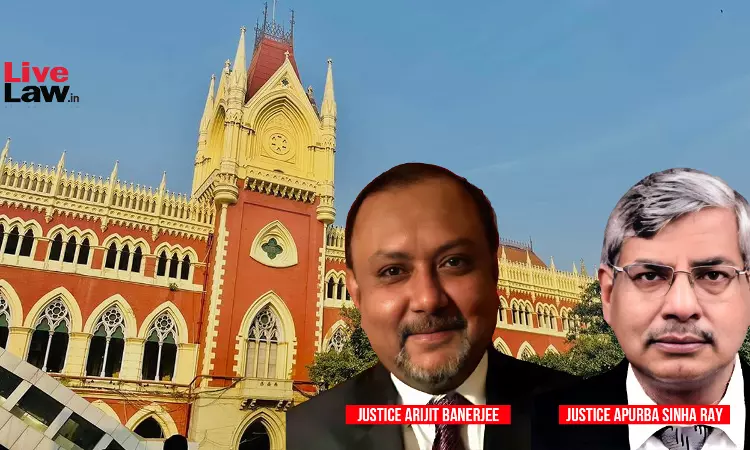
The Calcutta High Court has refused to grant bail to a man accused of being an active ISIS operative involved in radicalising Muslim youths, circulating extremist propaganda and attempting to recruit Indian youths for militant activities abroad, observing that the materials collected during the investigation prima facie indicated his involvement in terrorist activities.
A Division Bench of Justice Arijit Banerjee and Justice Apurba Sinha Ray held that the case did not concern mere possession of extremist literature or videos, but contained materials indicating the appellant's active participation in collecting and organising youths for Islamic extremism.
"The case at hand is not mere possession of literature," the Bench observed, while rejecting the bail appeal filed by Md. Saddam, also known as Mohammad Saddam, Saddam Mallik and Abdul Mallick.
The appellant had approached the High Court seeking bail under the Unlawful Activities (Prevention) Act (UAPA), contending that he had remained in custody for over three years and ten months, while only three out of the 52 charge-sheeted witnesses had been examined.


Rejecting the argument that the prolonged incarceration entitled him to bail, the Court held that the trial had not reached the stage where the statutory restrictions on bail under Section 43D(5) of the UAPA could be relaxed on account of delay.
The Bench noted that the National Investigation Agency (NIA) had filed the charge sheet on July 4, 2023, and charges were framed on August 14, 2025. It further observed that the appellant had subsequently filed a discharge application, the rejection of which was also challenged before the High Court, resulting in further delay in the examination of prosecution witnesses.
"There is no intentional laches from the side of the prosecution to prolong the trial," the Court held.
Prosecution alleges ISIS recruitment network and plans to target journalists
Opposing bail, the NIA submitted that the appellant was not a passive sympathiser of ISIS but an active operative involved in recruitment and radicalisation of Muslim youths, dissemination of ISIS propaganda and administration of clandestine Telegram groups.
The prosecution alleged that the appellant was involved in efforts to send recruits to Afghanistan/Khorasan for terrorist training and discussions concerning target killings and attacks against identified persons and institutions.
It further relied on forensic extraction reports from the appellant's electronic devices, which allegedly revealed communications with persons operating from Pakistan, Saudi Arabia, Syria and other foreign jurisdictions through virtual phone numbers.
According to the NIA, the appellant had circulated violent ISIS propaganda videos among other youths, while the recovered Telegram conversations indicated discussions about militant activities, including killing journalists in India.
The prosecution also alleged that the appellant was connected with Abdul Rakib Qureshi for planning and coordinating extremist activities. It identified one Amina Bint Munnavar, residing in Singapore, as a key radicaliser and administrator of ISIS-linked groups.
The NIA contended that the materials, corroborated by the statement of a prosecution witness, established a prima facie case attracting the statutory bar under Section 43D(5) of the UAPA.
Court finds material indicating active participation beyond mere possession of extremist literature
The appellant, represented by Senior Advocate Deep Chaim Kabir, argued that the prosecution's allegations were primarily based on the recovery of photographs, videos and other digital materials from electronic devices.
Relying on Supreme Court judgments in Thwaha Fasal v. Union of India and Vernon v. State of Maharashtra, the appellant contended that mere possession of extremist literature or association with a terrorist organisation would not constitute an offence under the UAPA without material indicating an intention to further the organisation's activities.
It was also argued that there was no evidence of any overt act demonstrating that the appellant had planned or participated in a terrorist act. The defence questioned the prosecution's decision to cite Farhan Javed, from whose mobile phone incriminating materials were allegedly recovered, as a witness rather than an accused.
The Bench, however, found that the forensic extraction reports revealed Telegram conversations through virtual numbers with persons residing outside India, including discussions about recruiting Indian youths abroad for militant and extremist purposes.
The Court further noted that the conversations indicated that the sender was interested in carrying out militant activities, including killing journalists in India, and was encouraged by foreign-based persons.
"There are materials to show that the applicant took an active part in collecting or organizing or instigating youth who would take part in hijarat and jihad for Islamic extremism. He also collected youth isthihad (suicide squad)," the judgment recorded.
The Bench also referred to the large number of videos and photographs recovered from the electronic devices, which allegedly depicted destructive and subversive activities, killings of helpless persons, beheaded bodies and militant training.
The materials also included videos showing plans to kill Prime Minister Narendra Modi and US President Donald Trump, the Court noted.
Distinguishing the case from Vernon, the Bench held that the allegations went beyond the mere possession of literature and indicated overt acts pointing towards active participation in extremist activities.
Court rejects argument based on prolonged incarceration
The appellant had relied on the Supreme Court's judgment in Union of India v. K.A. Najeeb, which held that constitutional courts could grant bail despite statutory restrictions where there was no likelihood of the trial concluding within a reasonable time and the accused had undergone a substantial period of incarceration.
The High Court acknowledged that the rigours of Section 43D(5) could not override an accused's fundamental right to a speedy trial under Article 21.
However, it observed that the question was when the circumstances of a particular case would reach the stage at which the statutory restrictions on bail would begin to melt down.
In this regard, the Bench noted that charges had been framed in August 2025 and that the appellant had subsequently filed a discharge application. Although the appellant was legally entitled to seek discharge, the Court observed that the application had halted the examination of prosecution witnesses and contributed to prolonging the trial.
Referring to the Supreme Court's decisions in Gulfisha Fatima and Tasleem Ahmed, the Bench reiterated that delay in trial could not automatically be attributed to the prosecution.
It further held that, considering the gravity of the allegations and the technical and electronic evidence involved, the presence of 52 charge-sheeted witnesses could not be considered excessive.
"We do not find any intentional laches from the side of the prosecution to prolong the trial," the Court observed.
The Bench ultimately held that the case had not reached the "melting point" contemplated in K.A. Najeeb, particularly since the prosecution was not responsible for the alleged delay.
Farhan Javed's role distinguished from that of the appellant
The appellant had also sought parity with Farhan Javed, who allegedly possessed incriminating videos and other materials on his mobile phone but had been cited as a prosecution witness.
The defence argued that the appellant, who had allegedly received similar materials from other sources, should also have been treated as a witness.
Rejecting the argument, the Bench referred to Farhan's statement recorded under Section 164 of the Code of Criminal Procedure.
As per the statement, Farhan had come to his aunt's house in Howrah for higher secondary education and became acquainted with the appellant while visiting a nearby mosque. The appellant, who appeared knowledgeable, allegedly sent him incriminating materials, describing them as confidential and instructing him to maintain secrecy.
The Court observed that the appellant had taken advantage of his proximity to Farhan to indoctrinate him with Islamic extremist ideologies.
"In our considered view, the applicant and Farhan do not stand on the same footing," the Bench held.
The Court added that the alleged conduct lent support to the prosecution's case that the appellant was continuously encouraged by foreign-based persons to recruit Indian youths interested in carrying out extremist operations in India and abroad.
Holding that sufficient materials indicated overt acts on the appellant's part and that the accusations appeared prima facie true at the present stage of the proceedings, the High Court dismissed the appeal seeking bail.
Case: Md. Saddam @ Mohammad Saddam @ Saddam Mallik @ Abdul Mallick v. Union of India
Case No.: CRA (DB) 324 of 2025