



- Home
- /
- High Courts
- /
- Calcutta High Court
- /
- Calcutta High Court Dismisses...
Calcutta High Court Dismisses Abhishek Banerjee's Plea To Travel Abroad For Eye Treatment After He Refuses To Appear Before Medical Board
Srinjoy Das
5 Aug 2026 11:46 AM IST
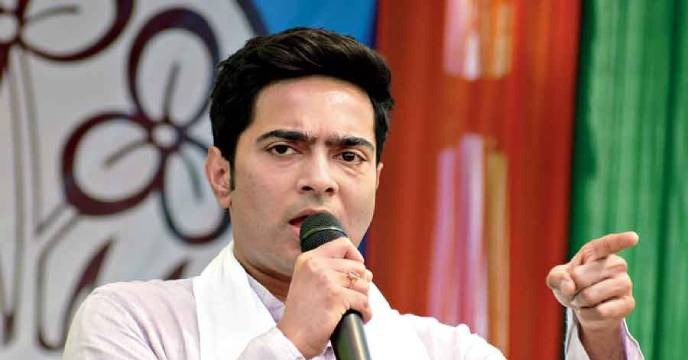
The Calcutta High Court on Wednesday dismissed Trinamool Congress MP Abhishek Banerjee's plea seeking permission to travel abroad for eye treatment after he declined the Court's suggestion to appear before a medical board at Kolkata's SSKM Hospital to determine whether the treatment could be provided in India.Justice Saugata Bhattacharyya held that the Court, not being a medical expert,...
This is a premium content
Available exclusively to
Our subscribers
Subscribe Premium 
INR 1099+GST
Your support helps us to bring you more content at
an affordable subscription scheme !!!
All payment options available
The Calcutta High Court on Wednesday dismissed Trinamool Congress MP Abhishek Banerjee's plea seeking permission to travel abroad for eye treatment after he declined the Court's suggestion to appear before a medical board at Kolkata's SSKM Hospital to determine whether the treatment could be provided in India.
Justice Saugata Bhattacharyya held that the Court, not being a medical expert, required an independent medical opinion before deciding whether overseas treatment was indispensable.
However, Banerjee, through Senior Advocate Rebecca John, refused to undergo the medical examination, insisting that he wished to continue treatment with the specialist who had previously operated on him in the United States.
The matter was taken up after the Supreme Court directed the High Court to dispose of Banerjee's application within a week.
Appearing for Banerjee, Senior Advocate Rebecca John argued that the criminal cases against him carried a maximum punishment of three years, with most being bailable offences. She submitted that Banerjee had previously been permitted to travel abroad for treatment in proceedings initiated by the Enforcement Directorate and had travelled overseas on several occasions between 2023 and 2025, always returning to India.
"He went as many as 12 times between 2023 and 2025... I have always gone and come back. I have a wife and two children in Calcutta. I am an MP with a diplomatic passport. Every movement can be checked by the State," John submitted, adding that Banerjee had fully cooperated with the investigation and there would be no prejudice to the prosecution if permission were granted.
The State opposed the plea, contending that there was no medical emergency requiring treatment abroad.
During the hearing, the Court repeatedly observed that if the treatment could be effectively administered in India, there was no necessity for Banerjee to travel overseas.
"It is important for him to get treatment but if it can be done in Kolkata or anywhere in India then there is no need to go abroad... Whether it is abroad is immaterial. It is ensured that he will get appropriate treatment," the Court observed.
Justice Bhattacharyya proposed constituting a medical board from the Ophthalmology Department of SSKM Hospital to examine Banerjee and furnish an opinion on whether the treatment necessarily required him to travel abroad.
"I will direct the Ophthalmology Department of SSKM... to constitute a board... If medical experts say that going abroad is absolutely necessary, then I will accept," the Court said.
John, however, submitted that Banerjee had undergone surgeries at Johns Hopkins Hospital in the United States and required continuity of treatment from the same specialists.
"The eye surgery was performed in John Hopkins USA... there is a need to reassess after the treatment by the specialist where he was being treated. Continuity of treatment is advisable after I've had two surgeries in the USA," she argued.
She further contended that Banerjee was not in custody and therefore could not be compelled to appear before a medical board merely because he was seeking permission to travel.
Relying on the Supreme Court's decision in Maneka Gandhi, John argued that the right to travel abroad forms part of the fundamental rights guaranteed under the Constitution and that Banerjee had the freedom to choose the doctor and country where he wished to receive treatment.
The Court, however, expressed reservations regarding the medical documents relied upon by Banerjee, noting that the physician's opinion annexed with the application did not disclose the doctor's registration number or institutional affiliation.
"I am not getting the credibility of the document you have relied upon... He is not indicating his registration number. Which institute is he with?" the Court remarked.
When the Court repeatedly sought clarification on whether Banerjee was willing to appear before the SSKM medical board, Senior Advocate John stated that her clear instructions were that he wished to travel abroad and would not submit to examination by the board.
Recording this position, the Court observed that there were around 15 criminal cases pending against Banerjee, with proceedings continuing in several of them, making it necessary for the Court to satisfy itself that overseas travel was medically unavoidable.
Dictating the order, the Court observed that the medical opinion annexed by the petitioner could not be readily accepted since the physician had not disclosed his registration details. It reiterated that neither the Court nor counsel were medical experts and that an independent assessment was therefore necessary.
The Court held that had Banerjee agreed to appear before the medical board, it would have examined the board's opinion before deciding whether permission to travel abroad ought to be granted.
However, since Banerjee expressly declined to undergo the examination, the Court held that there was no reason to keep the application pending.
"In view of such submission, this Court finds the issue agitated in the application ought not to be kept pending further. Hence, the application is dismissed," the Court held.
Srinjoy Das
Srinjoy Das is a Principal Correspondent with LiveLaw, covering the Calcutta High Court

