



- Home
- /
- High Courts
- /
- Calcutta High Court
- /
- Calcutta High Court Grants Bail To...
Calcutta High Court Grants Bail To Man Accused Of Extorting Over ₹21 Crore By Posing As ED Officer
Srinjoy Das
9 Sept 2026 3:05 PM IST
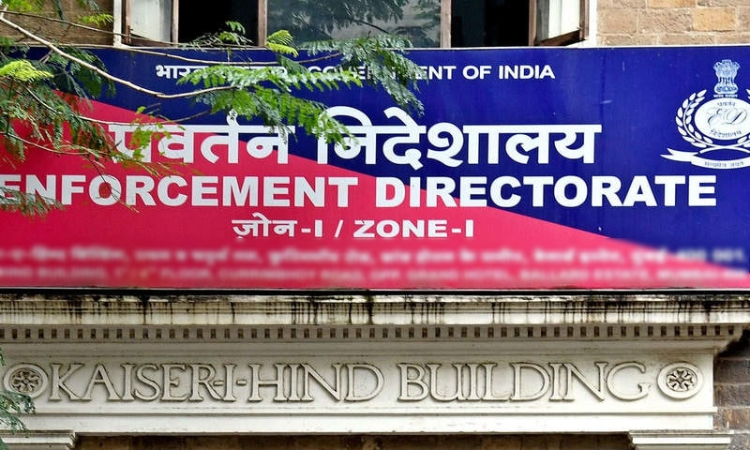
The Calcutta High Court has granted bail to Sk. Jinnar Ali, who is accused of extorting money from individuals by impersonating an Enforcement Directorate officer, observing that his prolonged incarceration and the pendency of the investigation into the predicate offences were mitigating circumstances.Justice Jay Sengupta passed the order in a bail application arising out of a money...
This is a premium content
Available exclusively to
Our subscribers
Subscribe Premium 
INR 1099+GST
Your support helps us to bring you more content at
an affordable subscription scheme !!!
All payment options available
The Calcutta High Court has granted bail to Sk. Jinnar Ali, who is accused of extorting money from individuals by impersonating an Enforcement Directorate officer, observing that his prolonged incarceration and the pendency of the investigation into the predicate offences were mitigating circumstances.
Justice Jay Sengupta passed the order in a bail application arising out of a money laundering case pending before the Chief Judge, City Sessions Court, Calcutta.
The Court, however, made it clear that the allegations against Ali were “far too serious” and that he had not been able to overcome the restrictions under Section 45 of the Prevention of Money Laundering Act (PMLA).
The prosecution alleged that Ali had duped individuals of huge sums by posing as an ED officer and had prepared forged documents to create an impression of legitimacy. According to the Enforcement Directorate, searches conducted at his premises led to the recovery of fake identity cards, visiting cards, rubber stamps, letterheads and letters purportedly issued by the ED.
The agency also alleged that Ali had projected himself as the Chairman of the National Anti-Trafficking Committee, claimed to be registered under NITI Aayog, and operated websites designed to resemble government websites. It was further alleged that he had portrayed his wife as a CBI officer before various victims.
The case originated from an FIR registered by Bidhannagar South Police Station on June 18, 2025, following a complaint by Tapan Kumar Poi. The complaint alleged that Ali and another individual had contacted Poi in 2023, falsely accused him of conducting illegal sand mining operations and threatened him with raids, property seizure and arrest.
The prosecution alleged that Poi was forced to pay ₹21.30 crore in cash between August 2023 and June 2024. The ED subsequently registered an ECIR on July 1, 2025, and arrested Ali on July 2, 2025.
The ED opposed bail, contending that the investigation into the predicate offence was still pending and that the proceeds of crime could not be assumed to be limited to the amount mentioned in Poi's complaint. It argued that the material collected during investigation disclosed transactions involving several victims and that the accused had failed to explain the source of cash deposits and funds used to acquire immovable properties.
The agency further submitted that the trial was at an advanced stage, with evidence of prosecution witnesses having commenced, and that there were 12 vulnerable witnesses. It apprehended that Ali, if released, could influence witnesses, tamper with evidence or abscond.
The petitioner, on the other hand, argued that the dispute with Poi was essentially commercial in nature. Reliance was placed on a legal notice issued by Poi in October 2024 seeking repayment of ₹20 lakh, which, according to the petitioner, did not contain any allegation of impersonation as an ED officer.
The petitioner also contended that the ED had relied on statements recorded in another money laundering case without obtaining permission from the Court, and that the grounds of arrest were therefore contrary to natural justice and Article 22 of the Constitution.
Justice Sengupta noted that the Supreme Court had held that prolonged incarceration may, in certain cases, outweigh the rigours of Section 45 of the PMLA. Referring to the decisions in Senthil Balaji and Manish Sisodia, the Court observed that Ali had been in custody for more than a year.
The Court also took note of the fact that Ali had been shown arrested in the predicate offence case and was subsequently released on bail by the Magistrate. Importantly, the investigation into the predicate offences had not yet been completed.
“Moreover, from the materials collected during investigation in the PML Act case, it appears that the Enforcement Directorate had dealt with original issues that did not necessarily pertain to the parking of the tainted money and some did not even have any mention in the predicate offences case,” the Court observed.
The Court added that such issues could fairly be the subject matter of another predicate offence case and that it would be for the Trial Court to finally decide the relevance of the materials, unless they were ultimately covered by the original predicate offence case.
While noting that the prosecution had handled the trial better and that some witnesses had already been examined, the Court held that the petitioner's presence during trial could be ensured through appropriate conditions.
The bail application was accordingly allowed.
Ali was directed to furnish a bond of ₹1 lakh with two sureties of like amount, one of whom must be local, to the satisfaction of the learned CJM, Calcutta.
The Court imposed several conditions, including surrender of his passport, a prohibition on leaving the territorial jurisdiction of the Trial Court without permission, and disclosure of his mobile number and place of residence to the investigating officer and the Trial Court.
He was also directed not to intimidate or contact witnesses in any manner during the pendency of the trial and to appear before the Trial Court regularly.
The Court clarified that any violation of the conditions would empower the Trial Court to cancel the bail without further reference to the High Court.
Case Title: Sk. Jinnar Ali @ Jinnar Ali v. Enforcement Directorate
Case No.: C.R.M. (R) 06 of 2026

Srinjoy Das
Srinjoy Das is a Principal Correspondent with LiveLaw, covering the Calcutta High Court

