



- Home
- /
- High Courts
- /
- Calcutta High Court
- /
- Calcutta High Court Refuses Probate...
Calcutta High Court Refuses Probate Of 2001 Will, Cites Contradictory Witness Testimony; Due Execution Not Proved Under Succession Act
Srinjoy Das
25 Feb 2026 6:45 PM IST
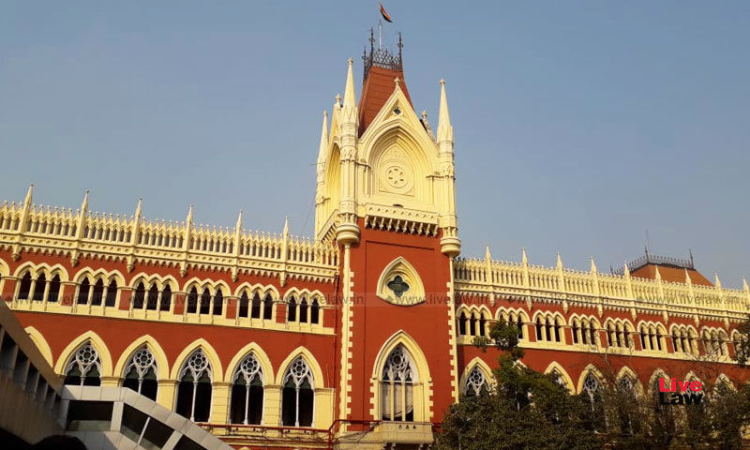
The Calcutta High Court has refused to grant probate of a 2001 Will in a contentious family dispute, holding that the propounder failed to prove its due execution in the manner mandated under Section 63 of the Indian Succession Act and Section 68 of the Evidence Act. Delivering judgment in a testamentary suit, Justice Sugato Majumdar observed that when suspicious circumstances surround...
This is a premium content
Available exclusively to
Our subscribers
Subscribe Premium 
INR 1099+GST
Your support helps us to bring you more content at
an affordable subscription scheme !!!
All payment options available
The Calcutta High Court has refused to grant probate of a 2001 Will in a contentious family dispute, holding that the propounder failed to prove its due execution in the manner mandated under Section 63 of the Indian Succession Act and Section 68 of the Evidence Act.
Delivering judgment in a testamentary suit, Justice Sugato Majumdar observed that when suspicious circumstances surround the execution of a Will, the burden on the propounder becomes heavier and must be discharged through clear, cogent and reliable evidence. The Court held that contradictory testimony of the sole attesting witness and failure to examine the second attesting witness were fatal to the probate claim.
The case arose from a probate petition filed by one of the sons of late Gour Lal Mitra, seeking probate of an alleged last Will dated 28 February 2001. After citations were issued, the testator's other children entered caveats and contested the Will, alleging that the testator lacked authority to bequeath several properties, that the disposition was unnatural, and that the Will had been procured by undue influence and coercion. They also questioned whether the Will had been validly executed and attested in accordance with law.
On the issue of testamentary capacity, the Court found no merit in the challenge. Witnesses consistently deposed that the testator was physically fit and mentally alert at the time of execution. Even defence witnesses admitted that he was strong-willed. The Court clarified that doubts regarding the testator's title to the properties could not be equated with lack of mental capacity, and further reiterated that a probate court does not decide questions of ownership or title to the estate.
However, serious infirmities emerged regarding proof of execution. While the Will bore the date 28 February 2001, official registration records showed that it had been registered on 27 February 2001. The principal attesting witness gave inconsistent statements, at different points claiming that execution and registration occurred on the same day, but alternating between the two dates. The Court held that the Will could not have been executed after registration and that these contradictions rendered his testimony unreliable.
Further, although the law requires attestation by two witnesses and at least one trustworthy attesting witness must prove execution, the second attesting witness—who was alive and had earlier affirmed execution by affidavit—was not examined. The Court held that withholding this crucial witness, particularly in the face of suspicious circumstances, amounted to suppression of the best available evidence. It observed that merely producing one attesting witness is insufficient when his evidence is doubtful and fails to establish that both witnesses signed in the presence of the testator.
Emphasising that compliance with statutory formalities must be strictly proved, the Court held that due execution of the Will had not been established. In the absence of proof that the Will was properly attested as required by Section 63, the propounder was not entitled to probate. Consequently, the testamentary suit was disposed of and probate was refused, while the connected civil suit was directed to be placed before the appropriate bench for determination.
Case: CHANDRA DAS & ORS. VS KAMAL MITRA
Case No: CS/90/2008

Srinjoy Das
Srinjoy Das is a Principal Correspondent with LiveLaw, covering the Calcutta High Court

