



- Home
- /
- High Courts
- /
- Calcutta High Court
- /
- Calcutta High Court Refuses To...
Calcutta High Court Refuses To Quash Criminal Case Over Alleged Illegal Filling Of Ponds For University Project
Srinjoy Das
5 Feb 2026 1:00 PM IST
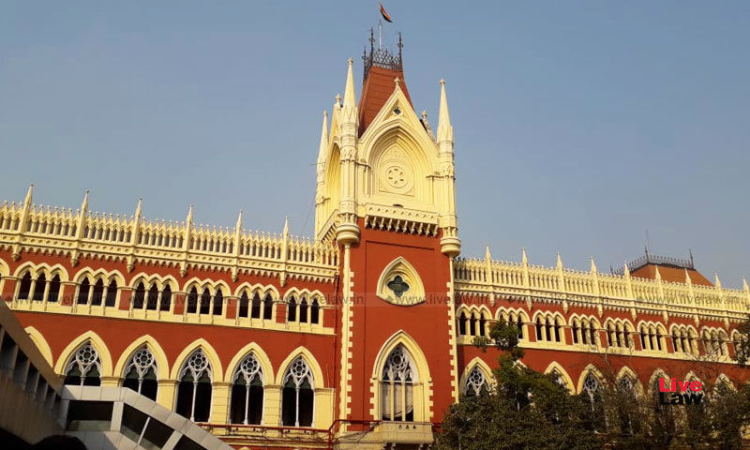
The Calcutta High Court has dismissed a criminal revisional application seeking quashing of criminal proceedings relating to the alleged illegal filling up of water bodies and violation of land use laws in connection with a proposed university project at the Ramkrishna Vivekananda Mission campus. Justice Chaitali Chatterjee Das held that the allegations raised disputed questions of fact...
This is a premium content
Available exclusively to
Our subscribers
Subscribe Premium 
INR 1099+GST
Your support helps us to bring you more content at
an affordable subscription scheme !!!
All payment options available
The Calcutta High Court has dismissed a criminal revisional application seeking quashing of criminal proceedings relating to the alleged illegal filling up of water bodies and violation of land use laws in connection with a proposed university project at the Ramkrishna Vivekananda Mission campus. Justice Chaitali Chatterjee Das held that the allegations raised disputed questions of fact requiring detailed examination and could not be decided at the threshold under the Court's revisional or inherent jurisdiction.
The petitioner, a reputed scientist and non-resident Indian, was accused of illegally filling up two ponds within the Mission's property at Agarpara without obtaining prior permission from the competent authorities. The criminal case arose from a complaint lodged in February 2014, leading to registration of FIR under Section 17 of the West Bengal Inland Fisheries Act, 1984 and Section 4D of the West Bengal Land Reforms Act, 1955, followed by submission of a charge sheet.
The petitioner contended that he had been authorised by the then Secretary of the Mission, late Swami Nityananda Maharaj, under a memorandum of understanding executed in 2013, pursuant to which he was entrusted with construction of an international university project funded by a donation of ₹150 crore through his philanthropic foundation. It was argued that the criminal proceedings were mala fide, stemmed from a subsequent civil dispute after change in the Mission's leadership, and were legally untenable as cognizance under the Inland Fisheries Act could only be taken on a “complaint” by a designated authority, not on a police report.
Opposing the plea, the Mission and the State submitted that the petitioner, along with his agents, had carried out large-scale filling of water bodies, felling of trees and preparatory construction work without sanctioned plans or statutory permissions. It was contended that investigation revealed sufficient materials to establish prima facie offences and that the Magistrate had lawfully taken cognizance. The Mission also disputed the validity of the alleged agreement and asserted that the petitioner had acted beyond any authority conferred upon him.
Examining the statutory framework, the High Court held that offences under Section 17A of the Inland Fisheries Act are cognizable and non-bailable, and that the legislative intent was to permit prosecution without being fettered by the restrictions applicable to other provisions of the Act. The Court rejected the argument that cognizance could be taken only on a formal complaint by a fisheries officer, noting that prima facie materials collected during investigation could not be ignored at this stage.
The Court further observed that although civil disputes concerning the validity of agreements and rights of parties were pending, such pendency did not bar criminal proceedings where statutory violations were alleged. It found that while the petitioner may have been entrusted with the project, such entrustment did not absolve him from complying with mandatory legal requirements before altering the nature of land or water bodies.
Relying on Supreme Court precedents cautioning against conducting “mini trials” at the quashing stage, the Court held that it could not evaluate disputed documents or determine whether prior permissions existed. Since charges had not yet been framed, the petitioner was at liberty to place all materials before the trial court, which would decide whether a case for framing of charge was made out.
Holding that the allegations required in-depth factual scrutiny and that prima facie materials existed to justify continuation of proceedings, the High Court refused to quash the FIR and charge sheet. Accordingly, the criminal revisional application was dismissed, with the Court clarifying that no opinion was expressed on the merits of the case.
Case: DR. PRADIP KUMAR GHOSH VS THE STATE OF WEST BENGAL & ANR
Case No: CRR 386 OF 2015

Srinjoy Das
Srinjoy Das is a Principal Correspondent with LiveLaw, covering the Calcutta High Court

