



- Home
- /
- High Courts
- /
- Calcutta High Court
- /
- Can Speaker Suo Moto Ignore...
Can Speaker Suo Moto Ignore Majority Party's LoP Proposal? Calcutta High Court Questions Ritabrata Banerjee's Appointment As LoP
Srinjoy Das
16 Jun 2026 4:34 PM IST
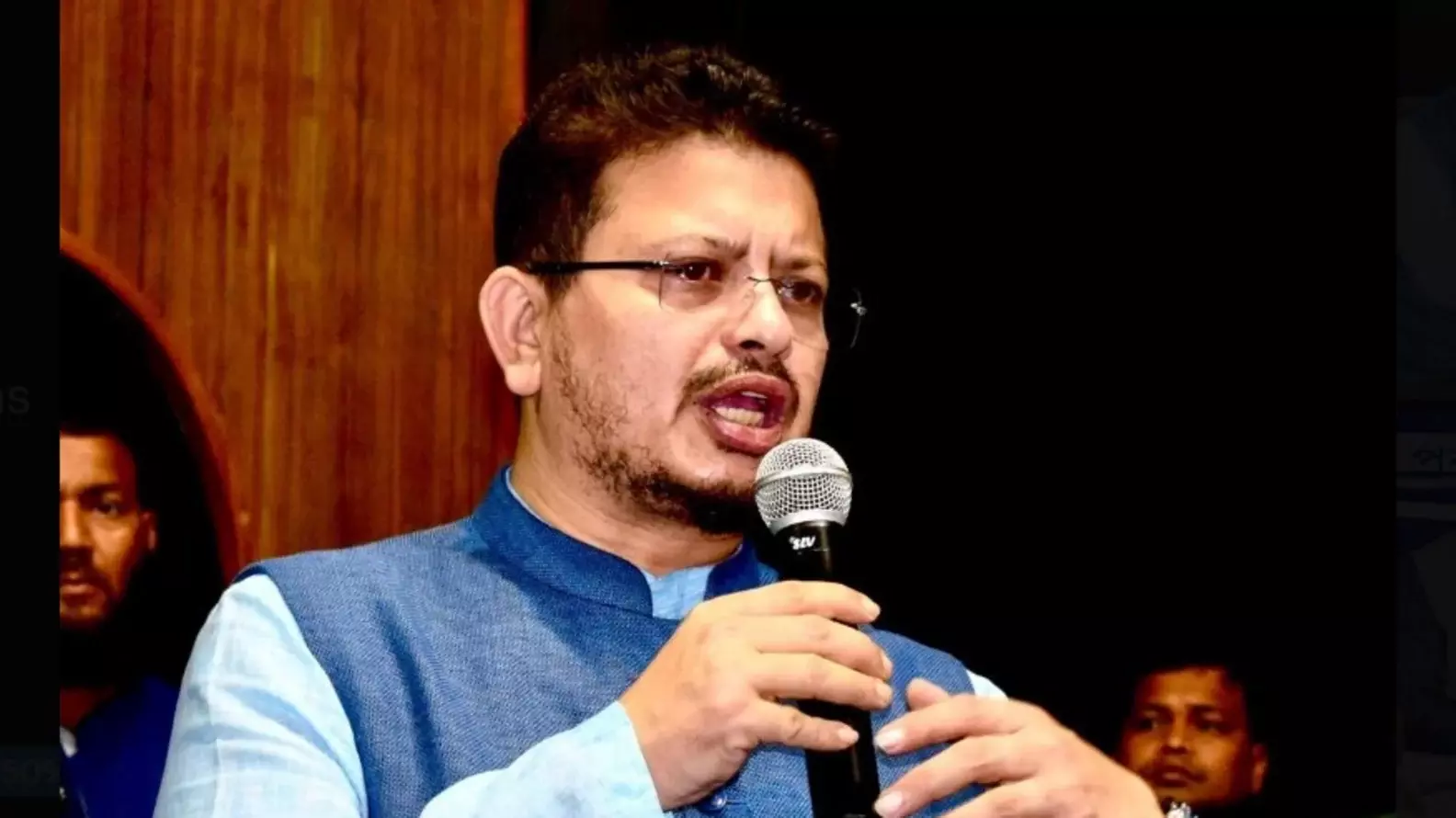
The Calcutta High Court on Tuesday questioned whether the West Bengal Assembly Speaker can ignore the name proposed by the majority political party as the Leader of Opposition (LoP) and pass an order to appoint some other individual.Justice Krishna Rao framed the question while hearing a plea challenging the recognition of rebel MLA Ritabrata Banerjee as LoP by the West Bengal Assembly...
This is a premium content
Available exclusively to
Our subscribers
Subscribe Premium 
INR 1099+GST
Your support helps us to bring you more content at
an affordable subscription scheme !!!
All payment options available
The Calcutta High Court on Tuesday questioned whether the West Bengal Assembly Speaker can ignore the name proposed by the majority political party as the Leader of Opposition (LoP) and pass an order to appoint some other individual.
Justice Krishna Rao framed the question while hearing a plea challenging the recognition of rebel MLA Ritabrata Banerjee as LoP by the West Bengal Assembly speaker instead of the Mamata Banerjee-led faction's nominee, Sobhandeb Chattopadhyay.
The plea has been filed against the Speaker's decision recognising Banerjee as Leader of Opposition and a Chief Whip, allegedly backed by a group of rebel legislators.
During the hearing today, AAG appearing for the Speaker said that he will demonstrate whether the Speaker can exercise discretion or not, and that the ruling in the Shiva Sena case was followed by the Speaker in the matter.
At the outset, the Court asked AAG how many parties were present in the Assembly on the day when the LoP's name was proposed.
As the AAG responded that the number of parties was the same as that day, the judge remarked:
“So the name which has been proposed was given by the majority party. So i am framing the question- If the name is proposed by the majority party, can the speaker ignore that and pass any other order to appoint anyone else?”
The AAG submitted that the situation depends on the facts of each case and that the Speaker must look at the party composition.
“Unlike the Shiva Sena case, there were two resolutions. There were two disqualification proceedings in that case. Here the case is otherwise. It is under the 1936 Bengal enomulents act and there is no rival faction also…. Here the question is whether there was at all a resolution. The court must consider whether there is a prima case for interim relief,” he said.
The AAG added that in the present case, there were two resolutions dated May 06 and May 19 and that the members were made to sign the former resolution on May 19.
He said that the resolution to appoint the LoP and the admission of the petitioners were completely contrary.
“It has been stated by them that the resolution was taken on 6th May. And they have written to the speaker annexing that resolution….. The SC has held that the speaker cannot be a rubber stamp. In case of a conflict , the speaker had to tally the signatures. Here they are saying that nothing was signed on 6th may. 19th they were asked to sign on a resolution dated 6th may,” he said.
AAG then submitted that the signatures were all in block letters and none of them tallied with the signatures available in the House records.
At this stage, the judge asked: “That is correct, but see, you got the proposal and on that day you didn't have any objection on that proposal…. What is the duty of the speaker ? 70 MLAs of the opposition party sent the resolution…The speaker had to appoint. In future if anything comes he can check, but why had he started his own enquiry?”
To this, AAG submitted that every resolution is accompanied by an annexure and that the Speaker had looked into the composition of the party and their way of conducting meetings.
He said that the system of the party is to choose LoP by holding a meeting of elected members. In the meantime the situation became contentious , two elected MLAs of this party rebelled, he said.
He told Court that the complaint was made on May 20 but was placed before the speaker on May 25. He said that the letter was served on June 01 in the office of the speaker whereby the rebel MLAs were expelled.
“First, they say that the resolution of 6th was taken on 19th but their general secretary told the speaker the resolution was taken on 6th May…..They have also admitted that the resolution was signed on the 19th. On 6th there was no resolution. That became contentious,” he continued.
On this, the Court said: “Fine there is dispute on dates and signatures. But speaker received the proposal and resolution. Why he kept silent? Dispute only came on 27th May…..Person who has been appointed was proposed by who?…The political party and majority is with TMC…On whose proposal did you appoint the LoP?”
To this, AAG said: “The complaint came on 20th may. The document sent by the two rebel legislators has indicated that there was a mismatch in signatures. Then an FIR was filed and investigation started on 27th may. While this was going on, the speaker received a document from 58 MLAs from the Trinamool congress… On consideration of everything, even the SC has said it is on the facts of every case.”
While referring to the judgement in Shiva Sena case, AAG said that the order of the speaker appointing one of the rebel MLAs as LoP takes into consideration the constitution of the AITC.
On this, the Court inquired what is the duty of the speaker when he has two proposal of the same party. “He can Suo moto recognise one? Where is the rejection of the earlier proposal?,” it asked.
AAG said that the Speaker can decide under the West Bengal Enomulents Act and that the mechanism provides that it is a continuous process.
“Before this writ petition there was no request received by the speaker for detachment…Expelling from political party is not detachment for the assembly,” he said.
The Court then asked if you the Speaker has two proposals, how can the Speaker decide without calling the House about which proposal is right or wrong.
“I don't want to comment on the complaint. If only two people filed the complaint, then how is that changing the 70 MLAs to 58? If these two made a complaint, what is the duty of the speaker?…. I am failing to understand. Your speaker is so keen with 58 MLAs but when 78 MLAs came, he started all enquiries….Why is that?,” the judge said.
AAG then said that the duty of the speaker is to conduct an enquiry on getting the letter and that the Speaker, in the present case, asked for the resolution and minutes which did not match the records. He also said that the Speaker had asked for the records before taking any decision on the proposals.
Referring to the order of the speaker in recognising LoP as Ritabrata Banerjee, AAG submitted that the LoP is the leader of the opposition party having the greatest numerical strength in opposition and in case of any doubt, the question shall be decided by the speaker.
On this, the Court questioned: “there were 78 MLAs fielded by the TMC. The signature forgery is being probed. How can you say that you will accept the 58 by ignoring the first proposal? The Speaker had to decide.”
AAG responded that the decision could be taken if the legislative parties came.
At this stage, Senior Advocate Kalyan Bandopadhyay appearing for the petitioners requested that the matter be heard tomorrow, adding that he wanted an interim order in his favour.
“Now because of the situation there is also a rival group of MPs who created a bloc and approached the speaker of the Lok Sabha . Now knowing that there cannot be any bloc, they joined another party,” he said.
Accordingly, the Court listed the matter for hearing tomorrow at 2 PM.
Background
During the earlier hearing the Court noted the petitioners' contention that the person recognised as LoP was no longer part of the political party after expulsion, and told the State: "Can the Speaker recognise the rebel leader without consent of the political party...the person appointed as LoP is not in any party. He has been expelled."
Appearing for the petitioners, Senior Advocate Kalyan Bandopadhyay sought an interim stay on the Speaker's decision, contending that the recognition was contrary to the Tenth Schedule and the settled law governing the relationship between a political party and its legislature party.
Bandopadhyay submitted that a meeting of elected MLAs was held on May 6, where Sobhandeb Chattopadhyay was chosen as the party's nominee for the post of LoP. According to him, signatures of MLAs supporting Chattopadhyay were subsequently obtained and placed against his name.
He argued that the Speaker had been informed of the party's decision on multiple occasions but nevertheless proceeded to recognise a rival faction supported by 59 MLAs. Referring to Supreme Court judgments, including decisions concerning political party mergers and the Maharashtra political crisis, Bandopadhyay contended that the Tenth Schedule recognises the primacy of the political party and not merely the numerical strength of a legislature party.
"The decision of the political party must be accepted by the Speaker. Not of the legislature party," he argued, adding that the anti-defection framework would become unworkable if "political party" were equated with "legislature party".
He further submitted that the Speaker had effectively acted on the basis of support from 59 legislators while ignoring the political party's decision. According to him, such an approach undermined the object of the Tenth Schedule. Bandopadhyay also argued that the individuals recognised had already been expelled from the party and that the expulsion orders had not been challenged.
Questioning the legality of the recognition, he submitted: "How can the Speaker recognise them as LoP then?"
Urging the Court to intervene before the Assembly reconvenes on June 18, Bandopadhyay argued that the party's voice in the House must be reflected through its chosen representative and sought a stay on the Speaker's decision.
During the hearing, the Court repeatedly queried whether any formal order recognising the LoP had been published. The Bench observed that if the recognition had been granted, the order ought to be available for scrutiny.
Opposing interim relief, Additional Advocate General Billwadal Bhattacharya argued that the petition suffered from incomplete pleadings and that no specific prayer had been made for quashing the Speaker's decision. He submitted that Assembly records could be obtained through the procedure prescribed under the House Rules and sought time to place the relevant materials before the Court.
Bhattacharya informed the Bench that he would file an affidavit along with all relevant records, including the order under challenge, and would also raise objections regarding the maintainability of the petition. He further contended that the reliefs sought were essentially declaratory in nature and therefore did not warrant interim orders.
When the State sought time to return before the Assembly reopens, the petitioners pressed for interim protection, apprehending that consequential steps such as allocation of seating arrangements in the House could be taken.
Tags

Srinjoy Das
Srinjoy Das is a Principal Correspondent with LiveLaw, covering the Calcutta High Court

