



- Home
- /
- High Courts
- /
- Calcutta High Court
- /
- Calcutta High Court Urges State To...
Calcutta High Court Urges State To Consider Law Against 'Vexatious Litigation', Restricts PILs By Frequent Litigant
Srinjoy Das
19 Oct 2026 10:38 PM IST
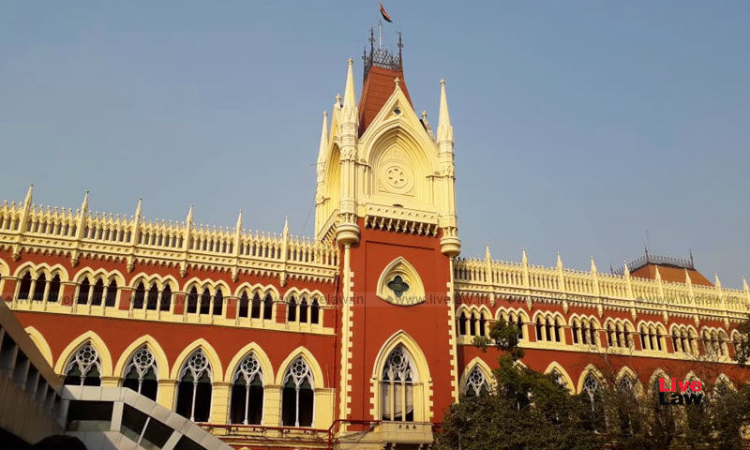
The Calcutta High Court has observed that it is “high time” West Bengal introduced a Vexatious Litigation (Prevention) Act, similar to laws in Maharashtra, Rajasthan and Tamil Nadu, in view of a litigant's extensive filing of cases and Right to Information (RTI) applications.A division bench of Chief Justice Ravindra Vithalrao Ghuge and Justice Om Narayan Rai called upon the...
This is a premium content
Available exclusively to
Our subscribers
Subscribe Premium 
INR 1099+GST
Your support helps us to bring you more content at
an affordable subscription scheme !!!
All payment options available
The Calcutta High Court has observed that it is “high time” West Bengal introduced a Vexatious Litigation (Prevention) Act, similar to laws in Maharashtra, Rajasthan and Tamil Nadu, in view of a litigant's extensive filing of cases and Right to Information (RTI) applications.
A division bench of Chief Justice Ravindra Vithalrao Ghuge and Justice Om Narayan Rai called upon the State's Additional Government Pleader to initiate steps in consultation with the Advocate General to impress upon the State Government the need for introducing such legislation.
The Court also directed that any future petition filed by the litigant, Biplab Kumar Chowdhury, which has the semblance of or is in the nature of a Public Interest Litigation (PIL), shall not be registered as a PIL unless it is first placed before the appropriate bench to determine whether it deserves to be treated as one.
The directions were passed on October 15 while dealing with a petition that Chowdhury sought to withdraw.
The bench recorded that documents submitted by the North Dum Dum Municipality indicated that Chowdhury had filed 316 RTI applications over nine years, raising more than 1,000 queries. The Municipality also relied on an earlier High Court order which had noted that he had filed 195 cases, including 43 PILs.
The Municipality further pointed out that the State Information Commission had disposed of 549 cases filed by Chowdhury, according to an order dated August 17, 2023.
It was also submitted that Chowdhury had filed 10 RTI applications within seven days, raising a large number of queries. The Municipality alleged that he had misused the provisions of the Right to Information Act and sought to prevent him from filing further applications.
The Additional Advocate General also submitted that the case was fit for restricting Chowdhury from filing further PIL petitions.
However, the Court clarified that it would not make any observation at that stage on restricting his ability to file RTI applications. It left it open to the Municipality to pursue appropriate remedies before the competent forum or court, including by invoking the High Court's writ jurisdiction.
The bench also recorded that Chowdhury had deposited costs of Rs.25,000 and Rs.50,000 imposed in earlier proceedings. His counsel tendered a demand draft for Rs.50,000 in compliance with an order passed on October 31, 2022, in WPA(P) 211 of 2022. The Court directed the Registry to hand over the draft to the West Bengal State Legal Services Authority.
The petition was ultimately dismissed as withdrawn, without costs.
Case Title: Biplab Kumar Chowdhury v. State of West Bengal & Ors.

Srinjoy Das
Srinjoy Das is a Principal Correspondent with LiveLaw, covering the Calcutta High Court

