



- Home
- /
- High Courts
- /
- Calcutta High Court
- /
- Husband Cannot Be Directed To Both...
Husband Cannot Be Directed To Both Maintain Fixed Deposit For Child & Pay Monthly Child Maintenance Separately: Calcutta High Court
Srinjoy Das
3 Aug 2026 3:05 PM IST
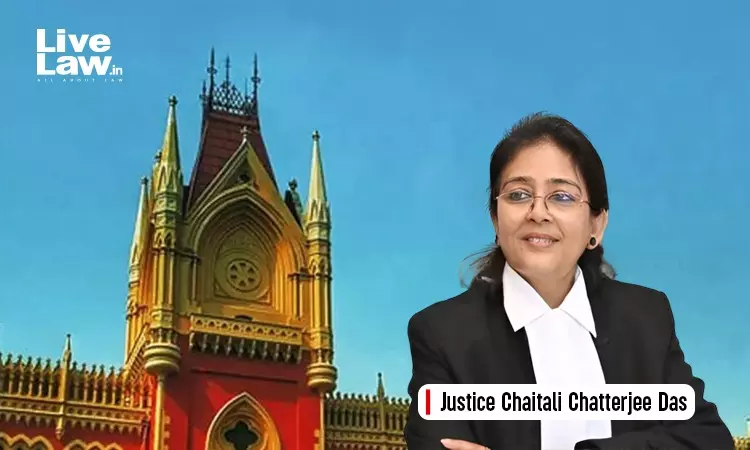
The Calcutta High Court has held that while a father may voluntarily create a fixed deposit to secure the future of his child, such a deposit cannot be treated as a substitute for monthly maintenance. At the same time, if monthly maintenance is ultimately awarded, the father cannot be compelled to continue the fixed deposit in addition to making periodic maintenance payments.Justice...
This is a premium content
Available exclusively to
Our subscribers
Subscribe Premium 
INR 1099+GST
Your support helps us to bring you more content at
an affordable subscription scheme !!!
All payment options available
The Calcutta High Court has held that while a father may voluntarily create a fixed deposit to secure the future of his child, such a deposit cannot be treated as a substitute for monthly maintenance. At the same time, if monthly maintenance is ultimately awarded, the father cannot be compelled to continue the fixed deposit in addition to making periodic maintenance payments.
Justice Chaitali Chatterjee (Das) partly allowed a revision petition challenging a Magistrate's order which had refused maintenance to a wife and minor child while directing the husband to create a fixed deposit of ₹11 lakh in the child's name. The High Court set aside the direction relating to the fixed deposit and remanded the issue of child maintenance to the Magistrate for fresh adjudication.
"The learned Court is directed to ensure in case of granting monthly maintenance in favour of the child to allow the opposite party/father to close the existing fixed deposit if he intends to do so, keeping in mind that the opposite party should not be saddled with both monthly maintenance as well as to continue with the fixed deposit," the Court observed.
The petitioner-wife had challenged an October 2022 order passed by the Judicial Magistrate, Kalyani, which rejected her claim for maintenance under Section 125 of the Code of Criminal Procedure for herself and her minor son. Instead, the Magistrate had directed the husband to hand over a bank fixed deposit of ₹11 lakh in the child's name, with the mother as nominee.
Before the High Court, the wife argued that although interim maintenance of ₹10,000 per month had earlier been awarded for the child, the amount remained unpaid and the Magistrate subsequently refused maintenance altogether despite her having to maintain herself and the child. She also placed a chart before the High Court detailing the child's educational expenses, though these documents had not been produced before the trial court.
The husband, on the other hand, contended that he had already complied with the Magistrate's order by depositing ₹11 lakh after taking a loan and argued that the amount, along with accrued interest, adequately secured the child's future.
Examining the record, the High Court noted that the wife was highly qualified, holding an MBA and PGDM, and had been earning a salary comparable to that of the husband. The trial court had found that both parties had almost similar financial status and that no material had been produced to establish that the husband earned additional income from the family business.
Justice Chatterjee (Das) agreed that there was no infirmity in the refusal to grant maintenance to the wife, observing that both spouses had comparable incomes and that the wife had not subsequently placed any material before the Court to substantiate her claim that she was no longer employed.
However, the Court found fault with the direction substituting child maintenance with a fixed deposit.
Referring to the Supreme Court's decision in Rajnesh v. Neha, the Court observed that although there is no prohibition on a father creating a fixed deposit for the future security of the child, "that cannot be substituted [for] the monthly maintenance."
Since the actual expenses incurred towards the child's upbringing had not been placed before the Magistrate, the High Court held that the issue of child maintenance required fresh consideration.
Accordingly, the Court set aside the direction requiring the husband to maintain the ₹11 lakh fixed deposit and remanded the matter to the Magistrate for a fresh hearing on child maintenance. The wife was granted liberty to file a fresh affidavit along with supporting documents regarding the child's expenses, and the Magistrate was directed to dispose of the matter preferably within three months. Pending such adjudication, the wife was permitted to withdraw the interest earned on the fixed deposit towards the child's maintenance.
Case Title: Poulami Tarafdar (Saha) v. Dibesh Saha
Case No.: CRR 146 of 2023

Srinjoy Das
Srinjoy Das is a Principal Correspondent with LiveLaw, covering the Calcutta High Court

