



- Home
- /
- High Courts
- /
- Calcutta High Court
- /
- Improbable For Elderly In-Laws...
Improbable For Elderly In-Laws Suffering From Medical Ailments To Assault Daughter-In-Law: Calcutta High Court Quashes S.498A IPC Case
Srinjoy Das
9 April 2026 8:00 PM IST
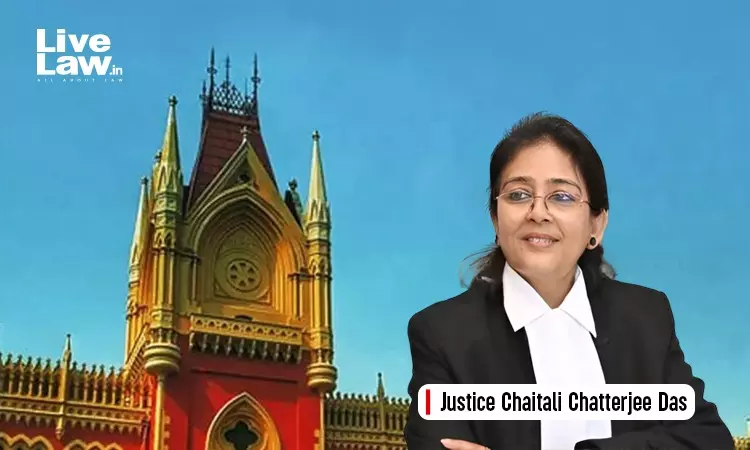
“To allow such proceedings to continue would be a sheer abuse of the process of the court,” the Calcutta High Court observed while quashing criminal proceedings under inter alia Sections 498A IPC, and Sections 3 & 4 of the Dowry Prohibition Act against a 67-year-old father-in-law and 61-year-old mother-in-law.Justice Chaitali Chatterjee Das allowed a criminal revision petition filed...
This is a premium content
Available exclusively to
Our subscribers
Subscribe Premium 
INR 1099+GST
Your support helps us to bring you more content at
an affordable subscription scheme !!!
All payment options available
“To allow such proceedings to continue would be a sheer abuse of the process of the court,” the Calcutta High Court observed while quashing criminal proceedings under inter alia Sections 498A IPC, and Sections 3 & 4 of the Dowry Prohibition Act against a 67-year-old father-in-law and 61-year-old mother-in-law.
Justice Chaitali Chatterjee Das allowed a criminal revision petition filed by Mrigesh Kanti Nath and another, holding that the allegations made by the complainant-wife were general, non-specific, uncorroborated and directly inconsistent with the medical incapacity of the in-laws, who had undergone major surgeries during the period of the alleged assaults.
The proceedings arose from a police complaint in which the daughter-in-law alleged cruelty, dowry demand of ₹10 lakh, misappropriation of stridhan, and physical assault.
The Court noted that the father-in-law had undergone open heart bypass surgery on 6 August 2022, involving four grafts, and was discharged only on 15 August 2022. The mother-in-law had undergone knee replacement surgery in May 2022 and was in critical condition for a prolonged period.
In this backdrop, Justice Das found it “highly improbable and beyond reasonable imagination” that the parents-in-law could have inflicted physical torture upon the complainant during the relevant period.
The Court further recorded that multiple complaints had earlier been filed by the in-laws and the husband before the Jadavpur Police Station and the National Commission for Women concerning alleged mental harassment by the complainant. This, the Court held, strongly suggested that the criminal complaint of November 25, 2022 appeared to be a counterblast.
Justice Das held that the complaint did not mention any specific date, incident, manner of torture, or overt act attributable to the petitioners. The only allegations were omnibus claims that the elderly parents-in-law had “pressurised” their son to demand more money.
Quoting precedents such as Achin Gupta v. State of Haryana (2024), Ghanshyam Soni v. State (NCT of Delhi) (2025), Geeta Mehrotra v. State of U.P. and K. Subba Rao v. State of Telangana, the Court reiterated that:
“A mere casual reference or vague allegation against relatives in matrimonial disputes is insufficient. Courts must guard against the tendency to rope in all family members without specific allegations.”
The Court emphasised that Section 498A requires wilful conduct likely to cause grave injury or harassment connected with unlawful dowry demand, none of which was made out against the petitioners.
On the charge of criminal breach of trust, the Court observed that the stridhan articles were already returned to the complainant against zimmanama, and there were no allegations of dishonest retention.
Similarly, the complaint was “absolutely silent” regarding any threat constituting criminal intimidation, and mere expression of words without intention to cause alarm cannot attract Section 506 IPC.
Relying on Bhajan Lal, Mahmood Ali, and Niharika Infrastructure, Justice Das noted that the High Court must exercise its inherent jurisdiction when the criminal process is misused:
“It would be a travesty of justice to permit proceedings to continue on vague, absurd or inherently improbable allegations.”
The Court found that continuing the case against the elderly petitioners would amount to abuse of process, especially as the charge sheet contained no specific incriminating material.
Case: MRIGESH KANTI NATH & ORS. VS THE STATE OF WEST BENGAL & ANR
Case No: CRR 4014 OF 2023
Tags

Srinjoy Das
Srinjoy Das is a Principal Correspondent with LiveLaw, covering the Calcutta High Court

