Indefinite Suspension Of Excise Licence Without Reasons Is “Unjust And Unconscionable”: Calcutta High Court
Srinjoy Das
14 Nov 2026 5:54 PM IST
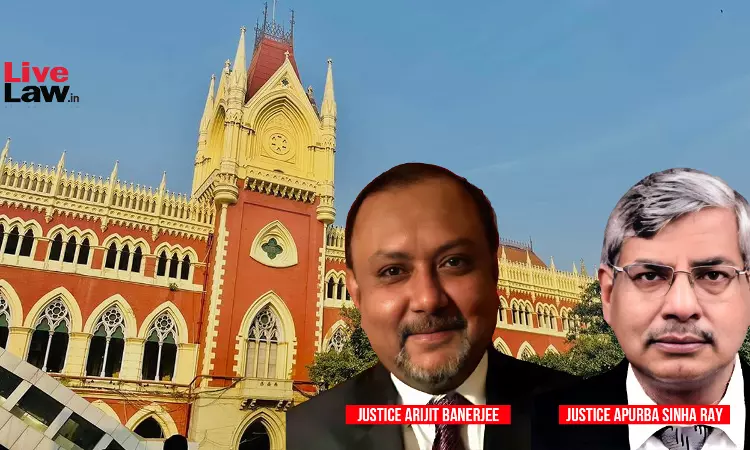
The Calcutta High Court has held that indefinite suspension of temporary excise licences without disclosing cogent reasons is “unjust and unconscionable”, directing the West Bengal Government to allow liquor shop owners, whose licences were suspended during the 2019 General Election, to resume business for the unexpired portion of their original six-month licence tenure.
A Division Bench of Justice Arijit Banerjee and Justice Apurba Sinha Ray observed that although the State has the power to suspend or cancel temporary liquor licences, it is under an obligation to disclose reasons when such licences are kept under suspension for an indefinite period, particularly after the circumstances prompting the suspension have ceased to exist.
“It is true that the State has the absolute right to cancel or suspend temporary licenses, but after granting a temporary license, if the State chooses to suspend it for an indefinite period, the State is under an obligation to disclose the reasons for such action,” the Court observed.
The Bench questioned whether the State's decision to keep the licences suspended long after the General Election had concluded was backed by acceptable reasons. It noted that the licensees had been prevented from operating their businesses despite having invested substantial amounts in infrastructure and liquor stocks, without any allegation of default or breach of licence conditions.


The Court was hearing three connected appeals filed by liquor licensees challenging orders of Single Judges dismissing their writ petitions concerning the suspension and subsequent discontinuation of temporary excise licences granted under the West Bengal Excise Rules, 2003.
The appeals were MAT 812 of 2024, MAT 847 of 2022 and MAT 418 of 2023.
Background
The dispute arose after the West Bengal Government introduced a new category of excise licence under Rule 4(q) of the West Bengal Excise Rules, 2003, through a notification dated October 3, 2018, permitting the sale of all kinds of liquor, except tari and pachwai, from liquor shops.
Pursuant to the notification, the appellants were granted temporary licences for a period of six months.
However, on March 2, 2019, the Excise Commissioner issued an order suspending the operation of all such liquor shops until further orders, citing the 2019 General Election and instructions of the Election Commission.
The appellants contended that the suspension was not on account of any breach of licence conditions or default on their part. Although the General Election concluded on May 23, 2019, the suspension continued.
Following their approach to the High Court, the Excise Commissioner, on August 22, 2019, rescinded the suspension order. However, the licensees were not permitted to resume business for the remaining period of their licences.
Instead, the order stated that continuation of the temporary licences would be considered by the Excise Directorate, having regard to demand and supply, law and order and other relevant factors.
While the issue remained under consideration, the State Government issued notifications dated December 27, 2019, omitting the relevant licensing category under Rule 4(q) from the 2003 Rules.
The licensees challenged the State's action, contending that their already-granted licences could not be rendered ineffective through subsequent regulatory changes without giving them an opportunity to operate for the stipulated period.
In another connected appeal, the appellants, who were operating foreign liquor 'Off' shops under Rule 4(v), challenged the omission of the relevant licensing category through Notification No. 2067-F.T. dated December 27, 2019.
Appellants' submissions
Senior Advocate Aninda Kumar Mitra, appearing for the appellants in two of the appeals, submitted that persons granted temporary licences for liquor shops were required to make substantial investments in infrastructure and logistics. Such investments were made with the expectation that, upon complying with the applicable rules and regulations, they would be allowed to continue their businesses.
Relying on the doctrine of legitimate expectation, the appellants argued that the State could not arbitrarily withdraw the benefit of licences already granted after the licensees had fulfilled the prescribed conditions and paid the requisite fees.
They further contended that the Excise Commissioner lacked the authority to suspend the licences under Section 42 of the Bengal Excise Act, 1909, as the licences had been granted by the Collector. It was also argued that the General Election could not constitute a justification for keeping the licences suspended long after the election had concluded.
Opposing the appeals, the State argued that the liquor trade was *res extra commercium* and that no citizen possessed a fundamental right under Article 19(1)(g) of the Constitution to claim the grant, renewal or continuation of a liquor licence.
It was further submitted that Section 37 of the Bengal Excise Act provided for the grant of temporary licences for a period not exceeding six months. Since the appellants' licences had expired by efflux of time, they could neither be revived nor extended.
Court's observations
Examining the circumstances surrounding the suspension, the Division Bench noted that the temporary licences had been granted by the Collector of the district, Nadia, while the suspension order dated March 2, 2019, had been issued by the Excise Commissioner.
The Court observed that Section 42 of the Bengal Excise Act provides that the authority which granted a licence may suspend or cancel it on the grounds specified under the provision. However, the suspension order did not mention the statutory provision or rule under which the Excise Commissioner had exercised the power.
The Bench also questioned why the suspension continued even after the conclusion of the General Election on May 23, 2019.
It noted that although the suspension order had initially been issued in connection with the election, no reason was disclosed for keeping the licences suspended for a prolonged period thereafter.
The Court observed that the licensees had invested substantial amounts of money and purchased stocks of wine and foreign liquor to operate their shops. Their businesses were effectively brought to a halt without any allegation of default or breach of licence conditions.
The Bench remarked that the State was required to disclose appropriate reasons for prolonging the suspension, particularly when the temporary licences had been granted for a limited period of six months.
“The action on the part of the State authorities in this regard is unjust and unconscionable,” the Bench observed.
The Court further remarked that the licensees were businessmen and not criminals, and their circumstances ought to have been considered by the authorities in accordance with the applicable rules and regulations.
The Bench also disagreed with the reasoning adopted by an earlier Single Judge that the suspension was intended to protect public health, observing that no such justification was reflected in the orders issued by the State authorities.
It held that the Court could not supply reasons on behalf of the State when the authorities themselves had failed to disclose any justification for their action.
“Therefore, it has been very rightly argued from the side of the appellants that the Court cannot supplant reasons in favour of the State authorities,” the judgment stated.
The Court clarified that although the State has the power to suspend or cancel temporary licences, such power must be exercised fairly and reasonably. The authorities had failed to establish any default on the part of the appellants necessitating the suspension or its continuation.
The Court noted that the temporary licences had neither been cancelled nor revived after the suspension was rescinded. The State could not subsequently contend that the licences had expired by efflux of time when the licensees had not been afforded an opportunity to operate their businesses for the stipulated period.
Finding merit in the appellants' submissions, the Bench directed the State Government to allow them to resume their businesses for the balance period of their temporary licences.
The shops were directed to be allowed to operate from December 15, 2026, until completion of the remaining portion of their original six-month licence tenure, enabling the licensees to clear the stocks accumulated in their respective shops.
The Court also granted the appellants liberty to file appropriate applications under Rule 9(1)-F of the West Bengal Excise Rules, 2003. If such applications were filed, the concerned State authorities were directed to dispose of them in accordance with law within three months.
Pending representations filed by the appellants, particularly those of Goutam Mondal and others, were also directed to be decided within three months.
Further, the Bench directed that notifications dated December 27, 2019, bearing Nos. 2067-F.T. and 2068-F.T., would remain in abeyance until the balance period of the temporary licences expired, but only insofar as the appellants in the three connected appeals were concerned.
Accordingly, the High Court disposed of all three appeals without costs.
Case Title: Barun Malakar & Ors. v. State of West Bengal & Ors. (with connected appeals)
Case Nos.: MAT 812 of 2024, MAT 847 of 2022 and MAT 418 of 2023