



- Home
- /
- High Courts
- /
- Calcutta High Court
- /
- “No Dying Declaration, No Proof Of...
“No Dying Declaration, No Proof Of Cruelty”: Calcutta High Court Acquits Husband In S.498A IPC Case After 24 Years
Srinjoy Das
29 March 2026 6:55 PM IST
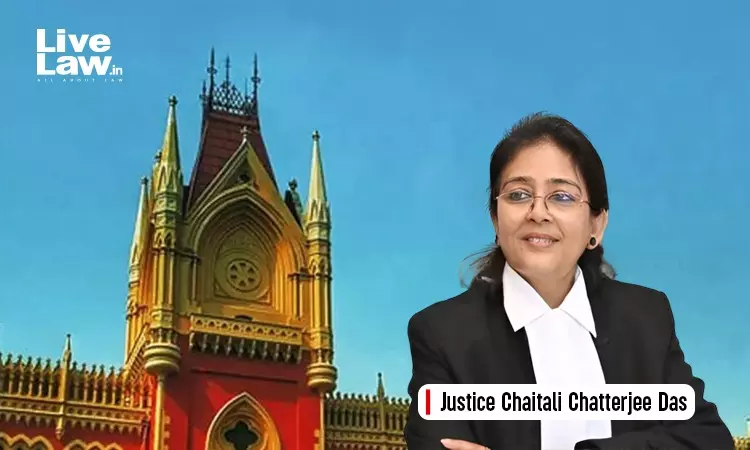
The Calcutta High Court has set aside the conviction of a man under Section 498A of the IPC, holding that the prosecution failed to prove any act of cruelty or dowry-related harassment that could have driven his wife to commit suicide. Justice Chaitali Chatterjee Das observed that the evidence on record was marked by vague allegations, contradictions and emotional assertions, and that...
This is a premium content
Available exclusively to
Our subscribers
Subscribe Premium 
INR 1099+GST
Your support helps us to bring you more content at
an affordable subscription scheme !!!
All payment options available
The Calcutta High Court has set aside the conviction of a man under Section 498A of the IPC, holding that the prosecution failed to prove any act of cruelty or dowry-related harassment that could have driven his wife to commit suicide.
Justice Chaitali Chatterjee Das observed that the evidence on record was marked by vague allegations, contradictions and emotional assertions, and that the prosecution story lacked the foundational facts necessary to sustain a conviction for cruelty. The Court noted that the mother of the deceased herself admitted in her testimony that she had lodged the complaint “out of grudge” after her daughter's death, and that the alleged dying declaration was non-existent, as the victim was only heard saying that she “would die”.
The Court concluded that there was no legally admissible dying declaration that could support a conviction and that the prosecution had failed to establish guilt beyond a reasonable doubt.
The case arose out of an appeal filed by Boren Mondal, who had been convicted in 2002 by the Sessions Judge, Malda, for an offence under Section 498A and sentenced to two years' rigorous imprisonment. According to the prosecution, the deceased had consumed poison and allegedly administered poison to her minor daughter as well, purportedly due to physical and mental torture inflicted by the husband over dowry demands. The trial court had acquitted the appellant of the charge of dowry death under Section 304B but had convicted him under Section 498A. Challenging this finding, the husband approached the High Court.
In appeal, the defence submitted that the couple had been married for six to seven years, had a child, and that no prior complaint of cruelty or dowry demand had ever been lodged. The victim's brother admitted that the husband generally behaved properly and that the deceased was adamant in nature. The defence further argued that the amount of Rs. 9,000 mentioned in the evidence was related to the appellant's medical treatment and had no connection with dowry. The mother of the victim conceded that she had filed the case out of revenge after her daughter's death. The State, however, maintained that the fact that the victim consumed poison and allegedly administered it to her child reflected the magnitude of suffering, and that there was sufficient material to sustain a conviction under Section 498A even though the ingredients of Section 304B were not made out.
The High Court, after examining the evidence, found several critical deficiencies. No independent witness from the locality supported the allegation of cruelty. There was no prior complaint or diary entry over the entire duration of the marriage. The victim's brother stated that the appellant behaved properly and that the deceased never complained of torture. The father's evidence was found to be vague, unsupported by dates or instances, and even he admitted that the appellant had never demanded money. The mother's admission that the complaint was filed to take revenge seriously weakened the prosecution case. The investigating officer did not obtain any FSL report, did not identify the poison, and no evidence was placed regarding the death of the minor daughter.
The Court also held that there was no dying declaration, as the victim had uttered nothing apart from saying she would die. Justice Das noted that once the trial court had already rejected the allegation of dowry-related cruelty under Section 304B, no material remained on record to sustain a conviction under Section 498A.
The Court referred to the Supreme Court's observations in Preeti Gupta v. State of Jharkhand, cautioning against the use of criminal law to settle personal scores in matrimonial disputes. Holding that the prosecution had failed to establish cruelty under either limb of Section 498A, the High Court allowed the appeal, set aside the conviction and sentence, directed that the appellant be released from his bail bond, and ordered transmission of the trial court records to the lower court.
Case: BOREN MONDAL VS THE STATE OF WEST BENGAL
Case No: CRA 309 OF 2002

Srinjoy Das
Srinjoy Das is a Principal Correspondent with LiveLaw, covering the Calcutta High Court

