



- Home
- /
- High Courts
- /
- Calcutta High Court
- /
- Deceased Passenger's Negligence In...
Deceased Passenger's Negligence In De-Boarding Moving Train Not Ground To Deny Compensation: Calcutta High Court
Srinjoy Das
17 Sept 2026 4:55 PM IST
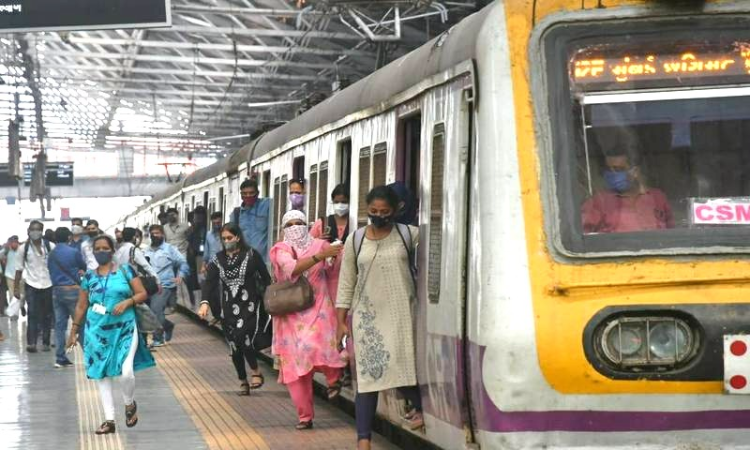
The Calcutta High Court has held that mere negligence on the part of a passenger while boarding or de-boarding a train cannot be treated as a “self-inflicted injury” so as to deny compensation under Section 124A of the Railways Act, 1989.Justice Biswaroop Chowdhury made the observation while allowing an appeal filed by Sukumar Mondal, whose wife died after falling from a train...
This is a premium content
Available exclusively to
Our subscribers
Subscribe Premium 
INR 1099+GST
Your support helps us to bring you more content at
an affordable subscription scheme !!!
All payment options available
The Calcutta High Court has held that mere negligence on the part of a passenger while boarding or de-boarding a train cannot be treated as a “self-inflicted injury” so as to deny compensation under Section 124A of the Railways Act, 1989.
Justice Biswaroop Chowdhury made the observation while allowing an appeal filed by Sukumar Mondal, whose wife died after falling from a train while attempting to get down when it had stopped between Uluberia and Fuleshwar.
The Court set aside the Railway Claims Tribunal's order dismissing the compensation claim and directed the Railways to pay compensation of Rs. 4 lakh with 9% interest from the date of filing of the claim case till the date of judgment, or Rs. 8 lakh, whichever was higher.
The deceased, Suparna Mondal, was travelling with her husband and two children from Jhargram towards Howrah on January 21, 2012. According to the material considered by the High Court, the train stopped between Uluberia and Fuleshwar due to a red signal. Her husband and two children got down, but when she attempted to de-board, the train started moving and she fell, sustaining serious injuries.
She was initially taken to Uluberia General Hospital and was subsequently treated at different hospitals before she died at Howrah General Hospital on March 5, 2012.
The Railway Claims Tribunal had dismissed the claim, holding that the incident was not an “untoward incident” and that the claimant had failed to establish the deceased's status as a bona fide passenger.
The Railways opposed the appeal, relying on the police report which stated that the deceased had attempted to get down from the train when it started moving. It was argued that the appellant had suppressed material facts and had also failed to produce the deceased's railway ticket.
The High Court, however, noted that the police and Railway authorities' reports themselves established that the deceased had fallen from the train.
The Court then considered whether her alleged negligence in attempting to get down from the train could disentitle her family from compensation under Section 124A.
Referring to the Supreme Court's judgment in Jameela v. Union of India, the Court noted that the concept of “self-inflicted injury” requires an intention to inflict the injury and cannot be equated with mere negligence.
The Supreme Court had held that death or injury suffered while boarding or de-boarding a train constitutes an “untoward incident” and cannot be excluded from Section 124A merely because negligence on the passenger's part is alleged.
“Thus from the Judicial decisions as well as from the provisions of Section 124A of the Railways Act it will be clear that mere negligence of the passenger while travelling in a train is no ground to deny the compensation,” Justice Chowdhury observed.
The Court acknowledged that the deceased was not getting down at a scheduled station platform. However, it noted that the train had stopped and her husband had already got down along with their children.
“In the instant case the victim attempted to get down from the train when the train was standing and her husband already got down from the train thus in such circumstances she cannot be faulted for attempting to get down from the train although the train did not reach the platform,” the Court held.
The High Court also rejected the Railway's contention concerning non-recovery of the railway ticket.
Referring to its earlier decision in Anima Sarkar (Dolui) v. Union of India, the Court observed that the absence of a ticket, in an otherwise established case, would not by itself defeat a legitimate compensation claim.
In the present case, the deceased had been travelling with her husband. The Court held that the ticket could have been with him and that the non-recovery of a ticket did not establish that she was not a bona fide passenger.
“Moreover when a passenger completes the journey there is no ground to preserve a general railway ticket,” the Court observed.
Holding that the death resulting from the fall was an “untoward incident” under the Railways Act, the High Court allowed the appeal and set aside the Tribunal's February 9, 2018 judgment.
The Railways was directed to deposit the compensation before the Registrar General of the Calcutta High Court within eight weeks from communication of the order.
Case: Sukumar Mondal v. Union of India, General Manager, South Eastern Railway
Case No.: F.M.A. 104 of 2021

Srinjoy Das
Srinjoy Das is a Principal Correspondent with LiveLaw, covering the Calcutta High Court

