



- Home
- /
- High Courts
- /
- Calcutta High Court
- /
- Pending PMLA Cases Not Grounds To...
Pending PMLA Cases Not Grounds To Automatically Restrict 10-Year Passport Renewal Of Undertrial To One Year: Calcutta High Court
Srinjoy Das
6 Aug 2026 2:15 PM IST
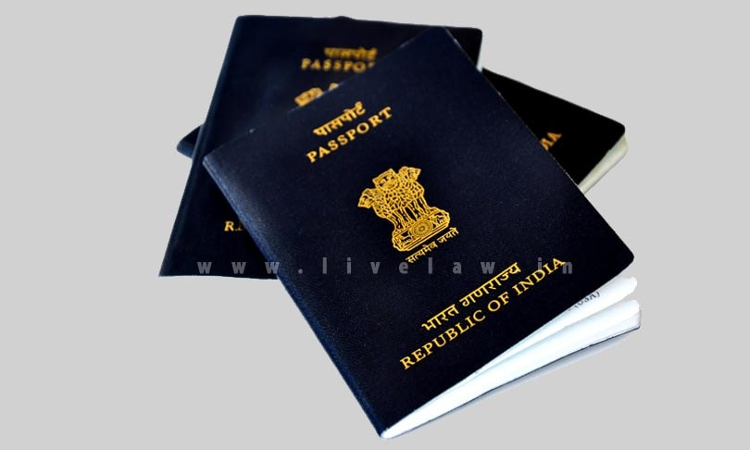
The Calcutta High Court has held that the mere pendency of criminal proceedings cannot be a ground for passport authorities to automatically restrict the validity of a passport to one year where the competent criminal court has permitted its renewal.Justice Krishna Rao directed the Regional Passport Office to renew the passport of a petitioner facing two pending Prevention of Money Laundering...
This is a premium content
Available exclusively to
Our subscribers
Subscribe Premium 
INR 1099+GST
Your support helps us to bring you more content at
an affordable subscription scheme !!!
All payment options available
The Calcutta High Court has held that the mere pendency of criminal proceedings cannot be a ground for passport authorities to automatically restrict the validity of a passport to one year where the competent criminal court has permitted its renewal.
Justice Krishna Rao directed the Regional Passport Office to renew the passport of a petitioner facing two pending Prevention of Money Laundering Act (PMLA) cases for the normal period of ten years, holding that the 1993 notification issued under the Passports Act cannot override the statutory scheme governing passport validity.
The petitioner, Amit Kumar Agarwal, approached the High Court after the passport authorities refused to issue him a passport with the normal ten-year validity. Although the Special Judge, PMLA, Ranchi had released his passport for renewal subject to conditions, including that he would not travel abroad without prior permission of the trial court and would surrender the passport within five days of renewal, the Passport Office informed him that only a one-year passport could be issued since the trial court had not specified the validity period in its orders.
Before the High Court, the petitioner contended that the passport authorities had misinterpreted Notification GSR 570(E) dated August 25, 1993. He argued that once the criminal court had permitted renewal of his passport, the authorities could not impose additional conditions not contemplated under the Passports Act. Reliance was placed on the Supreme Court's decision in *Mahesh Kumar Agarwal v. Union of India*, which held that renewal of a passport cannot be denied merely because criminal proceedings are pending when the competent criminal court has permitted such renewal.
The Union of India, however, argued that Clause (a)(ii) of the 1993 notification specifically provides that where a court order does not specify the period for which a passport is to be issued, the passport shall be issued only for one year. It also relied on an earlier decision of the Calcutta High Court upholding the validity of the notification.
Rejecting the stand of the passport authorities, the Court observed that Section 6(2)(f) of the Passports Act is concerned only with whether a passport may be issued to a person against whom criminal proceedings are pending and does not regulate the duration of such passport. It held that the insistence on a criminal court specifying the validity period of a passport finds no support in either the Passports Act or the Rules framed thereunder.
The Court further held that while Section 22 empowers the Central Government to exempt persons from the operation of the Passports Act, it does not authorise the Government to create substantive conditions beyond those contained in the parent legislation.
"The notification... cannot be read as imposing binding conditions on the Court. Section 22(a) merely empowers the Central Government to exempt any person or class of persons from the operation of the provisions of the Passports Act... It does not empower the Government to impose a new regime of conditions for passport issuance where the parent statute is silent," the Court observed.
Justice Rao also held that the role of a criminal court in passport matters is confined to deciding whether an accused should be permitted to travel abroad and on what conditions. The duration of a passport remains an administrative matter to be determined by the passport authorities under the Passports Act and the Passport Rules.
Applying these principles, the Court noted that even if the petitioner's passport were renewed for the normal period of ten years, he could not travel abroad without obtaining prior permission from the Special PMLA Court and would be required to surrender the renewed passport within five days, as directed by that court. Therefore, granting a ten-year passport would not dilute the safeguards imposed by the criminal court.
The Court also observed that restricting the passport's validity to one year would unnecessarily compel the petitioner to repeatedly approach the criminal court for release of his passport for renewal if the criminal proceedings remained pending.
Accordingly, the Court directed the passport authorities to renew the petitioner's passport for the normal period of ten years within three weeks, subject to compliance with all statutory formalities. It clarified that the petitioner must continue to comply with the conditions imposed by the Special PMLA Court, including obtaining prior permission before travelling abroad and redepositing the passport after renewal.
Case: Amit Kumar Agarwal Vs. Union of India, Ministry of External Affairs & Ors.
Case No: W.P.A. No. 9256 of 2026

Srinjoy Das
Srinjoy Das is a Principal Correspondent with LiveLaw, covering the Calcutta High Court

