



- Home
- /
- High Courts
- /
- Calcutta High Court
- /
- Providing Public Utility Is...
Providing Public Utility Is Fiduciary Trust, Not Administrative High-Handedness: Calcutta HC Quashes WBSEDCL's Excess Electricity Bills
Srinjoy Das
5 Feb 2026 5:00 PM IST
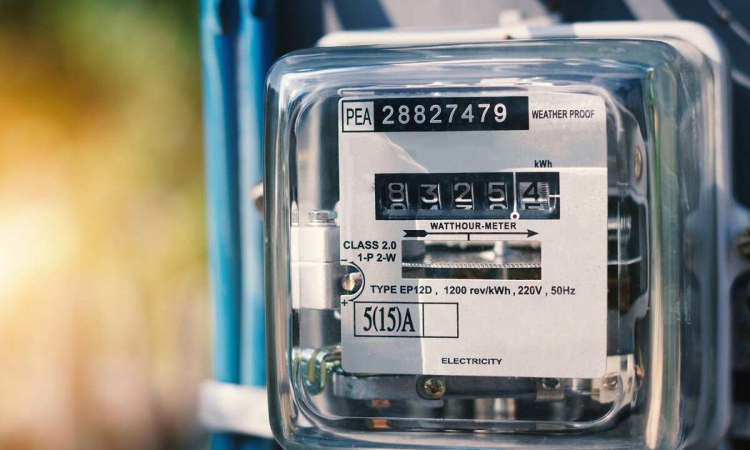
The Calcutta High Court has held that the West Bengal State Electricity Distribution Company Ltd. (WBSEDCL) cannot recover a supplemental electricity bill of Rs. 55.8 lakh from Jyotish Chandra Rice Mill. A division bench of Justices Rajarshi Bharadwaj and Uday Kumar found that the demand was based on an unproven “polarity reversal” in the transformer and speculative average billing,...
This is a premium content
Available exclusively to
Our subscribers
Subscribe Premium 
INR 1099+GST
Your support helps us to bring you more content at
an affordable subscription scheme !!!
All payment options available
The Calcutta High Court has held that the West Bengal State Electricity Distribution Company Ltd. (WBSEDCL) cannot recover a supplemental electricity bill of Rs. 55.8 lakh from Jyotish Chandra Rice Mill.
A division bench of Justices Rajarshi Bharadwaj and Uday Kumar found that the demand was based on an unproven “polarity reversal” in the transformer and speculative average billing, which lacked evidentiary support.
The dispute arose after WBSEDCL replaced a transformer at the rice mill in July 2019. For the next four months, the mill was billed on the basis of actual meter readings, which were duly paid and accepted by the Licensee. However, in November 2019, WBSEDCL unilaterally refunded the payments and issued revised bills totaling Rs. 55.8 lakh, claiming that the meter had under-recorded energy consumption due to a defect in the transformer. The Licensee also imposed a Late Payment Surcharge (LPSC) of Rs. 32.72 lakh.
The High Court observed that WBSEDCL failed to prove both the onset of the alleged defect and its rectification, which are mandatory conditions under Regulations 3.3.1 and 3.6.1 of the WBERC Regulations. The Potential Transformer (PT), being part of the metering circuit, falls under the statutory presumption of a “correct meter.” Without proof of the defect and its correction, the calculation of an average bill was legally unfounded.
The Electricity Ombudsman's order upholding the bill was described by the Court as “patently perverse,” because it ignored the absence of proof regarding the rectification of the alleged defect. The Bench emphasized that a quasi-judicial authority cannot declare a consumer liable while simultaneously finding the factual basis for such liability unproven.
The Court also rejected WBSEDCL's attempt to support the demand through subsequent affidavits filed in the High Court. Citing established law, it held that a statutory order must stand or fall on the grounds recorded at the time of its inception. Orders void ab initio cannot be revived through later explanations or supplemental documents.
The High Court thus quashed the supplemental demand in its entirety. The principal bill of Rs. 47,06,213 was declared null and void, the LPSC of Rs. 32.72 lakh was waived, and the Rs. 11,70,855 deposited under protest will be adjusted against future bills. All disconnection notices issued to the rice mill were also quashed.
Case: THE WEST BENGAL STATE ELECTRICITY DISTRIBUTION COMPANY LIMITED & ORS. VS JYOTISH CHANDRA RICE MILL & ORS.
Case No: FMA 179 OF 2023

Srinjoy Das
Srinjoy Das is a Principal Correspondent with LiveLaw, covering the Calcutta High Court

