



- Home
- /
- High Courts
- /
- Calcutta High Court
- /
- 'Mere Breach Of Promise To Marry...
'Mere Breach Of Promise To Marry After 5-Year Relationship Does Not Amount To Rape': Calcutta High Court Quashes Case Against Man
Srinjoy Das
17 Feb 2026 10:45 AM IST
Holding that a prolonged consensual relationship between two adults cannot later be converted into a rape prosecution merely because the relationship soured or marriage did not materialise, the High Court at Calcutta has quashed criminal proceedings under Sections 417, 376, 313 and 506 IPC against a man accused of sexual assault and forced abortion on the pretext of marriage. The Court...
This is a premium content
Available exclusively to
Our subscribers
Subscribe Premium 
INR 1099+GST
Your support helps us to bring you more content at
an affordable subscription scheme !!!
All payment options available
Holding that a prolonged consensual relationship between two adults cannot later be converted into a rape prosecution merely because the relationship soured or marriage did not materialise, the High Court at Calcutta has quashed criminal proceedings under Sections 417, 376, 313 and 506 IPC against a man accused of sexual assault and forced abortion on the pretext of marriage. The Court observed that for a promise to marry to vitiate consent, the promise must be false from the very inception, and not a subsequent breach arising out of a failed relationship.
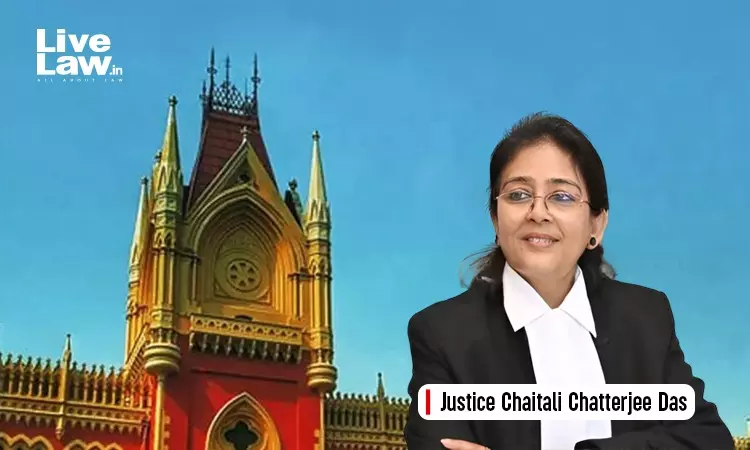
Justice Chaitali Chatterjee Das, allowing a criminal revision filed by petitioner Anirban Mukherjee, held that the materials on record clearly indicated a consensual relationship continuing for nearly five years, during which the parties travelled together, stayed in hotels, and lived like husband and wife, thereby negating allegations of misconception of fact or absence of consent.
As per the prosecution case, the complainant alleged that she developed a romantic relationship with the petitioner in 2017 and, in 2018, was forced to consume liquor and sexually assaulted. Thereafter, on the assurance of marriage, she continued the relationship, accompanied him to several places including Digha and Goa, and later became pregnant. She alleged that the petitioner compelled her to terminate the pregnancy and subsequently refused to marry her while threatening to circulate private photographs. A charge sheet was filed under Sections 417, 376, 313 and 506 IPC, prompting the petitioner to seek quashing.
Before the Court, the petitioner argued that the complainant was a major and educated woman who voluntarily continued the relationship for years, travelled with him repeatedly, and even consented to medical termination of pregnancy, demonstrating a fully consensual relationship. It was contended that the essential ingredients of rape on the ground of false promise to marry were absent. Reliance was placed on precedents including State of Haryana v. Bhajan Lal, Pramod Suryabhan Pawar v. State of Maharashtra, and Anurag Soni v. State of Chhattisgarh.
After examining the case diary, statements under Section 164 CrPC, medical records and travel details, the Court found that the parties maintained an intimate relationship from 2017 till 2022 without any contemporaneous complaint. The pregnancy termination was done with the complainant's consent and the petitioner had even signed as guardian. The Court noted that despite alleging sexual assault in 2018, the complainant continued to travel and stay with the petitioner, which weakened the prosecution's claim of coercion or misconception.
Referring to Supreme Court jurisprudence, the Court reiterated that consent is vitiated only where a false promise to marry was made from the very beginning with no intention to fulfil it. A mere failure of a relationship or refusal to marry later cannot retrospectively criminalise consensual intimacy. The Court observed that “misconception of fact” as required under Section 90 IPC was clearly missing in the present case.
Applying the principles laid down in Bhajan Lal on exercise of inherent powers to prevent abuse of process, the Court held that even if the allegations were accepted at face value, they did not disclose the commission of offences under Sections 376 or 313 IPC. The allegations under Sections 417 and 506 IPC were also found unsustainable for want of foundational ingredients.
Terming continuation of the prosecution a “sheer abuse of the process of court,” the Court allowed the revision and quashed the entire proceedings pending before the Chief Judicial Magistrate, Paschim Medinipur.
Case: Anirban Mukherjee v. State of West Bengal & Anr.
Case No.: CRR 3937 of 2022

Srinjoy Das
Srinjoy Das is a Principal Correspondent with LiveLaw, covering the Calcutta High Court

