- Home
- /
- High Courts
- /
- Chhattisgarh High Court
- /
- Chhattisgarh High Court Upholds...
Chhattisgarh High Court Upholds ED's ₹110 Crore Provisional Attachment Of Goa's Westin Hotel In Alleged Liquor Scam Cash Trail
Saksham Vaishya
29 Aug 2026 5:10 PM IST
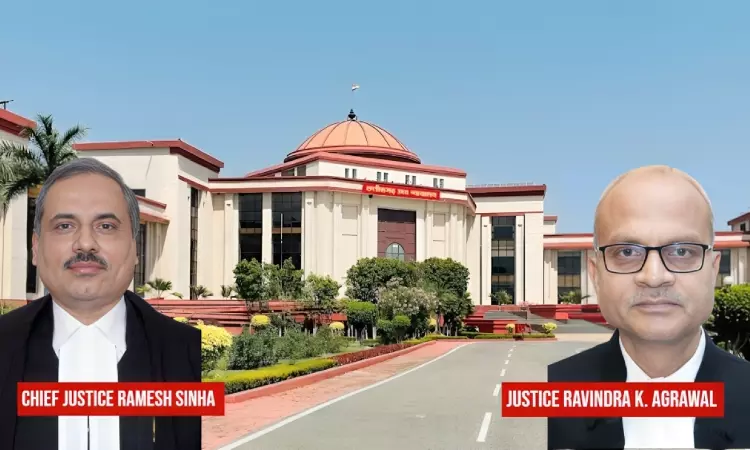
The Chhattisgarh High Court has refused to interfere with the Enforcement Directorate's (ED) provisional attachment of Hotel Westin, Goa, to the extent of ₹110 crore. While dismissing the petition, the Court clarified that it has not taken a final adjudication on the allegations concerned, and such question were required to be examined through the statutory adjudicatory mechanism in...
This is a premium content
Available exclusively to
Our subscribers
Subscribe Premium 
INR 1099+GST
Your support helps us to bring you more content at
an affordable subscription scheme !!!
All payment options available
The Chhattisgarh High Court has refused to interfere with the Enforcement Directorate's (ED) provisional attachment of Hotel Westin, Goa, to the extent of ₹110 crore. While dismissing the petition, the Court clarified that it has not taken a final adjudication on the allegations concerned, and such question were required to be examined through the statutory adjudicatory mechanism in accordance with the law. [2026 LiveLaw (Chh) 120]
A Division Bench comprising Chief Justice Ramesh Sinha and Justice Ravindra Kumar Agrawal was hearing a petition under Article 226 filed challenging the Provisional Attachment Order (PAO) dated May 28, 2026, passed under Section 5(1) of the Prevention of Money Laundering Act, 2002. In 2017, the Government of Chhattisgarh amended the State Excise Policy and established the Chhattisgarh State Marketing Corporation Limited (CSMCL), with the mandate of operating Government-run liquor retail outlets across the State.
The ED alleged that the CSMCL was misused to generate proceeds of crime. It was further alleged that the petitioners had acquired the Hotel Westin, Goa using proceeds of crime. In a search conducted in 2019, an alleged unaccounted cash payment of Rs.60 Crores was found to be made by petitioner No. 1-led entities to one M/s Sir Biotech India Ltd. Apart from this, one of the accused also stated that he had paid a total of Rs. 110 Crores to Vijay Agrawal out of the proceeds of crime generated through the liquor scam. This amount was allegedly used by the nephew of Vijay Agrawal to purchase a hotel in Goa.
The petitioners argued that the petitioner had deposed before the ED that the Income Tax Department had absolved him from the allegation of use of cash of Rs. 60 Crores for acquisition of property, holding that the same was accounted money. Further, on the same date, petitioner No. 1 had explained to the ED the source of cash to the tune of Rs. 60 Crores being the cash in hand in his Firms/Companies and himself.
The Court rejected the argument that the Income Tax orders conclusively prevented the ED from examining the same amount under the PMLA. It held that Income Tax proceedings and PMLA proceedings operate in different statutory fields.
“An income-tax finding that cash is adequately explained for taxation purposes does not establish that the same cash is not proceeds of crime. Section 71 of the PMLA gives the Act overriding effect. There is no res judicata or issue estoppel,” the Court remarked.
The Court further observed that the income tax orders speak, at most, to the character of the Rs. 60 Crores cash, without saying anything about Rs. 110 Crores delivered to Vijay Agrawal of which Rs. 50 Crores remain untraced. It observed:
“So long as it remains untraced and unavailable, the subject property is liable to attachment under the “value of any such property” limb of Section 2(1)(u) irrespective of the source of the cash component. The attachment therefore stands upon an independent footing which the orders relied upon do not touch.”
Regarding Jurisdiction, the Court also held that while the Court can examine whether there was relevant material before the authorised officer, it could not undertake a “mini-trial” in writ jurisdiction to determine whether the material ultimately established money-laundering. The Court also refuted the argument that once the Income Tax authorities have accepted the source of the cash, the Enforcement Directorate cannot subsequently treat the same amount as proceeds of crime.
The Court further held that the absence of a conventional banking trail did not, at this stage, conclusively negate the ED's case because the alleged transactions themselves were in cash. Similarly, the fact that the petitioners were not accused in the scheduled offence did not render the attachment without jurisdiction, since PMLA proceedings relating to the property are distinct from criminal prosecution for the scheduled offence.
On the challenge concerning the composition of the Adjudicating Authority, the Court held that any alleged defect in the subsequent Section 8 proceedings, even if taken as true, could not retrospectively invalidate an independent provisional attachment order passed by the authorised officer under Section 5(1).
The Court also refuted the argument that provisional attachment breached the petitioners' fundamental right under Article 19(1)(g), observing that a provisional attachment does not, by itself, transfer title in the property to the State.
Finding no ground to exercise Article 226 jurisdiction, the Court dismissed the writ petition.
Case Title: Dr. Rahul Agrawal & Anr. v. Union of India & Anr. [WPCR No. 473 of 2026]
Citation: 2026 LiveLaw (Chh) 120
Tags