- Home
- /
- High Courts
- /
- Chhattisgarh High Court
- /
- Suicide Note Naming Accused Does...
Suicide Note Naming Accused Does Not Establish Abetment Without Proximate Instigation, Mens Rea: Chhattisgarh High Court
Saksham Vaishya
7 Oct 2026 3:45 PM IST
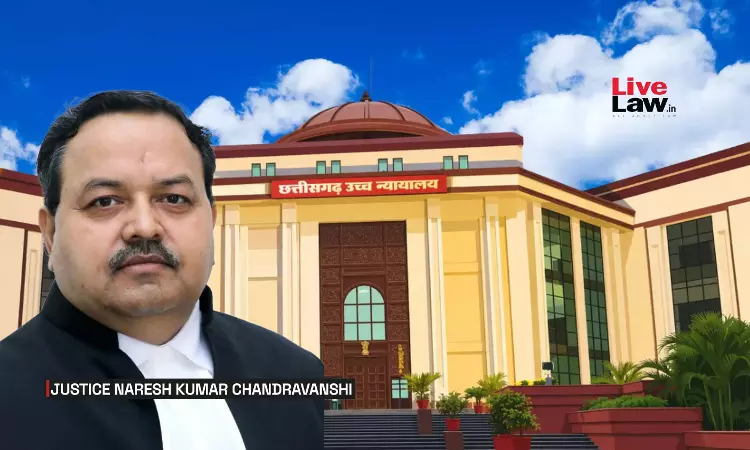
The Chhattisgarh High Court has held that mere reference to an accused's name in a suicide note cannot, by itself, establish abetment of suicide under Section 306 IPC. The Court observed that there must be a direct or indirect act of instigation in close proximity to the suicide, coupled with the requisite mens rea to abet the commission of suicide. Justice Naresh Kumar Chandravanshi was...
This is a premium content
Available exclusively to
Our subscribers
Subscribe Premium 
INR 1099+GST
Your support helps us to bring you more content at
an affordable subscription scheme !!!
All payment options available
The Chhattisgarh High Court has held that mere reference to an accused's name in a suicide note cannot, by itself, establish abetment of suicide under Section 306 IPC. The Court observed that there must be a direct or indirect act of instigation in close proximity to the suicide, coupled with the requisite mens rea to abet the commission of suicide.
Justice Naresh Kumar Chandravanshi was hearing a criminal revision filed challenging the Sessions Court's order whereby the application preferred by the respondent/accused under Section 227 of the Cr.P.C. was allowed, and he was discharged from the offence punishable under Section 306 of the Indian Penal Code, 1860.
The deceased died after jumping in front of a running train, and the prosecution alleged that the respondent, who was the brother of the deceased's wife, had persistently intervened in their matrimonial dispute, pressured the deceased to shift residence and harassed him. During investigation, a diary containing an alleged suicide note was seized, stating that the deceased was committing suicide because of the accused.
The Court noted that Section 306 IPC has to be read with Section 107 IPC and requires an act of instigation, conspiracy or intentional aid, accompanied by the requisite mens rea. It further noted that there must be direct or indirect instigation in close proximity to the commission of suicide and a clear mens rea to abet the commission of suicide.
Relying on various precedents, the Court reiterated that the material must disclose an overt act of instigation, goading or intentional aid having a proximate nexus with the suicide. It noted that the main allegation against the respondent/accused is that he, along with his sister, i.e., the wife of the deceased, was pressurizing the deceased to live separately from his family and to shift to Tedesara.
The Court emphasized that there was no specific act of the respondent immediately before the suicide which could reasonably be said to have instigated or provoked the deceased to take the extreme step. It observed that although witnesses supported the allegation that household articles had been thrown out of the deceased's house, their statements did not disclose when the incident occurred.
“… the prosecution witnesses have stated that the respondent/accused and his sister had allegedly thrown household articles out of the house of the deceased… However… There is thus no clear and specific material establishing that the said incident occurred immediately before the deceased committed suicide or that it constituted the proximate cause which drove him to take the extreme step,” the Court remarked.
As regards the suicide note, the Court held that its reference to Ravi could not be completely ignored, but mere reference is insufficient. It observed:
“… the mere reference to the name of the respondent/accused in the suicide note, by itself, cannot dispense with the statutory requirement of establishing abetment as contemplated under Section 107 of the IPC. The suicide note has to be considered along with the surrounding circumstances and the other material collected during investigation.”
Hence, the Court held that the requisite intention on the part of the respondent to aid, instigate or abet the deceased to commit suicide was not made out and that the suicide note, by itself, could not form the basis for framing a charge.
Accordingly, the Court dismissed the State's criminal revision and affirmed the Sessions Court's order discharging the respondent.
Case Title: State of Chhattisgarh v. Ravi Kumar Sahu [CRR No. 642 of 2021]
Tags