



- Home
- /
- High Courts
- /
- Chhattisgarh High Court
- /
- Accused Tortured & Paraded Over...
Accused Tortured & Paraded Over Trivial Dispute? Chhattisgarh High Court Flays Police For 'Casual' Action; Orders Probe Against SHO
Saahas Arora
24 Jan 2026 9:43 AM IST
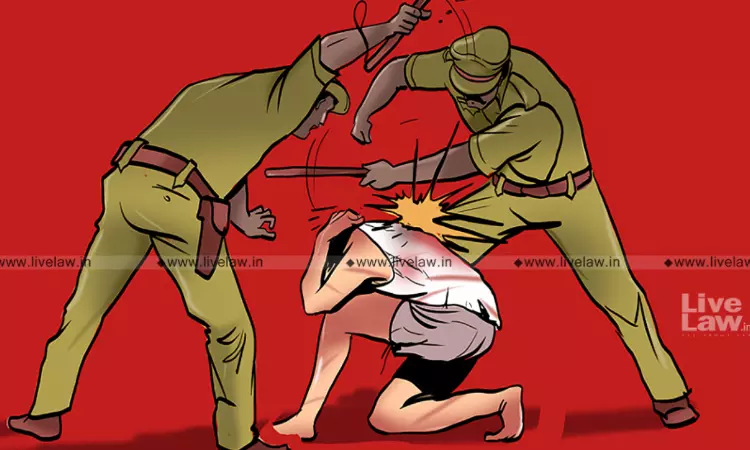
The Chhattisgarh High Court has expressed serious concern over the handling of a case by the Bhilai police authorities, in which the petitioners alleged that they were booked over a trivial issue and subjected to mental and physical custodial torture, illegal handcuffing and public parading, where they were allegedly forced to chant derogatory slogans.The incident arose out of a purported...
This is a premium content
Available exclusively to
Our subscribers
Subscribe Premium 
INR 1099+GST
Your support helps us to bring you more content at
an affordable subscription scheme !!!
All payment options available
The Chhattisgarh High Court has expressed serious concern over the handling of a case by the Bhilai police authorities, in which the petitioners alleged that they were booked over a trivial issue and subjected to mental and physical custodial torture, illegal handcuffing and public parading, where they were allegedly forced to chant derogatory slogans.
The incident arose out of a purported trivial verbal spat between the petitioners and the complainant in a cinema hall, pursuant to which the theatre staff called the police.
According to the petitioners, as the police authorities were harbouring pre-determined antipathy against them and they maliciously distorted the incident by giving it a false colour of offences involving outraging the modesty of a woman and assaulting police personnel. Therefore, they were booked under several offences of the Bharatiya Nyaya Sanhita.
In the process, it was alleged that the petitioners were subjected to custodial torture and despite judicial remand being granted, the police authorities handcuffed and publicly paraded the petitioners and also forced them to chant "Apradh Karna Paap Hai, Police Hamara Baap Hai". Additionally, they were allegedly denied prompt medical examination despite visible injuries.
Taking note of the alleged misconduct of the authorities, Chief Justice Ramesh Sinha and Justice Ravindra Kumar Agrawal observed thus,
"…there are procedural lapses and actions on the part of the police authorities which warrant serious concern. The conduct complained of alleging unlawful arrest, failure to observe statutory and judicial safeguards, inordinate delay in medical examination, and alleged humiliation of the petitioners, are matters which strike at the very core of Articles 21 and 22 of the Constitution of India, which guarantee the fundamental right to life, liberty, and dignity of every citizen. The allegations, if established, demonstrate a disregard for the rule of law and the constitutional safeguards enshrined for the protection of individuals against excesses in police action.”
The Division Bench disposed of the petition, observing that the police authorities must ensure that no citizen is subjected to harassment, humiliation, or custodial mistreatment. It added that the dignity, liberty, and fundamental rights of every individual must be respected and safeguarded.
"It is the expectation and earnest exhortation of this Court that the police authorities, entrusted with the solemn duty of upholding law and order, will exercise the highest degree of fairness, restraint, and diligence in the discharge of their duties, strictly observing the provisions of law, the directions of superior courts, and the fundamental rights of citizens"., the Court remarked.
Background
In a separate bail application filed by the petitioners before the Additional Sessions Judge, Durg, the complainant had stated that the issue was only trivial and submitted a no-objection to the grant of bail. The ASJ cocnerned also observed that the conduct of the police constituted an abuse of power.
Against their mistreatment, the petitioners filed a writ petition before the High Court seeking compensation, and a departmental inquiry along with strict action against the concerned police authorities (Respondents 2 to 8).
They argued that allegations of outraging the modesty of the complainant and assault upon the police personnel were inherently false and that by subjecting them to custodial violence, the police authorities had infringed their fundamental rights under Articles 21 and 22. They also argued that they had no criminal antecedents and were illegally detained despite alleged offences not exceeding five years of imprisonment.
In contrast, the State argued that the allegations against the petitioners were not fabricated, and all procedural safeguards were complied with, without any infliction of custodial torture, illegal detention or use of third-degree methods.
On the public parading aspect, the State contended that the situation was misconstrued, as the same occurred due to a mechanical failure of the police vehicle necessitating a 'push-start'.
The Court noted that video footage and medical reports suggested that certain aspects of the incident could have been handled with greater care, diligence, and adherence to procedural safeguards by the police.
However, the Court noted that the matter was amenable to resolution without invoking its extraordinary jurisdiction to adjudicate disputed facts, particularly when an opportunity for internal departmental review exists.
Significantly, the Court recorded its "serious concern and strong disapproval" specifically regarding the conduct of Respondent No. 2 (Station House Officer), noting that he appeared to have acted in a manner revealing a "casual and hasty approach" in the exercise of police powers.
Disposing of the petition, the Court directed the DGP to:
(i) Ensure that all police officers under his command, particularly the respondents, are reminded of their obligations under the Constitution, relevant statutes and the Supreme Court's decisions in the cases of Arnesh Kumar, Satender Kumar Antil and D.K. Basu.
(ii) Examine the conduct of Respondent 2 (SHO) who acted casually in the exercise of police powers, in disregard of constitutional safeguards and procedural mandates governing arrest, detention and treatment of citizens, and take necessary corrective and disciplinary measures, and ensure that he is formally sensitised and counselled with respect to the binding directions of the Supreme Court
(iii) Issue appropriate standing instructions reiterating that any deviation from constitutional safeguards relating to arrest, remand or custodial treatment shall invite strict departmental consequences.
Case Details:
Case Number: WPCR No. 11 of 2026
Case Title: Sujeet Sao and Ors v. State of Chhattisgarh and Ors
Click Here To Read/Download Order
Citation: 2026 LiveLaw (Chh) 12
Tags


