



- Home
- /
- High Courts
- /
- Chhattisgarh High Court
- /
- Compassionate Appointment Meant For...
Compassionate Appointment Meant For Immediate Succour, Not To Serve As Channel Of Public Employment After Decades: Chhattisgarh High Court
Saahas Arora
30 Jan 2026 9:00 AM IST
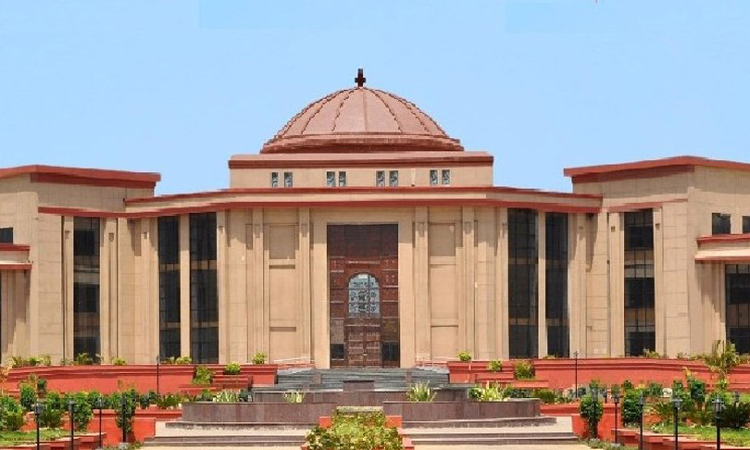
The Chhattisgarh High Court has refused to grant relief to an individual— who filed an application for compassionate appointment after an inordinate delay of 14 years after the death of his father, holding that the underlying objective of compassionate appointments is to provide immediate succour, and not serve as a delayed channel of public employment decades after the death of the...
This is a premium content
Available exclusively to
Our subscribers
Subscribe Premium 
INR 1099+GST
Your support helps us to bring you more content at
an affordable subscription scheme !!!
All payment options available
The Chhattisgarh High Court has refused to grant relief to an individual— who filed an application for compassionate appointment after an inordinate delay of 14 years after the death of his father, holding that the underlying objective of compassionate appointments is to provide immediate succour, and not serve as a delayed channel of public employment decades after the death of the deceased.
In this regard, Justice Amitendra Kishore Prasad reiterated that compassionate appointments must be confined to situations of pressing financial need at the time of the demise, and once the crisis has subsided, the basis for compassionate appointment ceases to exist. Elaborating further, the Single-Judge stated,
“The scheme of compassionate appointment has been carved out as a narrow exception to the general rule of recruitment and is intended solely to mitigate the immediate financial hardship suffered by the family upon the sudden death of a government employee. It is not intended to provide employment as a matter of inheritance nor to revive claims after the passage of several decades.”
Background
The petitioner was a minor when his father passed away in 2005, and no application was filed by any adult family member within a reasonable time from the demise. When the petitioner applied for compassionate appointment in 2019, i.e., fourteen years after the death of his father, the Tribal And Schedule Caste Development Department (Respondent 1) rejected the claim on the ground that it was made at a belated stage.
Aggrieved, the petitioner approached the High Court in 2022, which directed the respondent authorities to consider his claim. However, when he submitted a fresh application, the same was rejected again.
Challenging the decision, the petitioner submitted that at the time of his father's death, he was a minor, and had moved an application for attaining compassionate appointment upon attaining majority age. It was further submitted that while his mother had sought compassionate appointment for him, respondent authorities did not inform the family about the proper procedure adopted.
Underlining the necessity of compassionate appointment, the petitioner claimed that he and his family had suffered from extreme economic hardship, and having no source of income, they were entirely dependent on the deceased. Justifying the 14-year delay, he posited that it was caused owing to a dispute between the two wives of his father, each seeking compassionate appointment for their children, and that respondent authorities caused unnecessary delay in processing representations submitted by the petitioner and his mother.
In contrast, the State submitted that the petition suffered from unexplained and inordinate delay, as the petitioner's father died in 2005, and it is that year when a cause of action arose. However, an 14-year delay disentitles him to relief as he remained indolent and slept over his alleged rights.
Additionally, it was argued that compassionate appointment is not a vested right and its underlying objective is to only provide immediate succour to the family of the deceased to tide over the sudden financial crisis. It was further submitted that although disputes between the two wives led to civil litigation, the same cannot extend/revive the limitation.
At the outset, the Court noted that “the petitioner and his family had multiple opportunities to pursue the matter earlier but failed to do so diligently, and for long intervals, there was complete inaction, indicating that no immediate financial distress was demonstrated that required intervention under the compassionate appointment scheme.”
The Court further referred to the 2019 Compassionate Appointment Policy of the State, which stipulates that applications must be tendered within a specified period, and in exceptional circumstances, the period cannot exceed five years. It was observed that these timelines are designed to address immediate financial hardship, and are not intended to perpetuate claims after decades.
Noting that the delay of fourteen years was excessive, the Court upheld the impugned order, holding it to be in consonance with the Government policy and accordingly dismissed the petition.
Case Details:
Case Number: WPS No. 2604 of 2023
Case Title: Nijesh Chauhan v. State of Chhattisgarh
Click Here To Read/Download Order
Citation: 2026 LiveLaw (Chh) 15


