



- Home
- /
- High Courts
- /
- Chhattisgarh High Court
- /
- Delayed Compassionate Appointment...
Delayed Compassionate Appointment Defeats Its Purpose; Relief Can't Be Granted After Lapse Of 15 Years From Date Of Death: Chhattisgarh HC
Namdev Singh
14 Nov 2025 8:56 AM IST
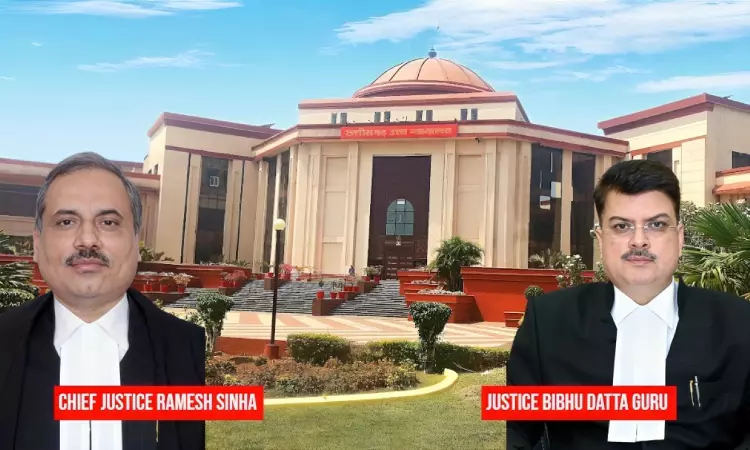
A Division bench of the Chhattisgarh High Court comprising Chief Justice Ramesh Sinha and Justice Bibhu Datta Guru held that compassionate appointment cannot be granted after a long lapse of time (15 years), as it is meant to provide immediate financial relief to the family of a deceased employee. Background Facts The mother of the appellant was employed as an Assistant Teacher...
This is a premium content
Available exclusively to
Our subscribers
Subscribe Premium 
INR 1099+GST
Your support helps us to bring you more content at
an affordable subscription scheme !!!
All payment options available
A Division bench of the Chhattisgarh High Court comprising Chief Justice Ramesh Sinha and Justice Bibhu Datta Guru held that compassionate appointment cannot be granted after a long lapse of time (15 years), as it is meant to provide immediate financial relief to the family of a deceased employee.
Background Facts
The mother of the appellant was employed as an Assistant Teacher under the Block Education Officer, Gariyaband. She died in harness on 09.12.2000. The appellant-daughter was a minor at that time. The appellant attained the age of majority in the year 2015. On 05.08.2015, she submitted an application for compassionate appointment. This application was rejected by the department vide order dated 29.08.2017.
The appellant filed a writ petition challenging the rejection. The Single Judge dismissed the writ petition. It was observed that the object of compassionate appointment is to provide immediate financial assistance to come over a sudden crisis. Therefore, this purpose had been extinguished after a lapse of over 15 years.
Aggrieved by the order of the Single Judge, the appellant filed the writ appeal.
It was contended by the appellant that the authorities had erroneously applied the compassionate appointment policy of 2003. The policy in force at the time of her mother's death in the year 2000 was the 1994 policy. The 1994 policy permitted a dependent to apply for compassionate appointment upon attaining the age of majority. Therefore, her application in 2015 was timely. It was further submitted that the appellant and her siblings were deserted by their father soon after their mother's death. They were forced to live with their old-aged maternal grandmother, causing the family's financial distress. On the other hand, the respondents supported the order of the Single Judge and submitted that the writ petition was rightly dismissed, and required no interference from the Court.
Findings of the Court
It was observed by the Court that the objective of granting compassionate appointment is to provide immediate financial assistance to the family of a government employee who dies in harness. It enables them to come over a sudden crisis. It is granted out of humanitarian considerations. It was found by the Court that the appellant's mother died on 09.12.2000, the application for compassionate appointment was moved on 05.08.2015, after a significant lapse of time. It was held by the Court that such an inordinate delay defeats the very purpose to address immediate hardship.
The judgment of the Supreme Court in State of Maharashtra & Anr. Vs. Ms. Madhuri Maruti Vidhate was relied upon by the Court wherein it was held that compassionate appointment is an exception to the general rule of employment. It is meant only to help the family of a government employee who dies in harness and leaves them in financial distress. Its purpose is to provide immediate relief and help the family overcome the sudden crisis, not to offer a job equivalent to the one held by the deceased. Further a claimant cannot be considered a dependent on the deceased employee after a number of years, and granting appointment after such a long period is contrary to the object and purpose of the policy.
It was held by the court that compassionate appointment is not intended to be a source of recruitment after numbers of years from the date of death of the deceased. It was further held that the findings of the Single Judge were just and proper and did not warrant any interference. With the aforesaid observations, the appeal filed by the appellant was dismissed by the Court.
Case Name : Ku. Smriti Verma vs. The State of Chhattisgarh & Anr.
Case No. : WA No. 734 of 2025
Citation: 2025 LiveLaw (Chh) 105


