- Home
- /
- High Courts
- /
- Chhattisgarh High Court
- /
- Prison Guard's Removal Can't Be...
Prison Guard's Removal Can't Be Upheld Based On Unverified Video Of Meeting Under-Trial's Family While Escorting Him: Chhattisgarh High Court
Saksham Vaishya
4 Aug 2026 1:40 PM IST
The Chhattisgarh High Court has held that findings recorded in a departmental enquiry cannot be sustained where they are founded on a social media video whose source, authenticity and manner of proof have not been established. [2026 LiveLaw (Chh) 99]The respondent-prison guard had been charged with roaming with the family members of an undertrial prisoner at a restaurant while escorting...
This is a premium content
Available exclusively to
Our subscribers
Subscribe Premium 
INR 1099+GST
Your support helps us to bring you more content at
an affordable subscription scheme !!!
All payment options available
The Chhattisgarh High Court has held that findings recorded in a departmental enquiry cannot be sustained where they are founded on a social media video whose source, authenticity and manner of proof have not been established. [2026 LiveLaw (Chh) 99]
The respondent-prison guard had been charged with roaming with the family members of an undertrial prisoner at a restaurant while escorting the prisoner for medical examination and with negligently delaying his return to the jail. The respondent contended that the charges were vague, that the delay occurred because the attending doctor had advised diagnostic tests, and that the departmental enquiry was founded entirely on a video allegedly circulated on social media without supplying either the original video or any authenticated forensic examination report.
The Court observed that where findings are based on no evidence or on material which has not been legally proved, interference in exercise of judicial review is not only permissible but necessary to prevent miscarriage of justice.
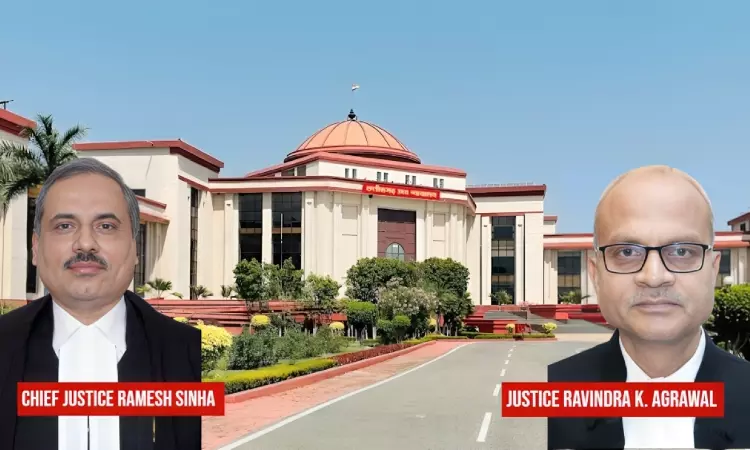
A Division Bench comprising Chief Justice Ramesh Sinha and Justice Ravindra Kumar Agrawal was hearing a writ appeal filed by the State against the order of the learned Single Judge setting aside the removal of a Prison Guard from service.
The Court held that the order rendered by the learned Single Judge does not suffer from any legal infirmity warranting interference in the present writ appeal. It observed that the Single Judge has rightly recorded a finding that the charges levelled against the respondent herein were not supported by any legally admissible evidence.
The Court noted that the first charge was founded entirely on a video allegedly uploaded on social media. It observed that neither the Enquiry Officer nor the Disciplinary Authority had discussed the manner in which the electronic record was proved.
“There is no finding regarding the source of the video, the person who recorded it, the date and time of its recording, or its authenticity. No witness connected with the recording or production of the video was examined during the enquiry. The enquiry report is also conspicuously silent as to the basis on which the alleged video footage was accepted as reliable evidence for holding the respondent herein guilty of misconduct,” the Court remarked.
The Court further observed that except the Chief Warder, who merely proved that the respondent had been deputed to escort the prisoner, no witness having personal knowledge of the alleged incident was examined.
The Court also held that the second charge relating to the alleged delay in returning to the jail remained unsupported by evidence. It highlighted that the respondent's explanation that the attending doctor had advised diagnostic tests and required the prisoner to remain in the hospital until the reports were available had not been rebutted by the department. Hence, the Court held that the finding of guilt on the second charge could not be sustained.
On the issue of jurisdiction, the Court justified the exercise of the power of judicial review on the basis of the case falling in the exception where the findings recorded by the disciplinary authority are based on no evidence.
“… the findings recorded in the departmental enquiry were supported by any legal evidence, which undoubtedly falls within the permissible ambit of judicial review under Article 226 of the Constitution of India. It is trite law that while adequacy of evidence cannot ordinarily be gone into by the writ court, the existence of some legally admissible evidence to support the findings is a sine qua non,” the Court observed.
Holding that the orders passed by the Disciplinary Authority and the Appellate Authority are unsustainable in law, the Court dismissed the State's writ appeal.
Case Title: State of Chhattisgarh & Ors. v. Lakhan Lal Jaiswal [WA No. 637 of 2026]
Click Here To Read/Download Order
Citation: 2026 LiveLaw (Chh) 99
Tags