- Home
- /
- High Courts
- /
- Chhattisgarh High Court
- /
- Keeping Person In Police Custody...
Keeping Person In Police Custody Under Guise Of 'Voluntary Cooperation' Violates Article 22: Chhattisgarh High Court
Saksham Vaishya
7 Aug 2026 10:45 AM IST
The Chhattisgarh High Court has held that investigating agencies cannot keep a person in their custody under the guise of "voluntary cooperation" to circumvent the constitutional safeguards against arrest, observing that such a course would violate Article 22 of the Constitution. The Court ruled that a mere endorsement on a notice stating that a person is voluntarily accompanying the...
This is a premium content
Available exclusively to
Our subscribers
Subscribe Premium 
INR 1099+GST
Your support helps us to bring you more content at
an affordable subscription scheme !!!
All payment options available
The Chhattisgarh High Court has held that investigating agencies cannot keep a person in their custody under the guise of "voluntary cooperation" to circumvent the constitutional safeguards against arrest, observing that such a course would violate Article 22 of the Constitution. The Court ruled that a mere endorsement on a notice stating that a person is voluntarily accompanying the police, particularly when made while the person is already under police control, is insufficient to establish genuine consent. [2026 LiveLaw (Chh) 105]
It further held that the constitutional protection under Article 22 becomes operative from the moment an individual's liberty is substantially curtailed and he comes under the control of the police, and not merely when a formal arrest memo is prepared.
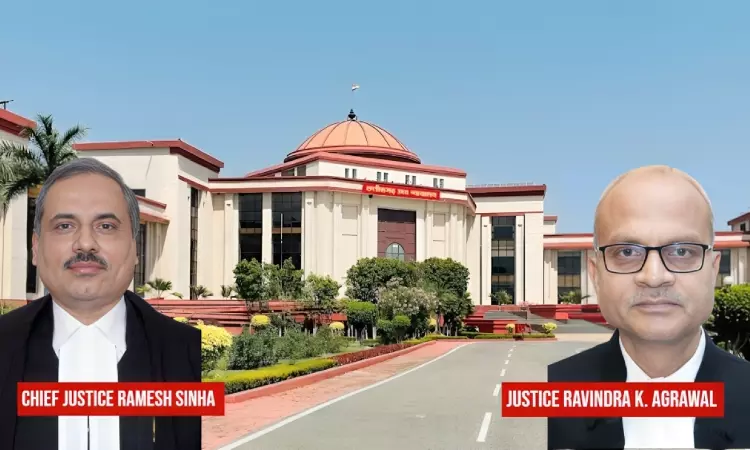
A Division Bench comprising Chief Justice Ramesh Sinha and Justice Ravindra Kumar Agrawal was hearing a writ petition challenging the legality of the petitioner's arrest and detention in connection with a cyber fraud case.
The petitioner contended that he was picked up from his residence at Rohtak, Haryana, on 28 June 2026, taken to Delhi and thereafter transported to Chhattisgarh without being produced before the nearest Magistrate or obtaining a transit remand. He further alleged that neither the grounds of arrest nor the reasons for his detention were communicated to him or his family members.
The State, on the other hand, contended that after being served with a notice under Section 35(3) of the BNSS, the petitioner voluntarily accompanied the police to Ambikapur and was formally arrested only on 30 June 2026 after incriminating material surfaced during investigation.
The Court found that the admitted factual position was that the petitioner remained continuously with the police from the evening of 28 June 2026 till his production before the Magistrate on 30 June 2026 and travelled across several States under the control and supervision of the police. It held that the endorsement made by the petitioner on the notice under Section 35(3) of the BNSS could not, by itself, establish that he was free to decline the request or proceed independently.
“The alleged voluntariness of such travel has to be viewed in the backdrop of the unequal position occupied by a citizen… Mere endorsement on a notice, particularly when made while the person is already under police control, cannot by itself establish that he was free to decline the request or to proceed independently,” the Court remarked.
The Court further observed that the constitutional guarantee contained in Article 22(2) cannot be defeated by postponing the formal preparation of an arrest memo. The expression "arrest" occurring in Article 22(2) cannot be construed in a narrow or technical sense.
“Acceptance of the respondents' submission would enable the investigating agency to keep a person in its exclusive custody for an indefinite duration under the guise of voluntary cooperation and thereafter prepare a formal arrest memo at a time convenient to it, thereby rendering the constitutional safeguard illusory,” the Court noted.
The Court further held that the record did not satisfactorily establish compliance with the mandatory safeguards regarding communication of the grounds of arrest at the point when the petitioner's liberty was first curtailed. It held that judicial remand cannot cure an illegal arrest or validate an unconstitutional detention and that the gravity of the allegations cannot justify departure from the mandatory safeguards enacted to protect personal liberty.
Accordingly, the Court held that the petitioner's detention from 28 June 2026 till his production before the Magistrate on 30 June 2026 was illegal and violative of Article 22 of the Constitution as well as Section 187 of the BNSS. It quashed the remand orders and directed the petitioner's release.
Case Title: Jitesh Anand @ Jitu v. State of Chhattisgarh & Ors. [WPCR No. 388 of 2026]
Click Here To Read/Download Order
Citation: 2026 LiveLaw (Chh) 105
Tags