- Home
- /
- High Courts
- /
- Chhattisgarh High Court
- /
- Merit-Cum-Seniority; Seniority ...
Merit-Cum-Seniority; Seniority Can't Be Applied Mechanically Not Evaluating Merit: Chhattisgarh HC
Namdev Singh
10 April 2026 11:30 AM IST
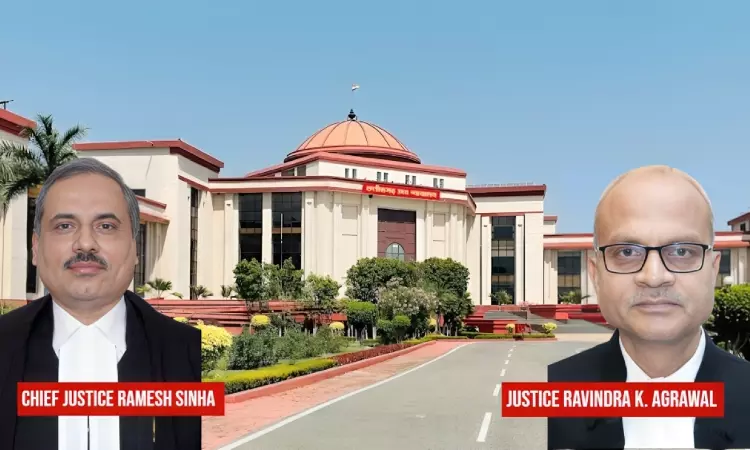
A Division Bench of the Chhattisgarh High Court comprising Chief Justice Ramesh Sinha and Justice Ravindra Kumar Agrawal held that under the principle of merit-cum-seniority, the DPC must first make a comparative assessment of merit, and seniority can be used only as a tiebreaker, not as the sole basis for promotion. Background Facts The appellant was appointed as a Jail...
This is a premium content
Available exclusively to
Our subscribers
Subscribe Premium 
INR 1099+GST
Your support helps us to bring you more content at
an affordable subscription scheme !!!
All payment options available
A Division Bench of the Chhattisgarh High Court comprising Chief Justice Ramesh Sinha and Justice Ravindra Kumar Agrawal held that under the principle of merit-cum-seniority, the DPC must first make a comparative assessment of merit, and seniority can be used only as a tiebreaker, not as the sole basis for promotion.
Background Facts
The appellant was appointed as a Jail Superintendent in 1994. He was inducted into the cadre in 2000. The respondent joined the service in 2009. When a vacancy arose for the post of Deputy Inspector General (DIG) Jail, a Departmental Promotion Committee (DPC) meeting was held in February 2023. The merit-cum-seniority criteria was applied based on ACR gradings.
The DPC recommended the appellant for promotion over the respondent. The respondent obtained the DPC proceedings and ACR chart under the RTI Act. He claimed that he had superior ACR gradings and upgraded entries.
The respondent submitted a representation seeking reconsideration, which was rejected on the ground of non-availability of vacancy. The appellant had already been promoted. Aggrieved by this, the respondent filed a writ petition before the High Court. A Single Judge allowed the petition and quashed the promotion order.
Aggrieved by the same, the appellant filed the writ appeal before the Division Bench.
It was argued by the appellant that the DPC had strictly followed the prescribed merit-cum-seniority criteria, where the benchmark was an overall ACR grading of “Very Good.” Both the appellant and respondent fell within the same “Very Good” category, therefore, their merit was considered equal.
It was further argued that as per Rule 7(9) of the Chhattisgarh Public Services (Promotion) Rules, 2003, if candidates are of equal merit then seniority in the feeder cadre becomes the deciding factor. The appellant was 15 years senior to the respondent. Therefore, he was rightly recommended for promotion. It was further submitted that the Single Judge erred by focusing on the number of Outstanding entries rather than the overall grading which is a decisive factor.
On the other hand, the respondent opposed the submissions made by the appellant. It was submitted that the Single Judge after considering all the aspects of the matter has rightly allowed the writ petition
Findings and Observations of the Court
It was observed by the Division Bench that the Rule 7 of the Chhattisgarh Public Services (Promotion) Rules, 2003, provide that promotion to the post of Deputy Inspector General of Prisons was required to be strictly governed by the principle of merit-cum-seniority. Therefore, it mandate a comparative assessment of merit of all eligible candidates within the zone of consideration.
However, while examining the DPC proceedings, it was found that although the benchmark of “Very Good” ACR grading was applied and all candidates were held eligible, the DPC failed to undertake a comparative evaluation of their merit and instead erroneously treated them as equal merely on the basis of similar gradings. Thereafter, DPC recommended the appellant solely on the basis of seniority. It was held by the court that it amounted to a mechanical application of seniority in violation of the statutory requirement.
The decision of the Supreme Court in Ajit Singh and Others (II) vs. State of Punjab and Others was relied upon to conclude that merit must be the predominant consideration and seniority can operate only as a tiebreaker after proper merit assessment.
It was held by the Division Bench that the DPC failed to assess the comparative merit, therefore, the promotion order was arbitrary and illegal.
With the aforesaid observations, the Single Judge's order was upheld by the Division Bench. Consequently, the writ appeal filed by the appellant was dismissed by the Division Bench.
Case Name : S.S. Tigga vs. State of Chhattisgarh & Others
Case No. : WA No. 265 of 2026
Counsel for the Appellant : Fouzia Mirza, Sr. Adv. Along with Ali Afzaal Mirza, Advocate
Counsel for the Respondents : Praveen Das, Add. A.G., Sudeep
Click Here To Read/Download Order
Citation: 2026 LiveLaw (Chh) 35