Probationer Can Be Terminated For Unsatisfactory Performance Without Enquiry: Chhattisgarh High Court Reiterates
Namdev Singh
18 Oct 2026 10:45 AM IST
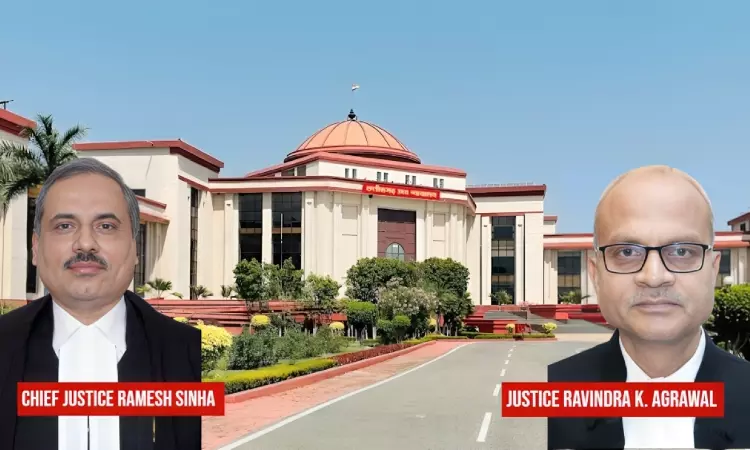
A Division Bench of the Chhattisgarh High Court comprising Chief Justice Ramesh Sinha and Justice Ravindra Kumar Agrawal held that the termination of a probationer's services, based on unsatisfactory performance and allegations of misconduct is not punitive in nature, and it does not require a departmental enquiry under Article 311 of the Constitution.
Background Facts
The appellant was appointed as an Associate Professor in the Department of Bio-Technology of Guru Ghasidas University, Bilaspur. He joined his duties on 05.03.2012 on probation for a period of two years. During the initial period of his service, the appellant claims to have discharged his duties satisfactorily and was entrusted with various academic and administrative responsibilities.
A dispute arose between the Associate Professor and the Vice-Chancellor. Following an incident happened on 22.04.2013, the Professor lodged a complaint at Police Station Koni, Bilaspur.
Thereafter, between 25.04.2013 and 29.05.2013, six show-cause notices containing allegations relating to misconduct and indiscipline were issued to the Associate, to which he submitted replies. His probation was extended by one year. However, his services were terminated on the ground that his performance during the probationary period was found to be unsatisfactory.


Aggrieved, the Associate Professor filed a writ petition. The Professor contended that no charge-sheet was issued, no departmental enquiry was conducted and no opportunity of hearing was afforded to him. The petition was dismissed by the Single Judge. It was held that the termination order was non-stigmatic. It was further held by the Single Judge that the termination order was based on unsatisfactory performance during probation, therefore, no departmental enquiry was required.
Aggrieved by the judgment of the Single Judge, the Associate Professor filed the intra Court appeal before the Chhattisgarh High Court.
It was argued by the appellant that the termination was punitive and founded upon allegations of misconduct and indiscipline, as was evident from the series of show-cause notices issued to the Professor. The decision in Dishan Singh Dahariya v. State of Chhattisgarh was relied upon wherein a similarly situated probationer was held entitled to protection of a regular inquiry.
It was further submitted that other similarly situated persons were subjected to minor penalties, whereas the Professor alone was terminated. It was submitted that his academic record, student feedback and research grant reflected satisfactory performance. It was further argued that the probation was extended by one year, but services were terminated much before expiry without any assessment. It was submitted that the University had acknowledged the Associate Professor as a good teacher in its communication to the President's Secretariat.
On the other hand, it was argued by the respondents that the Single Judge after considering all aspects had rightly dismissed the writ petition, in which no interference is sought for.
Findings and Observations of the Court
It was observed by the Division Bench that the Single Judge noted Condition No.7 of the appellant's appointment order, and held that the appellant was appointed on probation for a period of two years, which was extendable by a further period of one year. Further, that his services could be terminated if his performance during probation was found to be unsatisfactory.
It was further observed that the termination order did not allege any misconduct against the Professor and did not use any language suggesting that the termination was punitive or stigmatic. The argument of the Professor was rejected that the show-cause notices issued before termination meant that the termination was based on misconduct and therefore required a departmental enquiry.
Relying on the Supreme Court's decision in Rajasthan High Court v. Ved Priya, it was held that a probationer can be terminated if his performance is found unsatisfactory, without conducting a departmental enquiry under Article 311 of the Constitution.
It was held by the Division Bench that the termination order was not neither stigmatic nor punitive in nature.
With the aforesaid observations, the judgment of the Single Judge was upheld by the Division Bench. Consequently, the writ appeal filed by the appellant was dismissed by the Division Bench.
Counsel for the Appellant : Avinash K. Mishra
Counsel for the Respondents : S.S. Baghel, G.A., Annapurna Tiwari, CGC, Ashish Shrivastava, Sr. Adv. Along with Rahul Ambast, Advocate, Shotabdi Bagchi, Advocate and Ananya Pandey, Advocate