- Home
- /
- High Courts
- /
- Chhattisgarh High Court
- /
- RTI: Inquiry Records Sought For...
RTI: Inquiry Records Sought For Self-Defence Cannot Be Denied If No Third-Party Privacy Involved, Rules Chhattisgarh High Court
Namdev Singh
10 Sept 2026 8:45 AM IST
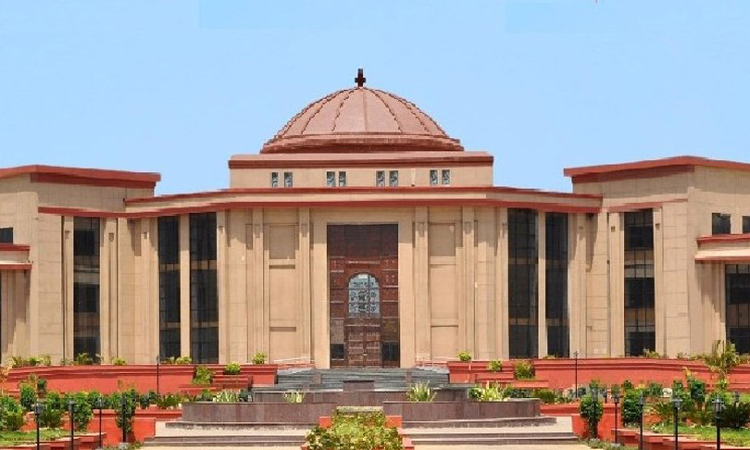
A Chhattisgarh High Court bench comprising Justice Amitendra Kishore Prasad held that the denial of information under Sections 8(1)(c) and 8(1)(j) of the RTI Act is impermissible when the requested information pertains to the petitioner's own departmental inquiry and is sought for self-defence, and it does not involve third-party privacy. [2026 LiveLaw (Chh) 128] Background Facts...
This is a premium content
Available exclusively to
Our subscribers
Subscribe Premium 
INR 1099+GST
Your support helps us to bring you more content at
an affordable subscription scheme !!!
All payment options available
A Chhattisgarh High Court bench comprising Justice Amitendra Kishore Prasad held that the denial of information under Sections 8(1)(c) and 8(1)(j) of the RTI Act is impermissible when the requested information pertains to the petitioner's own departmental inquiry and is sought for self-defence, and it does not involve third-party privacy. [2026 LiveLaw (Chh) 128]
Background Facts
The petitioner was working as a driver in the establishment of the Family Court, Janjigir. Two departmental inquiries were initiated against the petitioner in respect of certain allegations. Seven charges were levelled against him for misconduct. The departmental inquiries were concluded and the service of petitioner was terminated vide order dated 05.01.2021 passed by the Principal Judge, Family Court.
The order of termination was challenged by way of a departmental appeal through the Registrar General, High Court of Chhattisgarh. The petitioner challenged the order of termination on the ground that it was the denial of a fair and reasonable opportunity of defence, both prior to issuance of the said order and during the course of the departmental enquiry.
The petitioner had sought certain information and related documents from the department in respect of the departmental enquiry initiated against him. However, the information and documents were initially denied by the department. Therefore, the petitioner approached the Public Information Officer of the Department. The request was finally rejected vide order dated 15.01.2021.
An appeal was preferred against the order passed by the Public Information Officer, however, it was rejected. Further a second appeal preferred before respondent under the RTI Act 2005 was also dismissed.
Aggrieved by the same, the petitioner filed a writ petition before the High Court of Chhattisgarh.
It was argued by the petitioner that he had sought information in respect of the complete note sheets of office memo on the basis of which the order of termination was passed. The information was neither confidential, related to a third party nor intended for use against any third party. The information sought was primarily to defend himself before the higher authorities where the order of termination was itself under challenge. It was submitted that the information sought was for an effective defence that the petitioner could take up before the higher authority in his favour to seek quashing of the order whereby the services of the petitioner stood terminated.
On the other hand, it was contended by the respondents that the application and two appeals were rejected on the ground that they were hit by the provisions of Section 8(1)(c) and 8(1)(j) of the Act of 2005. Further the information sought by the petitioner was in respect of third party information and which could cause a breach of privilege of the parliament and the State Legislature.
Findings and Observations of the Court
It was observed by the court that on due consideration of the information sought by the petitioner, it would not be an information or disclosure of information which could cause breach of privilege of Parliament or the State Legislature. Further, the information sought was not an information which relates to a disclosure of personal information to which the petitioner has no relationship or has no interest or which could cause unwarranted invasion of the privacy of a third party.
It was further observed by the court that the order of dismissal was passed by the same authority who had decided the first appeal which would not be a fair proceeding drawn on the part of the Presiding Judge, Family Court.
It was held by the court that the findings arrived at by the Public Information Officer, the First Appellate Authority and also by the Second Appellate Authority were per se contrary to the provisions of Section 8 of the Right to Information Act. Therefore, the three orders were set aside by the court.
Further, the respondent was directed to ensure that the information sought by the petitioner was made available to him in terms of the Act of 2005, after payment of all the requisite fees by the petitioner, at the earliest preferably within a period of 30 days from the date of receipt of copy of this order.
With the aforesaid observations, the writ petition filed by the petitioner was disposed of by the court.
Case Name : Akram Khan v. Central Information Commissioner & Others
Case No. : WPC No. 3505 of 2022
Citation: 2026 LiveLaw (Chh) 128
Counsel for the Petitioner : Vikram Dixit, Advocate
Counsel for the Respondents : Rishabh Deo Singh, Advocate; Shyam Sunder Lal Tekchandani, Advocate