- Home
- /
- High Courts
- /
- Chhattisgarh High Court
- /
- Show-Cause Notice Mandatory For...
Show-Cause Notice Mandatory For Blacklisting Contractor; Arbitration Clause No Bar To Writ Petition Against Debarment: Chhattisgarh High Court
Saksham Vaishya
3 Aug 2026 11:35 AM IST
The Chhattisgarh High Court has held that a contractor cannot be blacklisted without being served a specific show-cause notice expressly proposing such action. The Court further observed that the existence of an arbitration clause does not bar the exercise of writ jurisdiction where the challenge is directed against arbitrary administrative action or violation of the principles of...
This is a premium content
Available exclusively to
Our subscribers
Subscribe Premium 
INR 1099+GST
Your support helps us to bring you more content at
an affordable subscription scheme !!!
All payment options available
The Chhattisgarh High Court has held that a contractor cannot be blacklisted without being served a specific show-cause notice expressly proposing such action. The Court further observed that the existence of an arbitration clause does not bar the exercise of writ jurisdiction where the challenge is directed against arbitrary administrative action or violation of the principles of natural justice, particularly in relation to blacklisting. [2026 LiveLaw (Chh) 97]
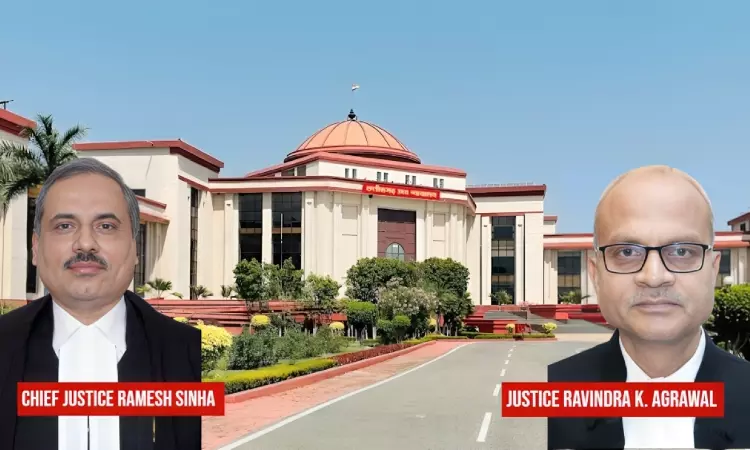
A Division Bench comprising Chief Justice Ramesh Sinha and Justice Ravindra Kumar Agrawal was hearing a writ petition filed by a partnership firm challenging an order of the South East Central Railway terminating its contract for hiring diesel-operated forklifts and simultaneously debarring it from participating in future tenders for two years. The petitioner contended that although a performance notice alleging deficiencies had been issued, the mandatory seven-day notice under the General Conditions of Contract was never served before termination, and no opportunity to explain the alleged deficiencies or to show cause against the proposed debarment/blacklisting was provided. The Railways opposed the petition, contending that the action had been taken strictly in accordance with the contract. It further argued that the petition was not maintainable in writ jurisdiction because of the arbitration in the agreement.
The Court first rejected the preliminary objection regarding maintainability. It observed that though where parties have consciously agreed upon an arbitral mechanism, the Court would ordinarily decline to exercise its extraordinary jurisdiction under Article 226 of the Constitution, an arbitration clause cannot be treated as an absolute bar.
“… the existence of an arbitration clause does not by itself operate as an absolute bar to the exercise of writ jurisdiction where the action of the State or its instrumentalities is alleged to be arbitrary, unreasonable, violative of the principles of natural justice or where the challenge is directed to the decision-making process rather than to the merits of the contractual dispute,” the Court remarked.
The Bench held that the challenge to the blacklisting order involved examination of fairness in administrative action and the principles of natural justice, which squarely fell within the ambit of judicial review under Article 226.
The Court noted that termination of a contract and blacklisting operate in different fields, where the latter carries independent penal and stigmatic consequences, which must satisfy the requirements of fairness and natural justice recognised by law.
Consequently, the Court held that while the disputes relating to termination of the contract involved contractual questions which could appropriately be dealt with under arbitration, the debarment order could not be sustained because no specific show-cause notice proposing blacklisting had ever been issued. It observed:
“… there is nothing on record to demonstrate that the petitioner was ever specifically put to notice that debarment/blacklisting for a period of two years was one of the proposed actions. A notice alleging deficiencies in performance or proposing termination of the contract cannot, by itself, be treated as a substitute for a notice proposing blacklisting unless such penal consequence is specifically disclosed therein. The requirement of a specific and unambiguous notice is not an empty formality but a substantive safeguard intended to ensure fairness in administrative action.”
Accordingly, it declined to entertain the challenge to the termination of the contract in writ jurisdiction, but quashed the order debarring the petitioner for two years.
Case Title: M/s. Dynami Enterprises v. Union of India & Ors. [WPC No. 3783 of 2026]
Click Here To Read/Download Order
Citation: 2026 LiveLaw (Chh) 97
Tags