



- Home
- /
- High Courts
- /
- Delhi High Court
- /
- Being First In Reserve List Doesn't...
Being First In Reserve List Doesn't Create Right To Promotion Merely Because Vacancies Arise: Delhi High Court
LIVELAW NEWS NETWORK
16 Sept 2026 10:38 AM IST
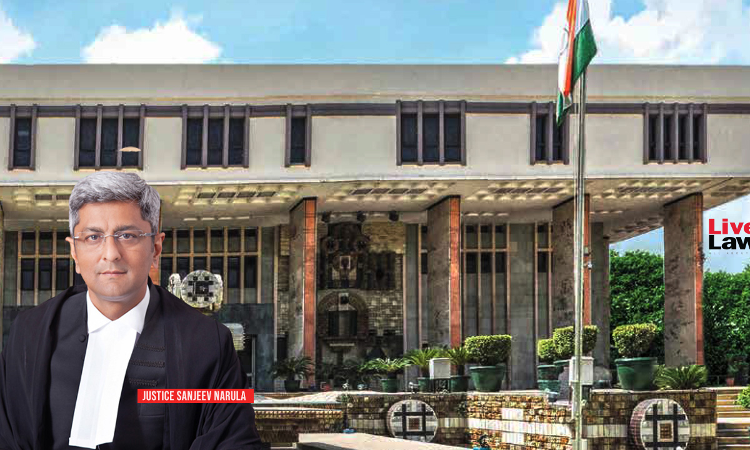
The Delhi High Court has held that an employee's first placement in a Reserve List does not by itself create a right to promotion merely because vacancies arise during the validity of the list. [2026 LiveLaw (Del) 851]Justice Sanjeev Narula observed that while the employee's position in the Reserve List would give him precedence if the Bank decided to operate the list, it did not oblige the...
This is a premium content
Available exclusively to
Our subscribers
Subscribe Premium 
INR 1099+GST
Your support helps us to bring you more content at
an affordable subscription scheme !!!
All payment options available
The Delhi High Court has held that an employee's first placement in a Reserve List does not by itself create a right to promotion merely because vacancies arise during the validity of the list. [2026 LiveLaw (Del) 851]
Justice Sanjeev Narula observed that while the employee's position in the Reserve List would give him precedence if the Bank decided to operate the list, it did not oblige the Bank to do so.
The Court was dealing with a petition filed by a former Deputy General Manager of Bank of Baroda, seeking promotion to the post of General Manager with effect from December 1, 2016, along with consequential benefits.
The Petitioner had joined the Bank in 1978 and was promoted as Deputy General Manager in May 2014. In May 2016, the Bank conducted a promotion exercise for elevation.
Three officers were declared successful, while 15 others were placed in a Wait List for consideration against future vacancies arising up to March 31, 2017, subject to vigilance clearance. A Reserve List of three officers was also prepared, in which Petitioner stood first. The Reserve List was to remain valid until April 1, 2017.
According to Petitioner, vacancies subsequently arose in the General Manager cadre, including one following the retirement of an officer on December 1, 2016. Since he was first in the Reserve List, he contended that he ought to have been promoted against that vacancy from December 1, 2016.
He also relied upon past instances where officers from Reserve Lists had allegedly been promoted against additional vacancies, contending that this gave rise to a legitimate expectation of similar treatment.
The Bank, while not disputing that Reserve List candidates had been promoted on earlier occasions, argued that inclusion in the Reserve List did not confer any right to promotion. It relied upon the Promotion Policy, which permitted the Management to keep vacancies unfilled and gave the Chairman & Managing Director/MD & CEO discretion to release promotions from the Wait List as and when vacancies arose.
At the outset, the High Court examined Clauses 11.8 to 11.10 of the Promotion Policy and noted that Clause 11.8 expressly permitted the Management to keep vacancies unfilled, notwithstanding their availability. Clause 11.10 similarly stated that the competent authority “may release” promotions from the Wait List as and when vacancies arose.
In this backdrop the Court held that the policy left a measure of administrative discretion with the Bank.
“A Reserve List serves an evident administrative purpose; it enables the Bank to draw upon an already assessed pool of officers if an additional vacancy is required to be filled,” the Court said, adding that “preparedness to fill a vacancy is not the same thing as a commitment that every vacancy which arises must be filled.”
It relied on the Supreme Court's Constitution Bench judgment in Shankarsan Dash v. Union of India which held that unless the governing rules provide otherwise, the existence of vacancies does not cast a legal duty to fill them and inclusion in a select list does not confer an indefeasible right to appointment merely because vacancies exist.
The Court noted that the entire Reserve List remained unoperated and that no candidate below Petitioner in the list was promoted. Therefore, there was no question of a less meritorious candidate being preferred over him.
The Court also rejected his contention based on the proposed cadre strength of 46 General Managers, observing that even if 46 was accepted as the relevant strength, it did not mean that all posts had to remain occupied at every point in time.
As such, the Court dismissed the petition.
Appearance: Mr. Deepak K. Vijay and Ms. Neeru Sharma, Advocates for Petitioner; Ms. Praveena Gautam, Mr. Pawan Shukla, Ms. Tissy A. Thomas, Mr. Rohan Bansla, Advocates for Respondent
Case title: Ravi Kant Thakral v. Bank Of Baroda
Citation: 2026 LiveLaw (Del) 851
Case no.: W.P.(C) 5601/2019


