



- Home
- /
- High Courts
- /
- Delhi High Court
- /
- Unrecorded Monetary Assurances...
Unrecorded Monetary Assurances Can't Be Added To Concluded Settlement Without Cogent Proof Of Fraud: Delhi High Court
Nupur Thapliyal
28 Sept 2026 1:45 PM IST
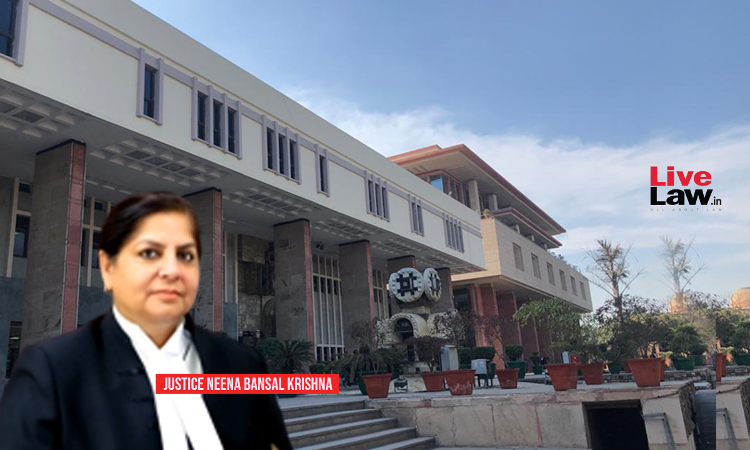
The Delhi High Court has held that unrecorded monetary assurances cannot be added to a concluded settlement merely on the basis of subsequent assertions, unless clear and cogent material establishes fraud, inducement or other circumstances vitiating the parties' consent. [2026 LiveLaw (Del) 918]Justice Neena Bansal Krishna made the observation while dismissing a plea filed by three...
This is a premium content
Available exclusively to
Our subscribers
Subscribe Premium 
INR 1099+GST
Your support helps us to bring you more content at
an affordable subscription scheme !!!
All payment options available
The Delhi High Court has held that unrecorded monetary assurances cannot be added to a concluded settlement merely on the basis of subsequent assertions, unless clear and cogent material establishes fraud, inducement or other circumstances vitiating the parties' consent. [2026 LiveLaw (Del) 918]
Justice Neena Bansal Krishna made the observation while dismissing a plea filed by three defendants (appellants) challenging a consent decree passed in a property dispute.
The suit filed by the respondents was decreed in terms of the settlement arrived at between the parties.
The Court observed that the appellants were seeking to superimpose an additional monetary obligation on the settlement which found no reflection in the joint statement recorded before the Trial Court.
“Such an obligation cannot be read into a concluded settlement merely on the basis of subsequent assertions, unless its existence as part of the final bargain is established by clear and cogent material,” the Court said.
“Consequently, unless the Appellants are able to establish fraud, inducement or any other circumstance affecting the validity of their consent, the alleged oral assurance of payment beyond the recorded amount cannot, by itself, be read into or added to the settlement,” it added.
During the pendency of the suit, the parties entered into a settlement. On September 26, 2022, all three appellants appeared personally before the Trial Court along with their counsel and made a joint statement on solemn affirmation.
Under the settlement, the appellants acknowledged that they and their legal heirs had no right, title or interest in the property and handed over peaceful possession of the portion in their occupation along with its keys. In return, the respondents handed over three demand drafts totalling Rs. 40 lakh.
The parties expressly acknowledged the amount as the “full and final settlement” and undertook that there would be no further civil or criminal litigation concerning the property. The Trial Court also specifically enquired whether they had understood the terms of settlement, to which they replied in the affirmative.
Subsequently, the appellants claimed that they had agreed to relinquish their alleged rights in the property on the assurance that they would receive an additional Rs. 3 crore upon its sale.
They also relied on two post-dated cheques of Rs. 5 lakh each and alleged that their consent had been obtained through false promises and representations.
They consequently moved an application under Section 151 of CPC seeking setting aside of the consent decree. The Trial Court rejected the application, observing that the settlement expressly recorded Rs. 40 lakh as full and final settlement and contained no reference to any additional payment or assurance.
Dismissing their appeal, the High Court held that the settlement was neither vague nor ambiguous, nor incomplete or uncertain.
It emphasised that the consideration of Rs. 40 lakh was specifically quantified, the appellants simultaneously handed over possession and keys and they expressly acknowledged that they had no right, title or interest in the property.
The Court further noted that the alleged additional payment of Rs. 3 crore was not an incidental term but, according to the appellants themselves, an integral part of the consideration which induced them to surrender possession and relinquish their claims.
“If payment of a further sum of Rs.3 Crores was indeed an integral part of the consideration which induced the Appellants to surrender possession and relinquish their claims in the suit property, it would ordinarily and naturally have found a specific and express mention in the settlement recorded before the learned Trial Court,” the Court said.
It further held that the appellants had failed to establish fraud, inducement, undue influence or any other circumstance rendering the compromise void or voidable.
Accordingly, the Court held that the alleged unrecorded assurances could not be permitted to supplant, vary or enlarge the settlement solemnly placed before the Trial Court and acted upon by the parties.
The Court accordingly dismissed the appeal and upheld the Trial Court's refusal to set aside the consent decree.
Counsel for Appellants: Mr. Rishabh Malhotra, Mr. Abhishek Lakra, Advocates
Counsel for Respondents: Mr. Bharat Chugh, Mr. Mayank Arora, Mr. Maanish M. Choudhary, Mr. Sarthak Mittal, Mr. Sukriti Saxena, Advocates
Title: AARTI KAKKAR & ORS v. DINESH MEHAN & ANR
Citation: 2026 LiveLaw (Del) 918
Tags

Nupur Thapliyal
Nupur Thapliyal is a Principal Correspondent with LiveLaw, based in New Delhi. She reports from the Delhi High Court and trial courts in the national capital

