



- Home
- /
- High Courts
- /
- Delhi High Court
- /
- Can't Use Inherent Powers U/S.528...
Can't Use Inherent Powers U/S.528 BNSS As 'Backdoor Entry' After Revision Fails Unless Gross Injustice Shown: Delhi High Court
LIVELAW NEWS NETWORK
27 Sept 2026 9:30 AM IST
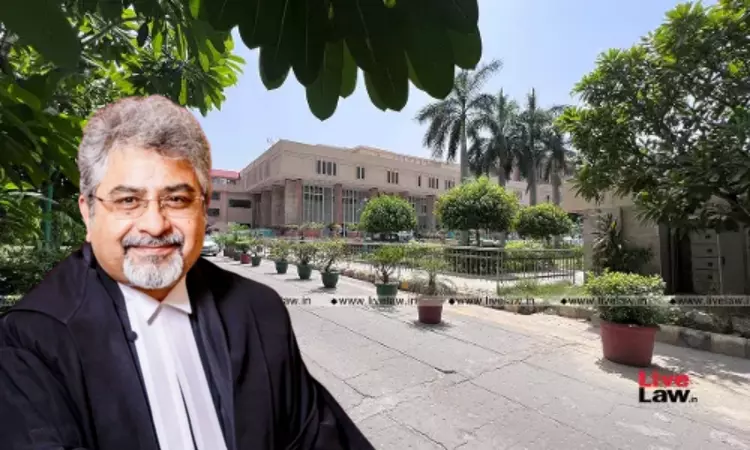
The Delhi High Court has held that a party cannot ordinarily invoke its inherent powers under Section 528 of the Bharatiya Nagarik Suraksha Sanhita (BNSS) as a “backdoor entry” to challenge an order after having unsuccessfully exhausted the revisional remedy, unless the case involves grave miscarriage of justice.Justice Girish Kathpalia observed that although the inherent powers of the...
This is a premium content
Available exclusively to
Our subscribers
Subscribe Premium 
INR 1099+GST
Your support helps us to bring you more content at
an affordable subscription scheme !!!
All payment options available
The Delhi High Court has held that a party cannot ordinarily invoke its inherent powers under Section 528 of the Bharatiya Nagarik Suraksha Sanhita (BNSS) as a “backdoor entry” to challenge an order after having unsuccessfully exhausted the revisional remedy, unless the case involves grave miscarriage of justice.
Justice Girish Kathpalia observed that although the inherent powers of the High Court are wide, they cannot be exercised routinely in a manner that renders the statutory bar under Section 438(3) BNSS otiose.
The Court was dealing with a petition filed by a man challenging the dismissal of his application seeking directions for registration of an FIR in connection with the death of his wife during the COVID-19 pandemic.
The man had earlier approached the Magistrate under Section 156(3) CrPC ( corresponding to Section 175(3) BNSS), alleging that his wife had died after the alleged stoppage of oxygen supply at a hospital.
The Magistrate, after considering the Action Taken Report submitted by the police, had declined to direct registration of an FIR. The Magistrate observed that the man was aware of the identity of the persons against whom allegations were made and the evidence was within his knowledge. It therefore directed him to proceed with pre-summoning evidence.
The Petitioner challenged this order before the Sessions Court but his revision petition was dismissed. He thereafter approached the High Court under Section 528 BNSS, contending that the revisional jurisdiction under Section 438 BNSS and the inherent jurisdiction under Section 528 BNSS operated in different fields.
Rejecting the challenge, the High Court examined the interplay between Section 438(3) and Section 528 BNSS.
The Court noted that Section 438(3) BNSS, like the erstwhile Section 397(3) CrPC, prohibits a party from pursuing a further revision after having already approached either the High Court or the Sessions Court.
“What is explicitly prohibited by law cannot be allowed backdoor entry by invoking inherent powers,” the Court observed while relying on its judgment in Exclusive Capital Ltd. vs State, Government of NCT Delhi (2026).
It added that an exception exists where the High Court is satisfied that there is gross injustice, grave miscarriage of justice, abuse of process or a comparable exceptional circumstance.
The Court observed that the relevant question was whether Petitioner had been rendered remediless after the dismissal of his revision petition.
Answering this in the negative, the Court noted that Petitioner's complaint was still pending before the Magistrate and he could lead pre-summoning evidence.
As such, the Court held that the present case did not constitute a “rarest of rare case” warranting invocation of inherent powers.
Appearance: Mr. Paranjay Chopra, Advocate for Petitioner; Mr. Nawal Kishore Jha, APP for State with SI Rohit Sagar, PS Laxmi Nagar.
Case title: Anil Ahluwalia v. State NCT of Delhi
Citation: 2026 LiveLaw (Del) 915
Case no.: CRL.M.C. 119/2026


