- Home
- /
- High Courts
- /
- Delhi High Court
- /
- Combatised BSF Person Retire At 57,...
Combatised BSF Person Retire At 57, Can't Claim Civilian Retirement Age Of 60 - Delhi High Court
Namdev Singh
5 April 2026 9:54 AM IST
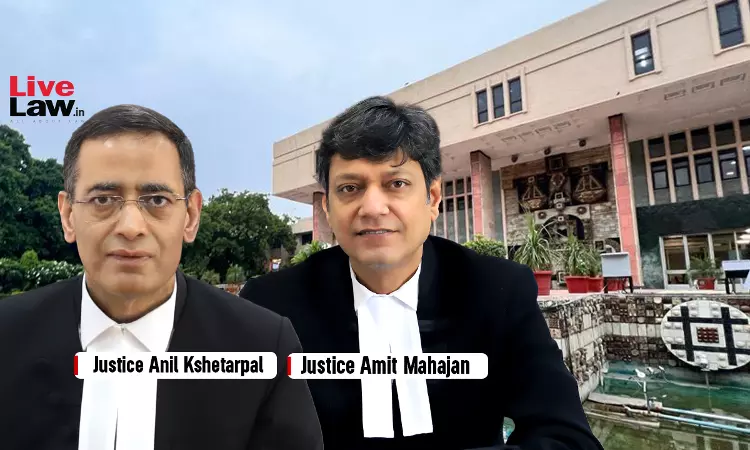
A Division Bench of the Delhi High Court comprising Justice Anil Kshetarpal and Justice Amit Mahajan held that a re-employed ex-serviceman appointed to a combatised post in the Border Security Force, who enjoys the benefits of that combatised cadre, is governed by the BSF's statutory superannuation age of 57 years and not by the 60-year retirement age applicable to...
This is a premium content
Available exclusively to
Our subscribers
Subscribe Premium 
INR 1099+GST
Your support helps us to bring you more content at
an affordable subscription scheme !!!
All payment options available
A Division Bench of the Delhi High Court comprising Justice Anil Kshetarpal and Justice Amit Mahajan held that a re-employed ex-serviceman appointed to a combatised post in the Border Security Force, who enjoys the benefits of that combatised cadre, is governed by the BSF's statutory superannuation age of 57 years and not by the 60-year retirement age applicable to civilian posts.
Background Facts
The respondent was discharged from the Indian Air Force on 31st August 1990. Subsequently he was re-employed as Sub-Inspector Junior Aircraft Mechanic in the BSF Air Wing on 13th December 1991. In 2003, the BSF issued an order retiring him upon attaining the age of 57 years.
Aggrieved by the same, he approached the Central Administrative Tribunal. It was contended that the post held by him was civilian in nature, therefore, he was entitled to superannuate at 60 years. The Tribunal allowed his application. It was held that re-employed Armed Forces personnel in the BSF shall continue in service up to the age of superannuation with reference to civil posts.
Aggrieved by the Tribunal's decision, the BSF filed the writ petitions before the Delhi High Court.
It was argued by the BSF that the combatised posts are provided with higher pay scales and additional allowances over their civilian counterparts. The respondent was appointed against the combatised post. It was argued that once an employee has enjoyed all the benefits to service in a combatised post, at the end of service, he cannot claim that he ought to be treated as a non combatised employee to claim more favourable terms of retirement.
It was contended that conversion of civilian posts into combatised posts received presidential sanction on 19.09.1989. Therefore, the post of Junior Aircraft Mechanic in the Air Wing was combatised. The respondent was appointed to post which was sanctioned subsequent to the Sanction of 1989, therefore, such posts cannot be characterized as civilian posts. Consequently, the respondent was precluded from claiming the retirement benefits applicable to civilian posts.
It was further argued that under Rule 12 of the BSF (Seniority, Promotion and Superannuation of Officers) Rules, 1978, officers below the rank of Commandant retire at 57 years. The same was made applicable to re-employed defence personnel by a circular issued by the Ministry of Home Affairs.
On the other hand, it was argued by the respondents that the Border Security Force (Air Wing, non-combatised Group C and D posts) Recruitment Rules, 1996 provided that Armed Forces personnel re-employed in the BSF shall continue in service up to the age of superannuation applicable to civil posts. It was submitted that the respondent was re-employed prior to the framing of the 1997 Rules which classified the posts as combatised. Therefore, Rules of 1997 were inapplicable to him.
Findings and Observations of the Court
It was noted by the Court that the Rules of 1978 draw a clear line that the officers above the rank of Commandant retire at 60 years of age, whereas those of other ranks retire at the age of 57 years. It was observed that this clear distinction was not an arbitrary rather it was an attempt to create a legislative balance between the demands of a uniformed service, the requirements of fitness, deployability and tenure.
it was observed that the 1989 made existing Air Wing BSF posts like Senior Aircraft Mechanic and Junior Mechanic to combatised ranks of Sub-Inspector and Assistant Sub-Inspector. The pay scales were kept same. Therefore, all such posts and future appointments became part of the combatised structure unless specifically retained as civilian posts.
It was further held that the respondent cannot rely on the 1996 Rules because those rules apply to serving Armed Forces personnel, whereas the respondent was already an ex-serviceman at the time of appointment. He was directly appointed to a combatised post with a higher pay scale, not the lower civilian scale. Therefore, if the 1996 Rules are applied then it would wrongly treat his post as civilian.
Further, it was observed that the 1997 Rules are also related to the combatised structure of the BSF, and their provisions apply only to serving personnel and not to the respondent. Further, the 1996 Rules are only related to serving Armed Forces personnel, they do not apply to those already in the combatised BSF cadre. Hence, they cannot override the 1978 Rules, which fix retirement at 57 years for ranks below Commandant.
It was observed by the Division Bench that the Tribunal's decision was based on incorrect assumptions that the post was civilian and governed by the 1996 Rules. The Tribunal ignored the 1989 sanction that had already made such posts combatised. It was held that a person who has enjoyed the benefits of a combatised role cannot later deny its obligations.
It was held by the Division Bench that Air Wing posts of Aircraft Mechanics were combatised by the 1989 Presidential sanction. The respondent was appointed with the rank, pay, and benefits of a combatised BSF officer. The civilian Rules of 1996 were not applicable to him. Therefore, his retirement was governed by the 1978 Rules i.e. his retirement age was 57 years.
With the aforesaid observations, the Tribunal's order was set aside by the Division Bench. Consequently, the writ petitions filed by the BSF were allowed by the Division Bench.
Case Name : UOI & Ors. Vs B.N. Chaubey & Ors.
Citation: 2026 LiveLaw (Del) 344
Case No. : W.P. (C) 980/2004 and W.P. (C) 981-982/2004
Counsel for the Petitioners : Pratima N Lakra, CGSC along with Shailendra Kumar Mishra and Abhishek Sharma, Advs
Counsel for the Respondents : Nikhil Palli and Niyati Razdan, Advs