



- Home
- /
- High Courts
- /
- Delhi High Court
- /
- Delhi High Court Calls For...
Delhi High Court Calls For Coordinated Policy To Prevent Delay In Transporting DNA Evidence In Sexual Assault Cases
Nupur Thapliyal
11 Dec 2025 5:56 PM IST
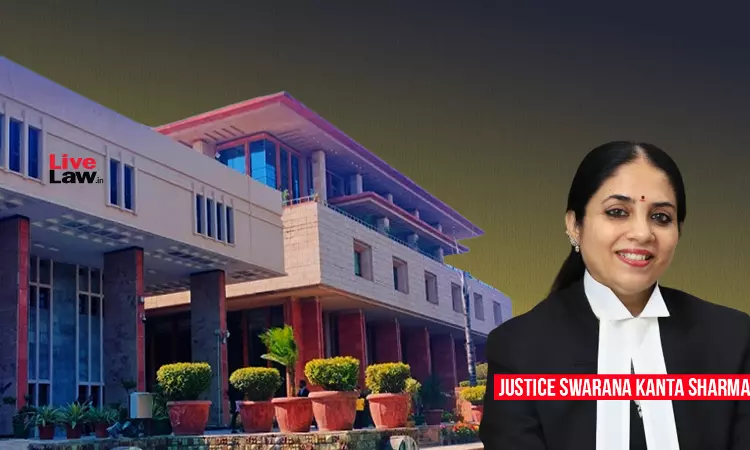
The Delhi High Court has called for framing of a coordinated policy to prevent the delay in transportation of DNA samples in cases of sexual assault. Justice Swarana Kanta Sharma called for an urgent and coordinated policy framework between the Delhi Police, forensic laboratories and Delhi Government's Health and Home Departments. The Court did so to ensure strict and uniform compliance with...
This is a premium content
Available exclusively to
Our subscribers
Subscribe Premium 
INR 1099+GST
Your support helps us to bring you more content at
an affordable subscription scheme !!!
All payment options available
The Delhi High Court has called for framing of a coordinated policy to prevent the delay in transportation of DNA samples in cases of sexual assault.
Justice Swarana Kanta Sharma called for an urgent and coordinated policy framework between the Delhi Police, forensic laboratories and Delhi Government's Health and Home Departments.
The Court did so to ensure strict and uniform compliance with the guidelines issued by the Union Ministry of Health & Family Welfare, CFSL , as well as the binding directions of the Supreme Court.
For context, the Apex Court had issued pan-India guidelines to ensure that DNA evidence is collected with due care, preserved in scientifically appropriate conditions, transported promptly and securely, and that its chain of custody is maintained with proper documentation.
The Supreme Court had directed that all DNA samples, especially in cases of sexual assault, are to be transported immediately and in any case within 48 hours, without any delay.
In her verdict, Justice Sharma flagged practical difficulties- such as the unavailability of adequate cold-storage facilities with the police, logistical challenges in maintaining an unbroken cold chain during transportation of biological samples, and that FSL laboratories remain closed on weekends and public holidays.
The Court said that the said concerns required a “coordinated and proactive response” from all stakeholders, as such practical issues continued to remain unanswered.
It added that if forensic laboratories (FSL) do not accept samples on weekends or public holidays, it is unclear how investigating agencies are expected to comply with the Supreme Court's mandate that DNA samples be transported without delay and, in any case, within 48 hours.
Justice Sharma said that the issues must be urgently addressed, so that avoidable lapses do not lead to miscarriage of justice in cases where corroborative forensic evidence may be crucial for adjudicating a criminal case.
“Therefore, this Court is of the view that the FSL authorities, the police administration, and the officials of the Health and Home Departments of the Government of Delhi must come together and
evolve a workable policy framework to ensure strict and uniform compliance with the guidelines issued by the Ministry of Health & Family Welfare, the CFSL/DFSS, as well as the binding directions of the Hon'ble Supreme Court,” the Court said.
Justice Sharma made the observations while upholding conviction of a man for raping a minor girl aged 17 years. The convict, maternal uncle of the minor, was accused of forcibly committing sexual intercourse with her. She was later found to be pregnant.
Upholding the conviction, the Court noted that the convict had put forth multiple contradictory defences and that none of his assertions were substantiated through any credible evidence.
It added that the prosecution had established beyond reasonable doubt that the convict had committed penetrative sexual assault upon the minor victim and that the minor's account remained consistent on all material aspects.
Justice Sharma said that during the hearings, the Court had noted that crucial DNA evidence, capable of providing significant corroboration, stood lost in the case.
While issuing directions to the authorities, the Court dismissed the appeal and upheld the sentence of rigorous imprisonment for 20 years for the offence punishable under Section 6 of the POCSO Act.
Title: DARSHAN MOHAR v. STATE OF NCT OF DELHI AND ANR
Citation: 2025 LiveLaw (Del) 1694

Nupur Thapliyal
Nupur Thapliyal is a Principal Correspondent with LiveLaw, based in New Delhi. She reports from the Delhi High Court and trial courts in the national capital

