



- Home
- /
- High Courts
- /
- Delhi High Court
- /
- Child Custody Guidelines | Delhi...
Child Custody Guidelines | Delhi High Court Refers PIL For 'Parenting Plan' To Administrative Side; Committee To Decide On Policy
Sparsh Upadhyay
6 Feb 2026 6:24 PM IST
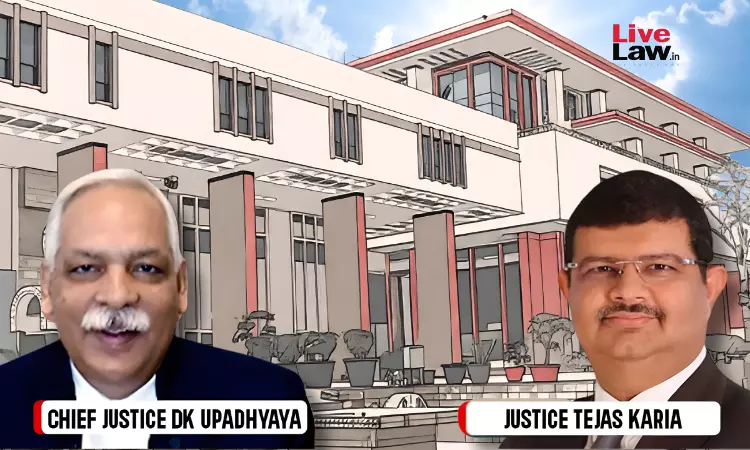
The Delhi High Court on Wednesday asked a PIL petitioner, who sought the formulation of structured 'Child Access and Custody Guidelines' and a 'Parenting Plan', to approach the HC on its Administrative Side for policy formulation regarding the issue. A Bench of Chief Justice Devendra Kumar Upadhyaya and Justice Tejas Karia thus disposed of a PIL plea filed by the Ayushman Initiative...
This is a premium content
Available exclusively to
Our subscribers
Subscribe Premium 
INR 1099+GST
Your support helps us to bring you more content at
an affordable subscription scheme !!!
All payment options available
The Delhi High Court on Wednesday asked a PIL petitioner, who sought the formulation of structured 'Child Access and Custody Guidelines' and a 'Parenting Plan', to approach the HC on its Administrative Side for policy formulation regarding the issue.
A Bench of Chief Justice Devendra Kumar Upadhyaya and Justice Tejas Karia thus disposed of a PIL plea filed by the Ayushman Initiative for Child Rights and the Ekam Nyaay Foundation, observing that the matter was to be considered by the appropriate Committee of the High Court.
The Court granted the petitioners liberty to approach the Registrar General of the High Court with an exhaustive representation within a fortnight, enclosing all relevant documents and precedents.
Disposing of the plea, the Bench ordered:
"On receipt of such representation, the Registrar General of this Court shall place the matter before the appropriate Committee/authority, which shall take a decision in terms of the prayers made in this writ petition for formulating such policy in consultation with the stakeholders."
BRIEFLY PUT, the plea raised concerns about the absence of objective parameters and guidelines in the NCT of Delhi regarding custody, guardianship, and visitation rights of minor children involved in matrimonial litigation.
The petitioners highlighted that the absence of uniform guidelines results in dichotomous and highly variable orders issued by the Courts in identical cases, based on personal perception and the discretion exercised by individual judicial officers.
"Non cognizance of the lifelong adverse impact on the emotional quotient, stability and welfare of the children on account of the inordinate delay in adjudication of child custody and visitation petitions (both interim and final), thus necessitating a standardized guideline to be followed by all Courts", the PIL plea contended.
It also stressed the need to ensure that the separated parent and his side of the family are not alienated from the child's life, thereby saving the child from a lifelong trauma as a result of being separated from a parent and losing out on parental love and care.
On February 4, the counsel for the petitioners submitted that similar guidelines have already been framed and adopted by the Calcutta and Karnataka High Courts.
Thus, the petitioners urged the Delhi High Court to formulate, enact and implement similar Child Access and Custody Guidelines along with a Parenting Plan to ensure that the children are not weaponised in custody battles or subjected to “Parental Alienation”.
Having gone through the averments made in the writ petition and the documents enclosed therewith, the Bench found it appropriate to permit the petitioners to approach the Court on the Administrative Side.
The Order adds that upon receipt of such representation, the Registrar General shall place the matter before the appropriate Committee/authority.
This Committee will take a decision in terms of the prayers made in this writ petition for formulating such policy in consultation with the stakeholders, the bench added.
About the petition
The PIL plea, moved by Advocates Manav Gupta, Sahil Garg, Ankit Gupta, Abhinav Jain, Mithil Malhotra, Aryan Pandey and Akshat Bajpai, sought enactment and adoption of concerned guidelines to be mandatorily followed by the Court in the territory of New Delhi, which deal with matrimonial disputes and issues of custody and visitation of minors.
They highlighted the non-uniform exercise of powers by the Courts in the NCT of Delhi in matters of custody, guardianship, and visitation.
The petition emphasized that innocent non-custodial parents face genuine hardships and undue harassment while interacting with their child because often the custodial parent tries to create stiff impediments so as to obstruct normal interaction.
The petitioners submitted that the hapless child most often is used as a pawn to settle the score between the warring couples, leading to Parental Alienation.
The petition placed heavy reliance on the fact that the Calcutta HC, in exercise of its powers under Section 50(1)(j) of the Guardian and Wards Act, 1890, had formulated, enacted and adopted the Child Access and Custody Guidelines along with the Parenting Plan 2025.
This was affirmed by the High Court in its Judgment passed in September 2025 in Antara, a non-profit society & Anr. v. The Hon'ble High Court at Calcutta.
Furthermore, the petitioners submitted that these guidelines have also been adopted for implementation by way of an interim Order passed by the Karnataka High Court in December last year.
For context, the Karnataka HC had directed that the Child Access & Custody Guidelines, along with Parenting Plan 2025, which has been approved by the Calcutta High Court, will be applied by all trial courts in the State till formal Rules in this regard are framed and notified by the Rule-making Committee of the High Court.
The petition also apprised the bench that the “Child Access and Custody Guidelines along with Parenting Plan 2025” have been duly accepted and recognized by the Ministry of Women and Child Development (Child Welfare-II Section), Government of India.
The petitioners stated that they had previously sent a representation to the Chief Justice of the HC requesting the framing of rules for a comprehensive parenting plan and Child Guidelines for Custody and Access cases.
The petition also pointed out that while the Delhi High Court in Amit Sharma vs. Sugandha Sharma 2024 LiveLaw (Del) 766 explicitly held that "Joint parenting is the norm", this effect had not 'trickled down' to the Family Courts, being the courts of first instance.
The petitioners argued that the adoption and implementation of Guidelines as a mandatory measure would go a long way in filling this vacuum of our legislative framework, and it would ensure that a child is not deprived of the love, care and affection of either of the parents and grandparents.
Title: AYUSHMAN INITIATIVE FOR CHILD RIGHTS & ANR v. HIGH COURT OF DELHI & ORS
Citation: 2026 LiveLaw (Del) 164
Tags

Sparsh Upadhyay
Sparsh Upadhyay is an Associate Editor with LiveLaw.

