



- Home
- /
- High Courts
- /
- Delhi High Court
- /
- Delhi High Court Declines Plea For...
Delhi High Court Declines Plea For Daily Grievance Hearing By Union Ministers Via Video Conferencing
Nupur Thapliyal
14 April 2026 1:30 PM IST
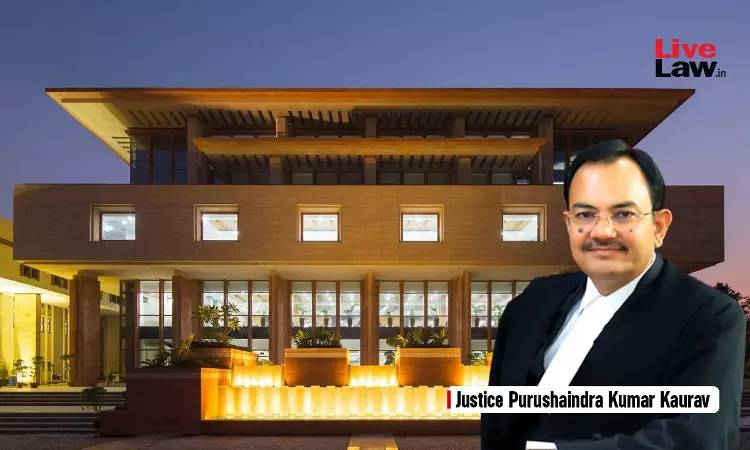
The Delhi High Court has dismissed a petition seeking directions to the Union Government to formulate a policy mandating all Union Ministers to interact with citizens and hear their grievances for at least two hours daily through video conferencing.Justice Purushaindra Kumar Kaurav observed that the relief sought squarely falls within the executive domain and cannot be enforced through a writ...
This is a premium content
Available exclusively to
Our subscribers
Subscribe Premium 
INR 1099+GST
Your support helps us to bring you more content at
an affordable subscription scheme !!!
All payment options available
The Delhi High Court has dismissed a petition seeking directions to the Union Government to formulate a policy mandating all Union Ministers to interact with citizens and hear their grievances for at least two hours daily through video conferencing.
Justice Purushaindra Kumar Kaurav observed that the relief sought squarely falls within the executive domain and cannot be enforced through a writ of mandamus under Article 226 of the Constitution of India.
“The sole grievance of the petitioner pertains to formulation of a scheme or policy requiring Union Ministers to mandatorily interact with citizens for a specified duration on a daily basis. It is a settled position of law that the power to frame policies, devise administrative mechanisms and determine the manner of discharge of executive functions lies squarely within the domain of the executive,” the Court said.
“The constitutional Courts, while exercising powers under Article 226 of the Constitution of India, do not ordinarily interfere in such policy matters unless there exists a clear violation of any statutory provision, constitutional mandate, or demonstrable arbitrariness,” it added.
The petitioner, Onkar Sharma, a retired Senior Manager from a nationalised bank, had urged the Court to direct the Union of India to frame and implement a scheme ensuring daily accessibility of Union Ministers to the public via virtual platforms. He also sought conversion of the plea into a Public Interest Litigation.
He claimed to have faced repeated instances of alleged mistreatment by government departments and argued that lack of direct access to ministers hindered effective grievance redressal.
Dismissing the plea, Justice Kaurav observed that issuing such a direction would amount to transgressing into the exclusive domain of the executive and would be contrary to the doctrine of separation of powers.
“In view of the aforenoted, there does not seem to be any justification to direct the respondent to formulate and implement a scheme mandating all Union Ministers to interact and hear the grievances from the public at least for two hours daily through video conferencing,” the Court said.
It added that the aspects will have to be dealt with by the concerned Ministry or the public representative, and that there cannot be any mandamus to that extent.
“In view of aforesaid, the instant petition is bereft of merit and the same is, accordingly, dismissed. Pending applications also stand dismissed,” the Court held.
Title: ONKAR SHARMA v. UNION OF INDIA
Citation: 2026 LiveLaw (Del) 374
Tags

Nupur Thapliyal
Nupur Thapliyal is a Principal Correspondent with LiveLaw, based in New Delhi. She reports from the Delhi High Court and trial courts in the national capital

