



- Home
- /
- High Courts
- /
- Delhi High Court
- /
- Delhi High Court Refuses To Reopen...
Delhi High Court Refuses To Reopen IFS Cadre Allocation Despite Admitted Error, Cites Delay And Cascading Impact
LIVELAW NEWS NETWORK
3 Feb 2026 12:04 PM IST
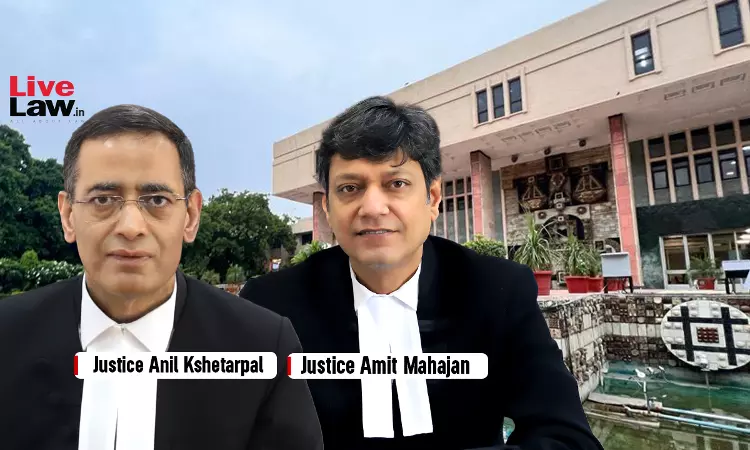
The Delhi High Court has refused to reopen the Indian Forest Service (IFS) cadre allocation of an officer, holding that even an admitted error in vacancy calculation cannot justify unsettling cadre allocations after a long lapse of time, given the serious cascading consequences such a move would entail.A Division bench of Justices Anil Kshetarpal and Amit Mahajan were hearing a writ...
This is a premium content
Available exclusively to
Our subscribers
Subscribe Premium 
INR 1099+GST
Your support helps us to bring you more content at
an affordable subscription scheme !!!
All payment options available
The Delhi High Court has refused to reopen the Indian Forest Service (IFS) cadre allocation of an officer, holding that even an admitted error in vacancy calculation cannot justify unsettling cadre allocations after a long lapse of time, given the serious cascading consequences such a move would entail.
A Division bench of Justices Anil Kshetarpal and Amit Mahajan were hearing a writ petition challenging a Central Administrative Tribunal (CAT) order that had declined to interfere with the petitioner's cadre allocation.
The petitioner contended that a mistake had occurred in the calculation of vacancies during the cadre allocation exercise, which adversely affected his posting.
While the Union of India did not dispute that an error had occurred in the vacancy calculation, it argued that the challenge was raised after an inordinate delay of about seven years and that reopening the allocation at this stage would disrupt the entire cadre structure, affecting multiple officers across batches.
Agreeing, the High Court observed that cadre allocation is an incidence of service, governed by policy considerations, and does not confer an indefeasible right on an individual officer to seek reallocation after the process has attained finality.
It further noted that granting individual relief at such a belated stage would require reshuffling of cadres across the country, leading to a domino effect impacting seniority, postings, and promotional avenues of several officers who were not parties to the proceedings.
“It is not disputed that cadre allocation is carried out on a batchwise, all-India basis, by adopting a uniform methodology for determination of vacancies and for allotment, while taking into consideration the merit and overall cadre strength and requirements of all participating States. Accordingly, any correction or re-working in respect of one batch, or one officer within a batch, would necessarily lead to a re-calibration of the entire allocation exercise for that batch, in turn, impacting the allocations made in the successive batches on the existing vacancy and cadre position.
If this Court were to accept the contention of the Petitioner and direct a re-allocation in his favour on the basis of a corrected vacancy computation, it would inevitably open the floodgates to similar claims from other officers of the same batch as well as subsequent and prior batches who might, on a retrospective recalculation, assert that they too were prejudiced in terms of their cadre allocation,” it observed.
Thus the Court was not persuaded to unsettle such large-scale, settled allocations.
The Court also emphasised on the need for judicial restraint in service matters and as such, dismissed the plea.
Appearance: Mr. Shakti Singh, Adv. for Petitioner; Ms. Arunima Dwivedi, CGSC along with Mr. Abhiraj Singh, GP, Ms. Monalisha Pradhan and Ms. Priya Khurana, Advs for Respondent
Case title: Rahul Singh Tolia v. Union Of India & Anr.
Citation: 2026 LiveLaw (Del) 132
Case no.: W.P.(C) 18908/2025


