



- Home
- /
- High Courts
- /
- Delhi High Court
- /
- Delhi HC Upholds Validity Of Civil...
Delhi HC Upholds Validity Of Civil Defence Act Provision Allowing Summary Discharge, Bars Stigmatic Dismissals Without Hearing
LIVELAW NEWS NETWORK
29 Dec 2025 12:10 PM IST
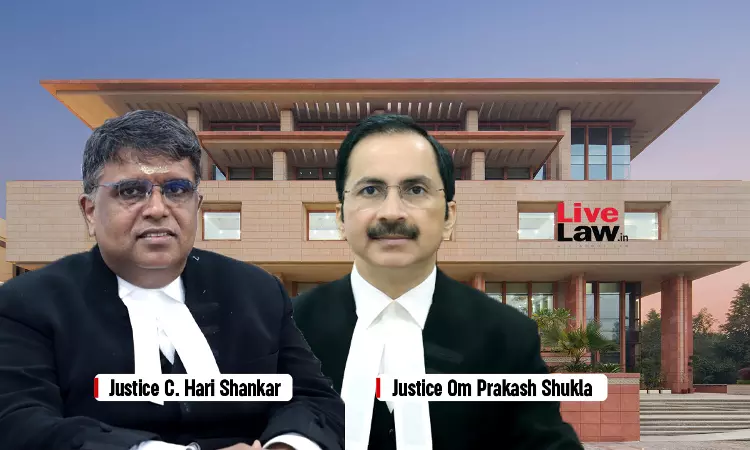
The Delhi High Court has upheld the constitutional validity of Section 6(2) of the Civil Defence Act, 1968, which empowers authorities to discharge Civil Defence Volunteers without hearing, but has held that the provision can't be used as a cloak to impose punitive or stigmatic dismissals without following principles of natural justice.A division bench of Justices C.Hari Shankar and Om...
This is a premium content
Available exclusively to
Our subscribers
Subscribe Premium 
INR 1099+GST
Your support helps us to bring you more content at
an affordable subscription scheme !!!
All payment options available
The Delhi High Court has upheld the constitutional validity of Section 6(2) of the Civil Defence Act, 1968, which empowers authorities to discharge Civil Defence Volunteers without hearing, but has held that the provision can't be used as a cloak to impose punitive or stigmatic dismissals without following principles of natural justice.
A division bench of Justices C.Hari Shankar and Om Prakash Shukla made the observation while dealing with a batch of petitions filed by Civil Defence Volunteers who were discharged from service on the ground of being “undesirable,” allegedly for not reporting for COVID-19 duties, without being afforded any opportunity of hearing.
Petitioners contended that though Section 6(2) permits summary discharge of volunteers, the impugned orders were stigmatic in nature, effectively penalising them for alleged misconduct. They argued that such action could not be sustained without adherence to due process, including issuance of notice and opportunity to explain.
Rejecting the challenge to the vires of Section 6(2), the High Court held that the provision serves an administrative purpose and is constitutionally valid. However, the Court drew a clear distinction between dismissal simpliciter and a punitive dismissal camouflaged as a discharge.
“While undertaking the judicial exercise of determining the validity of Section 6(2), it must be borne in mind that the provision governs dismissal simpliciter of CDVs, whose engagement is voluntary and honorary in nature. Thus, an endeavour must be made to find synergy while balancing the overarching principles of natural justice which serve as an essential safeguard, especially considering the very nature of the service rendered by CDVs,” the Court said.
It added, “In the case of a stigmatic dismissal, reasons must be furnished, and due opportunity must be given to the affected party to make their case. However, if there are no negative or stigmatic findings constituting the foundation (as opposed to motive) of dismissal, the requirement of a hearing is not mandatory and the same may depend on the incidental surrounding facts and circumstances.”
In the case at hand however, the Court noted that Petitioners' dismissal under Section 6(2) ostensibly appeared to be simpliciter, but the Respondent admitted during oral arguments that dismissal arose from the failure to join the assigned duty during the COVID-19 pandemic.
“Hence, it can be safely inferred that the dismissal of the petitioner was effectively stigmatic and as it appears, the provisions of Section 6(2) were employed to circumvent the rigours of Section 6(1) of the Act,” the Court noted.
It added, “since the dismissals, though couched as simpliciter, were stigmatic in essence. Accordingly, the petitioners ought to have been afforded fair and meaningful opportunity to be heard as provided for under Section 6(1) of the Act. However, in the present case, since the authority failed to do so, the principles of natural justice stand violated.”
As such, the Court quashed the Petitioners' dismissal.
Appearance: Mr. Chirayu Jain, Adv. for Petitioners; Mr. Kavindra Kumar Gill, SPC Mrs. Avnish Ahlawat, SC with Mr. N.K. Singh, Adv. for Respondents
Case title: Deepak Kumar v. Directorate Of Civil Defence, Government of Nct Of Delhi & Anr
Citation: 2025 LiveLaw (Del) 1800
Case no.: W.P.(C) 4233/2022


