



- Home
- /
- High Courts
- /
- Delhi High Court
- /
- Delhi High Court Urges More...
Delhi High Court Urges More Judicial Appointments For MCOCA Cases, Calls For Administrative Action
Nupur Thapliyal
18 Feb 2026 6:20 PM IST
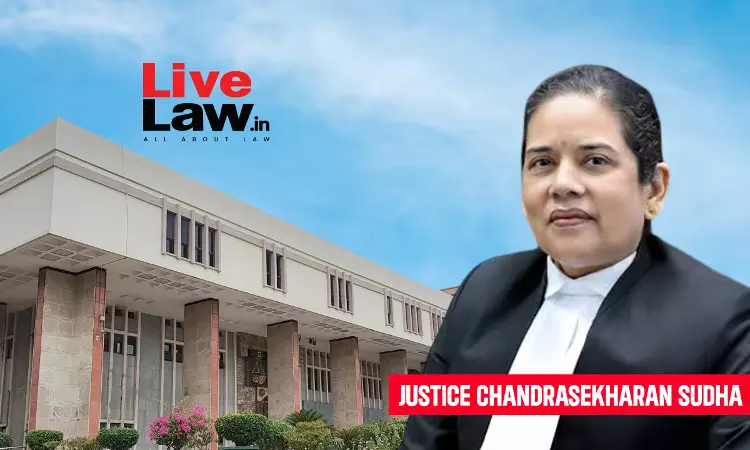
The Delhi High Court has called for more judicial appointments to deal with cases under the Maharashtra Control of Organised Crime Act, 1999. Justice Chandrasekharan Sudha said that a sessions judge or an additional sessions judge would be qualified to be appointed as a judge of the Special Court under Section 5(3) of the MCOCA. The Court said when there is only one judge appointed to the...
This is a premium content
Available exclusively to
Our subscribers
Subscribe Premium 
INR 1099+GST
Your support helps us to bring you more content at
an affordable subscription scheme !!!
All payment options available
The Delhi High Court has called for more judicial appointments to deal with cases under the Maharashtra Control of Organised Crime Act, 1999.
Justice Chandrasekharan Sudha said that a sessions judge or an additional sessions judge would be qualified to be appointed as a judge of the Special Court under Section 5(3) of the MCOCA.
The Court said when there is only one judge appointed to the Special Court, difficulties in work arrangement would certainly arise when the said judge goes on leave or otherwise.
Noting that the Legislature has forseen such a situation and has provided for appointment of additional judges under Section 5(3) of MCOCA, the Court said:
“It would certainly be ideal if additional Judge(s) are appointed to the Special Court or a few officers, if not, all the members of the Delhi Higher Judicial Service, are empowered to deal with offences under the MCOCA.”
The judge said that it would be a decision that will have to be taken by the State Government in consultation with the Chief Justice of the High Court.
“It would do well for the High Court on the administrative side to consider the feasibility of appointing additional judge(s) to the Special Court already constituted or conferring the power to deal with offences under MCOCA to more members of the Delhi Higher Judicial Service.
This order may be placed before the Hon'ble the Chief Justice of this Court for considering the matter,” the Court said.
The observations were made while dismissing appeals filed by two women challenging the denial of default bail in a MCOCA case, also containing offences under NDPS Act and Drugs and Cosmetics Act.
While the court dismissed the pleas on merits, it took note of the fact that there are “11 Sessions divisions in Delhi and that in each division, only one court has been designated as the Special Court.”
“When there is only one judge appointed to the Special Court in each of the sessions division, Sub-section (5) of Section 5 of MCOCA cannot come into play and the judge appointed to the Special Court cannot distribute the business of his Court in his absence to any other member of the Delhi Higher Judicial Service or the Sessions judge or additional Sessions judge appointed under Section 9(2) or (3) Cr.P.C/ Section 8(2) or (3) BNSS,” the Court said.
“When there is only one judge appointed to the Special Court established in a Sessions division, what would be the course open in case the said judge is unavailable or goes on leave?,” it added.
Title: DEEPA SINGH v. STATE (NCT OF DELHI) & Other Connected Matter
Citation: 2026 LiveLaw (Del) 215

Nupur Thapliyal
Nupur Thapliyal is a Principal Correspondent with LiveLaw, based in New Delhi. She reports from the Delhi High Court and trial courts in the national capital

