



- Home
- /
- High Courts
- /
- Delhi High Court
- /
- Plea In Delhi High Court Challenges...
Plea In Delhi High Court Challenges One-Month Ban On Protests At Delhi University
Nupur Thapliyal
25 Feb 2026 2:15 PM IST
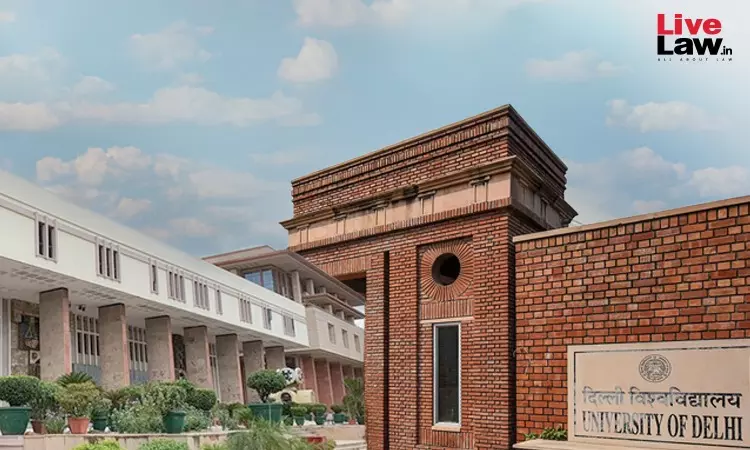
A plea has been filed in the Delhi High Court against a notification banning protests and public meetings of any kind for a month in the Delhi University or its campuses in the national capital. Justice Jasmeet Singh heard a plea filed by Uday Bhadoriya, a student of the varsity, challenging the notification issued by the Office of Proctor on February 17 in the wake of clashes during a protest...
This is a premium content
Available exclusively to
Our subscribers
Subscribe Premium 
INR 1099+GST
Your support helps us to bring you more content at
an affordable subscription scheme !!!
All payment options available
A plea has been filed in the Delhi High Court against a notification banning protests and public meetings of any kind for a month in the Delhi University or its campuses in the national capital.
Justice Jasmeet Singh heard a plea filed by Uday Bhadoriya, a student of the varsity, challenging the notification issued by the Office of Proctor on February 17 in the wake of clashes during a protest in support of UGC equity rules.
The petition has been filed through Advocates Abhishek and Aman Rawat.
At the outset, the counsel appearing for the varsity submitted that the petition was in the nature of a PIL. He said that Section 144 of CrPC has been imposed by the Delhi Police which is not made a respondent party. This is a half baked petition, the counsel said.
The Court then sent the plea to be heard by the PIL bench which comprises of the Chief Justice and impleaded the Delhi Police as a respondent on oral request.
“On oral request of the learned counsel for the petitioner, Delhi Police is impleaded as respondent No. 6. The learned counsel for the petitioner states that the petition may be treated as a PIL and subject to the completion of formalities, may be listed before Hon'ble the Chief Justice,” the Court said while listing the matter on March 10.
Bhadoriya has challenged subsequent notifications issued by Kirori Mal College and Dyal Singh College reinforcing the prohibition. The plea mentions that the annual cultural event "Rajnigandha-2026" was postponed by Dayal Singh Evening College, claiming administrative reasons due to the current situation.
The plea contends that impugned notification imposes a blanket prohibition on peaceful assembly, speech and expression within the premises of campus or colleges which directly infringes upon the fundamental rights guaranteed under Articles 14, 19(1)(a), (b) and (d) of the Constitution of India.
Bhadoriya has said that he is directly affected by the impugned order as it curtails his ability to participate in academic discussions, peaceful assemblies, student engagements, and other legitimate activities that are essential to campus life.
“The cascading effect of the impugned order demonstrates that the restriction is not merely regulatory but has substantially curtailed student involvement and genuine academic discourse throughout the university,” the plea states.
It adds: “The Petitioner submits that the impugned order fails the test of reasonableness and proportionality, as it imposes a blanket prohibition without considering less restrictive measures like regulated permissions, designated spaces, or targeted restrictions. The order is therefore manifestly arbitrary and violative of Article 14.”
Title: UDAY BHADORIYA v. UNIVERSITY OF DELHI & ORS
Nupur Thapliyal
Nupur Thapliyal is a Principal Correspondent with LiveLaw, based in New Delhi. She reports from the Delhi High Court and trial courts in the national capital

