



- Home
- /
- High Courts
- /
- Delhi High Court
- /
- Dowry Demand For Setting Up...
Dowry Demand For Setting Up Business Still 'Dowry' Under S. 304B IPC: Delhi High Court
LIVELAW NEWS NETWORK
20 Sept 2026 1:30 PM IST
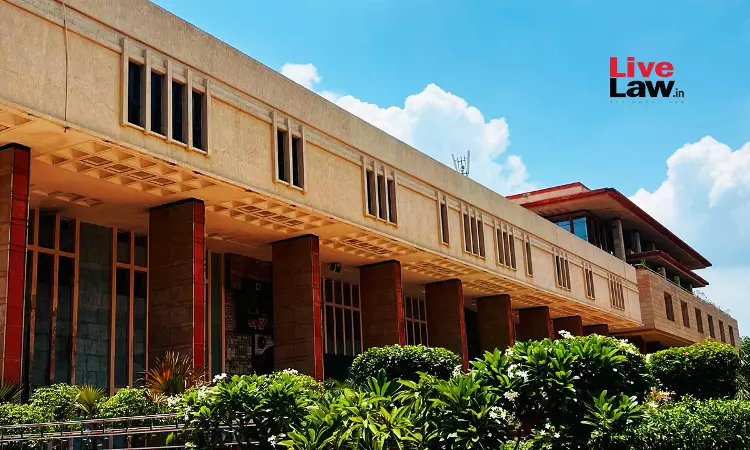
The Delhi High Court has held that a demand for money connected with the marital relationship does not cease to be a dowry demand merely because the money is sought for setting up a business rather than for personal use. [2026 LiveLaw (Del) 882]Justice Vimal Kumar Yadav made the observation while dismissing an appeal filed by two, challenging their conviction under Sections 304B and 498A of...
This is a premium content
Available exclusively to
Our subscribers
Subscribe Premium 
INR 1099+GST
Your support helps us to bring you more content at
an affordable subscription scheme !!!
All payment options available
The Delhi High Court has held that a demand for money connected with the marital relationship does not cease to be a dowry demand merely because the money is sought for setting up a business rather than for personal use. [2026 LiveLaw (Del) 882]
Justice Vimal Kumar Yadav made the observation while dismissing an appeal filed by two, challenging their conviction under Sections 304B and 498A of IPC in a dowry death case.
The case concerned the death of a woman who died by hanging on April 10, 2003, around four-and-a-half months after her marriage. An FIR was registered under Sections 498A, 304B and 34 of IPC. The Trial Court subsequently convicted two family members under Sections 304B and 498A IPC, while acquitting another accused.
The prosecution alleged that the deceased was subjected to cruelty and harassment over a demand for ₹50,000 as dowry.
Before the High Court, the defence questioned the credibility of the prosecution witnesses, arguing that they were related to the deceased and that there was no independent corroboration.
Rejecting the argument, the Court observed that witnesses cannot be treated as “interested witnesses” merely because they are related to the deceased. It noted that offences involving matrimonial cruelty and dowry harassment generally take place within the matrimonial home, making family members natural witnesses to the circumstances.
The Court further noted that the prosecution witnesses had consistently spoken about a specific demand of ₹50,000 in cash.
Rejecting the contention that the amount was demanded for starting a business and therefore could not constitute dowry, the Court held,
“.....demand as being connected with setting up a business does not take it outside the definition of dowry, since a demand connected with the marital relationship does not cease to be a dowry demand merely because the purpose disclosed for it is “business” rather than “personal use”.”
The High Court further observed that Section 304B IPC does not require proof of a concluded agreement to give dowry, though the other statutory requirements for attracting the offence must be established.
On the argument that the deceased had no physical injuries, the Court held that absence of physical injuries does not by itself negate cruelty or dowry harassment where the evidence otherwise establishes such conduct.
The Court also reiterated that “soon before her death” under Section 304B is a relative term and cannot be confined to any fixed period. What is required is a proximate and live link between dowry-related harassment and the death.
Finding the prosecution case sufficient to sustain the convictions, the High Court dismissed the appeal and directed the appellants to surrender to undergo the remaining sentence.
Appearance: Mr. Dharmendra Vashishtha, Mr. Sumit Kalra, Ms. Yashika Malhotra, Advs. for Appellants; Mr. Mukesh Kumar, APP for the State with SI Anil Kumar, PS Okhla Industrial Area
Case title: Naveen Kumar Verma & Anr. v. State
Citation: 2026 LiveLaw (Del) 882
Case no.: CRL.A. 677/2004


