



Forfeiture Of Earnest Money Not Automatic On Breach Of Agreement To Sell, Seller Must Prove Loss: Delhi High Court
LIVELAW NEWS NETWORK
31 Oct 2026 8:33 PM IST
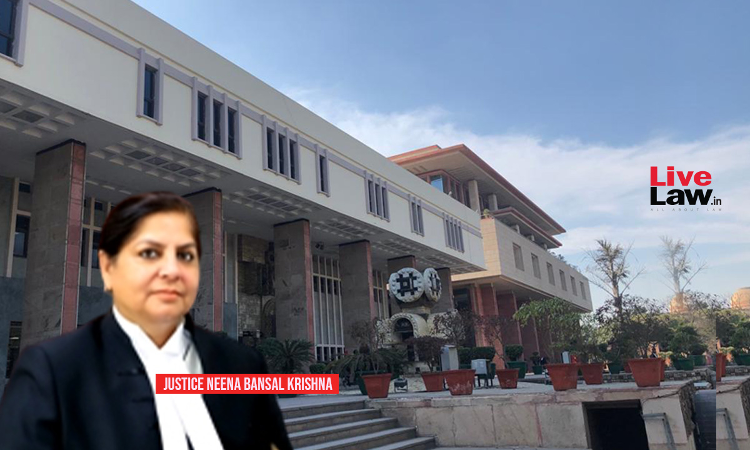
The Delhi High Court has held that forfeiture of earnest money paid under an agreement to sell a property is not automatic upon breach of contract, and the seller must establish the loss suffered to justify retaining the amount.
Justice Neena Bansal Krishna made the observation while dismissing an appeal filed by the legal representatives of two deceased property sellers against a trial court order directing them to refund ₹4 lakh paid as earnest money by a prospective buyer.
“The forfeiture of earnest money paid under an Agreement to Sell, is not an automatic consequence of breach. The amount named in the contract, only defines the outer limit of compensation. The party seeking to retain it, must establish that legal injury has resulted from the breach, and where the loss is capable of proof, it must be proved,” the Court observed.
The dispute arose from an agreement to sell a property in Ramesh Nagar, Delhi, executed on June 21, 2008, for a sale consideration of ₹40 lakh. The buyer had paid ₹4 lakh as earnest money, with the balance ₹36 lakh payable on or before September 5, 2008.


Under the agreement, the earnest money was liable to be forfeited if the buyer failed to honour the transaction. Conversely, if the sellers defaulted, they were required to pay double the earnest money to the buyer.
The buyer subsequently sought recovery of ₹8 lakh, alleging that the sellers had failed to provide the property's title documents for verification. The sellers however contended that the buyer had failed to pay the balance sale consideration and that they were entitled to forfeit the earnest money.
The sellers also claimed that they had suffered a loss after an intended purchase of another property fell through, resulting in the forfeiture of ₹4.60 lakh they had paid as earnest money in that transaction.
The trial court rejected the buyer's claim for double the earnest money but directed the sellers to refund the ₹4 lakh originally paid, along with interest. Aggrieved, the sellers' legal representatives approached the High Court.
The High Court referred to Section 74 of the Indian Contract Act, 1872, which provides for reasonable compensation in cases of breach of contract where a sum is stipulated as payable or a penalty is specified.
Relying on the Supreme Court's decisions in Fateh Chand v. Balkishan Das and Kailash Nath Associates v. Delhi Development Authority, the Court reiterated that the amount stipulated in a contract does not become automatically recoverable merely because a breach has occurred.
In the present case, the sellers had asserted that they lost ₹4.60 lakh paid towards another property transaction because the buyer failed to perform her obligations. However, the relevant receipt and agreement to sell were de-exhibited after the sellers failed to produce the original documents.
The Court noted that no other cogent evidence had been produced to establish either the subsequent transaction or the reasons for its non-performance. Since the alleged loss could have been proved through documentary evidence or by examining the other seller, the sellers had failed to establish the loss claimed by them.
As such, the Court held that the trial court was justified in directing refund and dismissed the appeal.
For Appellants: Ms. Tejasvi Mohan, Advocate


