



- Home
- /
- High Courts
- /
- Delhi High Court
- /
- Complete Silence In Face Of...
Complete Silence In Face Of Sustained Vilification May Weaken Public Confidence In Judiciary: Delhi High Court
Nupur Thapliyal
15 May 2026 11:15 AM IST
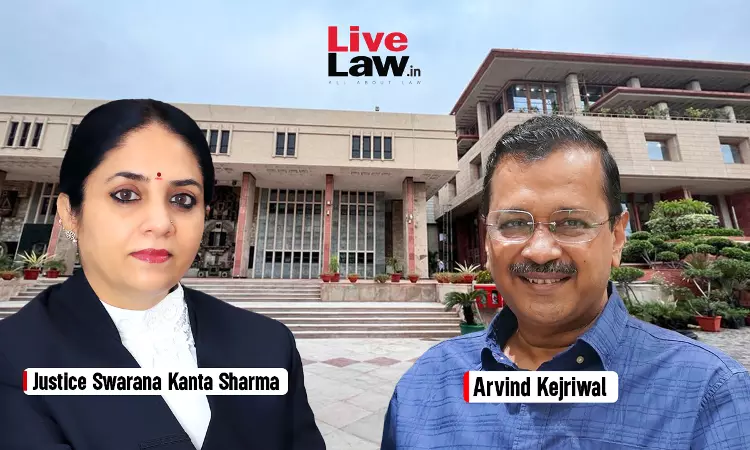
While initiating criminal contempt proceedings against Aam Aadmi Party leaders including Arvind Kejriwal, the Delhi High Court observed that “judicial silence” cannot become “surrender before those who commit contempt.”In a strongly-worded 68-page judgment, Justice Swarana Kanta Sharma observed that the Court was faced with “two options” — judicial silence or discharge...
This is a premium content
Available exclusively to
Our subscribers
Subscribe Premium 
INR 1099+GST
Your support helps us to bring you more content at
an affordable subscription scheme !!!
All payment options available
While initiating criminal contempt proceedings against Aam Aadmi Party leaders including Arvind Kejriwal, the Delhi High Court observed that “judicial silence” cannot become “surrender before those who commit contempt.”
In a strongly-worded 68-page judgment, Justice Swarana Kanta Sharma observed that the Court was faced with “two options” — judicial silence or discharge of constitutional duty — and chose the latter after finding that a “calculated campaign of vilification” had been launched against the Court and the institution of judiciary itself.
The Court initiated contempt proceedings against Arvind Kejriwal, Manish Sisodia, Sanjay Singh, Saurabh Bharadwaj, Durgesh Pathak and Vinayy Mishra over alleged social media campaigns targeting Justice Swarana Kanta Sharma during proceedings in the excise policy case.
In her ruling, Justice Sharma said that a judge is expected to maintain calmness and decide matters according to law without being easily disturbed by public opinion. However, when a litigant crosses the line between fair criticism and organised vilification of the Judge presiding over a case, the issue does not remain one of mere criticism.
“… it will be too much to expect a Judge to be so thick- skinned, thick-headed or insensitive as to remain completely unaffected by sustained public humiliation, vilification and attempts to bring down the dignity of the Court. Judges are human beings and not gods. This Court has little doubt that such sentiments would find resonance with many judges across different levels of the judicial system,” the Court said.
It added that in today's world of social media trials and organised online campaigns, it has become extremely easy to generate public narratives against judges and courts and to spread the same widely within a short span of time. It has become much easier to poison the fountain of justice, the Court said.
The Court was of the view that powerful litigants or political personalities may, if they so choose, publicly vilify judges but judges, by virtue of the discipline of their office, do not enter into public controversy or answer allegations in media platforms.
It was observed that a Judge commits an error in a judgment, or if a litigant is aggrieved by an order, the law provides remedies by way of appeal or challenge before a higher court. The Court said that what law does not permit is malicious campaigns, false narratives and character assassination of judges through social media and public platforms.
On freedom of speech, the Court said that one cannot claim constitutional protection for generating false public narratives against a Court through organised social media campaigns. It added that free l speech cannot extend to paralysing or obstructing the administration of justice.
“Disrespectful and malicious attacks upon the judiciary cannot be accepted in the name of criticism. While some may criticise the power of courts to initiate contempt proceedings, they often do not suggest what a Judge is expected to do in circumstances where organised attempts are made to publicly destroy confidence in the Court while the Judge herself remains institutionally silent,” the Court said.
Further, the Court observed that though Kejriwal and Sisodia cited Mahatama Gandhi's “Satyagraha” while boycotting the proceedings before her, and remained absent inside the Court, they remained present at social media platforms and continued to cast aspersions on the Court and kept on maligning and scandalising the judge.
Justice Sharma said that the contemnors crossed the limits of fair criticism and sought to create a public narrative against her after having failed to obtain the relief sought through legal proceedings.
The Court also said that it cannot allow the attempt which was cleverly clothed in the action called Satyagraha, through social media posts intended to derail the entire judicial system and sow seeds of such contemptuous path in the minds of the public at large.
It added that howsoever powerful or influential an accused be, he should not be allowed to even assume for a moment that he can demolish the Indian judicial system, its judges or procedures established by law so easily as by a manufactured opinion, social media narrative, verging on bullying and trying to browbeat a sitting judge by dragging her family into the controversy and targeting the judge instead of targeting her order before the court of law as by law established.
“A Judge, at times, is required to walk a lonely path in such situations. Unlike others, a Court cannot enter the public domain itself to defend itself through press conferences, or answer allegations in the marketplace of public narratives even when personally targeted. Undoubtedly, even for this Court, the self-imposed silence of judicial discipline to not respond in the public domain has been lonely,” the Court said.
“This Court neither seeks sympathy nor demands immunity from criticism. This Court does not require applause; it functions upon the constitutional trust of the people on it and would protect it when deliberate attempts are made to poison the fountain of justice,” it added.
Title: CBI v. Kuldeep Singh & Ors

Nupur Thapliyal
Nupur Thapliyal is a Principal Correspondent with LiveLaw, based in New Delhi. She reports from the Delhi High Court and trial courts in the national capital

