



Magistrate Can Summon Persons Not Formally Chargesheeted By Police, But Must Pass Reasoned Order: Delhi High Court
LIVELAW NEWS NETWORK
14 Oct 2026 2:30 PM IST
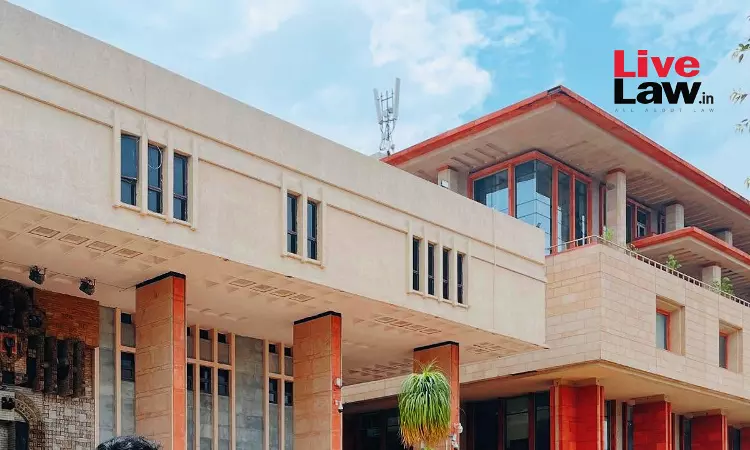
The Delhi High Court has held that a Magistrate is not bound by the investigating agency's conclusion that there is no sufficient material against a suspect and can summon such a person to face criminal proceedings.
However, it held that where the Magistrate disagrees with the police and decides to proceed against such a person, the order must identify the material supporting that decision and disclose the reasons for doing so.
Justice Madhu Jain made the observations while partly allowing a plea filed by Zubair Ahmed, a former Non-Executive Director of Raheja Developers Ltd., challenging an order of the trial court summoning him in a cheating, criminal breach of trust and conspiracy case.
Ahmed had been placed in Column No. 12 of the chargesheet, with the investigating agency recording that he was not involved in the company's day-to-day affairs and that no incriminating evidence had emerged against him. The agency therefore did not seek his prosecution.


Column No. 12 in a police final report (chargesheet) lists individuals who are not formally charge-sheeted but are recorded as suspects during the investigation.
The trial court nevertheless summoned him, observing that the persons named in Column No. 12 had prima facie participated in the transactions and that there was sufficient material to proceed against them.
Before the High Court, Ahmed argued that he had been a Non-Executive Director only until August 2015, had received only sitting fees for attending Board meetings and had not been involved in the company's day-to-day affairs. He also pointed out that he was not named in the original police complaint or FIR.
The Court noted that Sections 190 and 204 of CrPC empower a Magistrate to take cognizance and issue process where sufficient grounds exist. It said that before issuing process however, the Magistrate must apply judicial mind to the material before the Court and determine whether it provides sufficient grounds to proceed against the person concerned.
The Court reiterated that a Magistrate is not bound by the investigating agency's opinion and can summon a person even if the police have placed that person in Column No. 12 and have not found material warranting his prosecution.
However, the Court stressed that such departure from the police's conclusion must be supported by a speaking order.
"But the law at very same time demands, that the concerned Magistrate in such cases or situations pass, a 'speaking order' which upon a bare perusal of it discloses sufficient grounds for proceeding against such individuals. Such an order need not be detailed as to its contents, but this requirement of passing a reasoned order which would disclose sufficient reasons for summoning such individuals becomes essential, as the investigating agency which is tasked with collecting material which would assist the Court to decide whether to issue process or not, did not find any at the very threshold," the Court said.
Examining Ahmed's case, the Court found that the trial court's order attributed active participation, knowledge of the alleged conspiracy and compliance with directions to him, but the said allegations did not emanate from the chargesheet. Instead, the allegations substantially reproduced assertions made in a synopsis filed by the complainant.
The Court observed that while the trial court could disagree with the investigating agency, it was required to identify the material supporting the allegations and record its satisfaction that such material constituted sufficient ground to proceed.
“Mere reproduction of the allegations followed by a collective conclusion against all persons placed in Column no. 12 does not reflect the independent application of judicial mind,” the Court held.
As such, it held that the summoning order insofar as Ahmed was concerned, was a non-speaking order.
Appearance: Mr. Siddharth Aggarwal, Sr. Adv. along with Ms. Smriti Sinha, Ms. Aleena, Ms. Vismita Diwan, Mr. Japman Singh, Mr. Divyash Sharma, Advs. for Petitioner; Ms. Meenakshi Dahiya, APP with Mr. Aditya Vikram Singh, Adv. Mr. Madhav Sareen, Ms. Raunak Wahi, Ms. Vanshika Jha, Ms. Pradhi Sahni, Mr. Raghvendra Pratap Singh, Advs. for R-2. Insp. Ramkesh, P.S. EOW.


