



- Home
- /
- High Courts
- /
- Delhi High Court
- /
- Delhi High Court Rejects Plea...
Delhi High Court Rejects Plea Against Manish Sisodia's 2020 Election Win, Says Mere Registration Of FIR Need Not Be Disclosed
Nupur Thapliyal
19 Jan 2026 11:43 AM IST
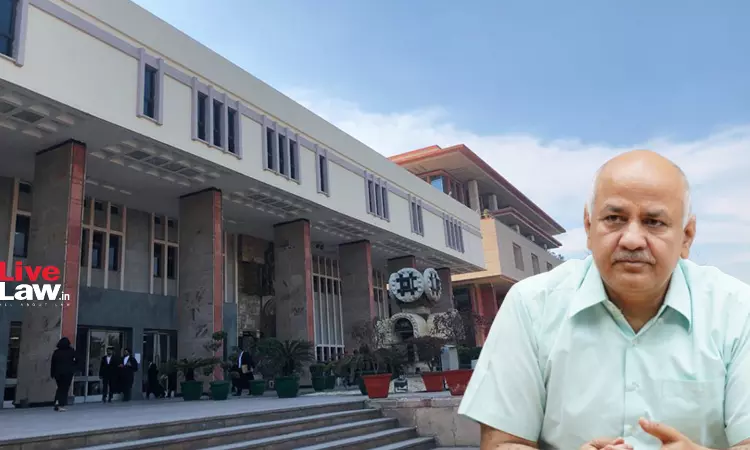
The Delhi High Court has ruled that mere registration of an FIR does not imply pendency of a criminal case for the purpose of “disclosure” by an election candidate under Section 33A of Representation of Peoples Act. “It is only when charges are framed, or cognizance of the offence is taken by the Court, that the statutory obligation to disclose arises,” Justice Jasmeet Singh said....
This is a premium content
Available exclusively to
Our subscribers
Subscribe Premium 
INR 1099+GST
Your support helps us to bring you more content at
an affordable subscription scheme !!!
All payment options available
The Delhi High Court has ruled that mere registration of an FIR does not imply pendency of a criminal case for the purpose of “disclosure” by an election candidate under Section 33A of Representation of Peoples Act.
“It is only when charges are framed, or cognizance of the offence is taken by the Court, that the statutory obligation to disclose arises,” Justice Jasmeet Singh said.
The Court dismissed a petition challenging the election of Aam Aadmi Party (AAP) leader Manish Sisodia from Patparganj in the 2020 Assembly polls. The plea was filed by Pratap Chandra, who had contested against Sisodia as a Rashtriya Rashtrawadi Party candidate.
Chandra alleged that the election campaigning and display of election material by Sisodia continued during the prohibited forty-eight-hour period prior to the conclusion of polling.
He also alleged that Sisodia failed to disclose details of FIR registered against him in 2013 under the Prevention of Insult to National Honour Act, 1971, amounting to suppression of material facts.
Rejecting the plea, the Court said that the object behind mandating disclosure of criminal antecedents of a contesting candidate is to ensure that the electorate is made aware of such antecedents so as to enable voters to make an informed choice while exercising their franchise.
It added that to that extent, Section 33A of the RP Act enacts a “limited statutory right to information” in favour of the voters, with a corresponding duty cast upon the candidate to disclose such information strictly in accordance with the law.
The Court said that no charge has been framed in respect of the criminal case mentioned by Chandra, and that he also failed to plead or aver that the Sisodia had knowledge of the said FIR.
“In the absence of any such pleading or material to demonstrate knowledge on the part of the respondent, the non-disclosure of the FIR cannot be construed as deliberate concealment so as to attract penal or electoral consequences,” the Court said.
It further observed that Chandra failed to establish a specific cause of action in his election petition.
Justice Singh said that the pleadings were conspicuously silent on any nexus between the alleged continuance of election matter and the outcome of the election, thereby failing to disclose how the result was materially affected within the meaning of Section 100(1)(d) of the RP Act.
“The petitioner has just made vague allegations and general pleadings, the petitioner has also failed to file the affidavit in the prescribed pro-forma which requires specific indication of corrupt practices and even the source of information as mandated in Ajmera Shyam (supra) has not been disclosed. These omissions are not mere technicalities but go to the root of the maintainability of the election petition,” the Court said.
“The petitioner's failure to allege any specific violation exercised by the respondent renders the allegation of Section 126 of the RP Act violation insufficient to establish a ground under Section 100(1)(d). The petitioner has essentially confined the allegations in a general sense and that the authorities did not act, without establishing direct culpability or knowledge on the part of the respondent,” it added.
Counsel for Petitioner: Petitioner in person
Counsel for Respondents: Mr. Gautam Narayan Sr. Adv. with Mr Rishikesh Kumar, Ms. Asmita, Mr.Mohd Irsad Mr. Karan Sharma, Ms. Sheenupriya, Mr. Rajat Jain, Mr. Abhiram Venugopal Advs
Title: PRATAP CHANDRA v. MR. MANISH SISODIA & ORS
Citation: 2026 LiveLaw (Del) 83
Tags

Nupur Thapliyal
Nupur Thapliyal is a Principal Correspondent with LiveLaw, based in New Delhi. She reports from the Delhi High Court and trial courts in the national capital

