Mere Website Accessibility Can't Confer Territorial Jurisdiction In IP Suits, Courts Must Draw 'Lakshman Rekha': Delhi High Court
Nupur Thapliyal
4 Nov 2026 9:15 AM IST
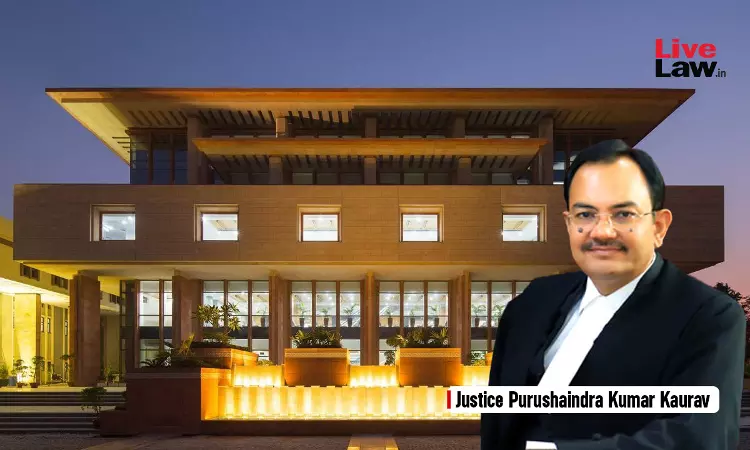
The Delhi High Court has held that mere accessibility of a website offering allegedly infringing goods or services within its territorial limits does not confer jurisdiction to entertain an intellectual property infringement suit.
Justice Purushaindra Kumar Kaurav made the observations while deciding a batch of 17 commercial suits involving intellectual property disputes, several of which were instituted before the Court despite neither the plaintiff nor the defendant being located in the national capital.
The Court emphasised that territorial jurisdiction cannot be created by a plaintiff through a contrived transaction or an artificial connection with the forum.
“A statute or a provision cannot be interpreted in a manner that confers an unbridled, unguided and uncanalised right on the plaintiff to create jurisdiction within the territory of a given Court,” the Court observed.
The Court said that in the digital era, where websites are accessible across the country, mere online accessibility cannot be treated as sufficient to confer jurisdiction upon every court where the website can be accessed.


“After enjoying, effectively, a pan-India jurisdiction, it becomes difficult for a court today to draw a Lakshman Rekha and restrain itself from stepping outside its bounds. This issue, however, demands closer consideration. The question is not one of losing territory but of institutional discipline. If jurisdiction is naturally made out, the Court must entertain the suit without hesitation,” the Court said.
“But if a dispute ought to be agitated before another court and is brought to Delhi, almost forcibly, and such a suit is entertained, the other rightful and natural forum which should have exercised jurisdiction over the matter gets deprived of the opportunity to adjudicate upon that cause of action. Institutional discipline and respect require this Court to refrain from entertaining such a suit. The statutory and constitutional scheme evinces a carefully structured division of courts' jurisdiction. Constitutional morality demands that this Court respect that scheme and abides by it,” it added.
The Court also noted that the Delhi High Court's specialised intellectual property framework and its contribution to the development of IP law cannot justify entertaining disputes that lack a material territorial connection with Delhi.
Justice Kaurav said that India's IP landscape to a large extent has grown under the Banyan Tree, which is the Delhi High Court. The Court said that while the Banyan provides shelter and comfort, it also stunts the growth of other trees below it.
“There is no reason to believe that other High Courts will not rise to the occasion, create a specialised machinery like this Court, and make IP litigation conducive either before them, or the district courts. This Court, without any doubt, must not command a reputation that no matter how minuscule a connection the lis has with Delhi, the plaintiff or the defendant, the High Court of Delhi, would entertain a suit,” the Court said.
The Court further held that a sole transaction cannot form the basis for conferring jurisdiction, particularly where the transaction has been initiated by the plaintiff or a person acting on its behalf.
Even where a product is delivered to Delhi, the Court observed that such a transaction, being capable of occurring at any location chosen by the plaintiff, cannot automatically oblige the Court to entertain the suit.
It explained that such a sale may, at its highest, constitute only a slender part of the cause of action, while the material, integral and essential part of the cause of action may have arisen elsewhere. In such circumstances, the Court may invoke the doctrine of forum non conveniens and refuse to entertain the plaint.
The Court clarified that the territorial jurisdiction of a court cannot be founded merely on the fact that an online marketplace permits customers within its jurisdiction to access or purchase the allegedly infringing products.
Ultimately, the Court said that all the plaints deserved to be returned on grounds of territorial jurisdiction to the plaintiffs under Order VII Rule 10 read with Section 151 of the CPC, and can be presented before an appropriate court, if so advised.