



- Home
- /
- High Courts
- /
- Delhi High Court
- /
- No Bar On Fresh Tender Amid...
No Bar On Fresh Tender Amid Subsisting Contracts; Writ Courts Won't Entertain Anticipatory Grievances: Delhi High Court
LIVELAW NEWS NETWORK
22 April 2026 12:05 PM IST
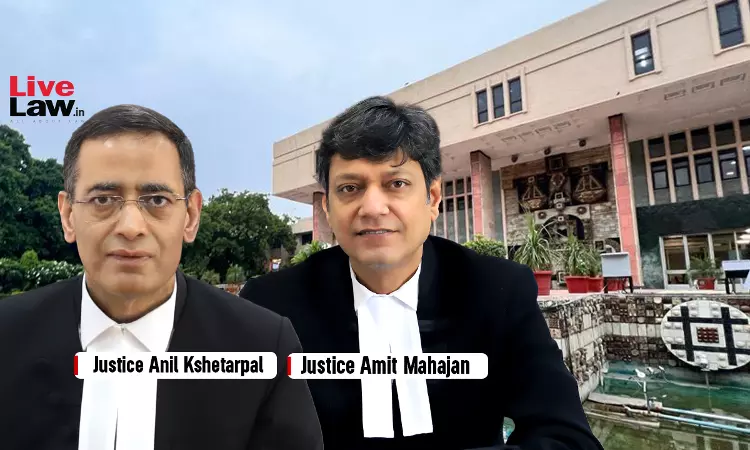
The Delhi High Court has held that the mere existence of subsisting contracts does not bar the State from initiating a fresh tender process for a future period.The division bench of Justices Anil Kshetarpal and Amit Mahajan added that merely because the Petitioner-contractor apprehended that the fresh tender may “overlap” contractual arrangements, would not be grounds to entertain a...
This is a premium content
Available exclusively to
Our subscribers
Subscribe Premium 
INR 1099+GST
Your support helps us to bring you more content at
an affordable subscription scheme !!!
All payment options available
The Delhi High Court has held that the mere existence of subsisting contracts does not bar the State from initiating a fresh tender process for a future period.
The division bench of Justices Anil Kshetarpal and Amit Mahajan added that merely because the Petitioner-contractor apprehended that the fresh tender may “overlap” contractual arrangements, would not be grounds to entertain a writ petition.
“The writ jurisdiction under Article 226 of the Constitution of India is not intended to be invoked on the basis of hypothetical or anticipatory grievances. The existence of a legal right and its infringement is a sine qua non for the exercise of such jurisdiction. Courts do not entertain challenges founded on mere apprehension of future injury unless such apprehension is shown to be real, and imminent,” it said.
The Court thus dismissed petitions filed by existing empanelled chemists under the Central Government Health Scheme (CGHS), who had challenged a fresh e-tender issued for empanelment of local chemists for the financial years 2026–2028.
Petitioners contended that since their existing contracts were still in force, the issuance of a fresh tender covering the same subject matter was arbitrary. They also invoked the doctrine of legitimate expectation, arguing that they were entitled to continue for the full tenure of their contracts without disruption.
Rejecting these contentions, the Court held that initiation of a fresh tender process for a subsequent period does not, by itself, interfere with subsisting contractual rights, so long as the existing contracts are allowed to run their course in accordance with their terms.
“Unless it is demonstrated that the Respondents have taken steps to prematurely terminate, truncate or otherwise alter the subsisting contracts in breach of their stipulations, no actionable infringement of a legal right can be said to arise...It is trite that a contractor has no vested right to insist upon renewal or continuation of a contractual arrangement beyond its stipulated tenure, in the absence of a contractual or statutory right, nor can it claim immunity from future tendering processes,” it said.
The Court added that merely because earlier tenders operated under a different framework does not preclude the Respondents from introducing a revised policy and initiating steps for its implementation.
“It is well-settled that no bidder or contractor has a vested right in the continuance of a particular policy regime…No vested right accrues in favour of a bidder in matters of future government contracts,” it said.
The Court further emphasised that public procurement, particularly in sectors involving essential services such as supply of medicines, cannot be undertaken in a vacuum or at the last moment.
“The process of tendering, evaluation of bids, award of contracts and operational transition is inherently time-consuming. Consequently, the procuring authority is required to initiate tender processes sufficiently in advance so as to ensure continuity and avoid disruption in public services.”
As such, finding no arbitrariness in the impugned tender, the Court dismissed the petitions.
Appearance: Mr. Samrat Nigam, Senior Advocate with Mr. Kunal Mittal, Ms. Arpita Rawat and Mr. Shiv Dutt Kaushik, Advs. for Petitioner; Mr. Nishant Gautam CGSC with Ms. Kavya Shukla, Mr. Vineet Negi, Mr. Vibhav V. Nath & Ms. Theresa, Advs. for R1 & R2
Case title: M/S Kaushik Medical Store v. UoI
Citation: 2026 LiveLaw (Del) 407
Case no.: W.P.(C) 3960/2026


