



- Home
- /
- High Courts
- /
- Delhi High Court
- /
- Ocular Evidence Corroborated By...
Ocular Evidence Corroborated By Medical Evidence Sufficient For Murder Conviction, Even If Motive Not Fully Established: Delhi High Court
LIVELAW NEWS NETWORK
13 Nov 2025 12:45 PM IST
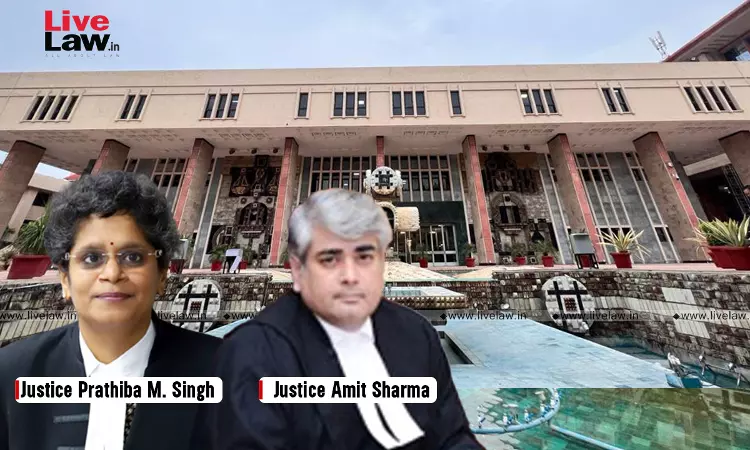
The Delhi High Court has held that ocular evidence, duly corroborated by medical evidence, is sufficient for a murder conviction, even if the motive of the crime is not fully established.A division bench of Justices Prathiba M. Singh and Amit Sharma observed, “if there is sufficient evidence in the form of eye witness/es or otherwise to establish the guilt of the accused, then not proving...
This is a premium content
Available exclusively to
Our subscribers
Subscribe Premium 
INR 1099+GST
Your support helps us to bring you more content at
an affordable subscription scheme !!!
All payment options available
The Delhi High Court has held that ocular evidence, duly corroborated by medical evidence, is sufficient for a murder conviction, even if the motive of the crime is not fully established.
A division bench of Justices Prathiba M. Singh and Amit Sharma observed, “if there is sufficient evidence in the form of eye witness/es or otherwise to establish the guilt of the accused, then not proving of motive would not be fatal to the case of the Prosecution.”
It added that recovery of the alleged weapon of offence is not considered a sine qua non for convicting an accused.
“Even if the prosecution was not able to establish that the alleged knives recovered at the instance of (accused) were used for assaulting the deceased, the same cannot be considered fatal to the case of prosecution in view of the testimony.”
The judges thus upheld the conviction and life sentence of six men for the murder of one Ibrahim and dismissed their appeals.
As per the prosecution, all appellants-accused arrived at the deceased's shop at midnight— armed with laathi, pistol, knives, and cricket stumps. They entered the shop and started abusing and beating him.
As per the eye-witness (PW-1), the deceased fled inside the workshop and the Appellant-Arif fired upon him 5-6 times, he was stabbed by Appellants-Abid and Javed and Appellants-Gufran and Tarif were hitting him with cricket stumps, while Appellant-Israil Pehalwan hit him with laathi. Later, they all fled together.
Appellants had argued that the prosecution case was primarily based on the testimony of PW-1, whose presence at the spot was highly doubtful.
However, the Court after analysing the evidence in its 129-page judgment found that PW-1 had made a call to the police on 100 number at about 12:22 AM, he was present at the time when the PCR came at the spot and after putting the deceased in the PCR van, he went to the hospital in his own vehicle. Moreover, his clothes were also seized, which as per FSL report were found to be stained with the blood of the deceased.
Appellants had also alleged certain contradictions with respect to place of occurrence in the testimonies of prosecution witnesses.
The Court however, observed that staging of the crime scene with blood-stained objects was impossible since the Police arrived at the scene within minutes. “In these circumstances, there cannot be any doubt with regard to the place of occurrence and the status of the same, including the recovery of articles from the crime scene.”
Appellants had next argued that there was no proper dock identification.
The Court however, observed that PW-1 already knew all the Appellants and hence, dock identification was not required.
It further noted that the defence of Appellants had been of “simple denial” as opposed to prosecution's evidence of Appellants' blood-stained clothes and matching DNA profile with deceased.
As such, it upheld their conviction and sentence but reduced the fine imposed on them, considering their financial backgrounds.
Mr. Aman Usman APP Appeared for the State
Citation: 2025 LiveLaw (Del) 1489
Case title: Abid v. State (and connected matters)
Case no.: CRL.A. 260/2023 (and connected matters)


