



- Home
- /
- High Courts
- /
- Delhi High Court
- /
- Online Defamation Suit Maintainable...
Online Defamation Suit Maintainable Only Where Defendant Is Located Or Where Harm Occurs: Delhi High Court In Sameer Wankhede vs Netflix
Nupur Thapliyal
29 Jan 2026 2:04 PM IST
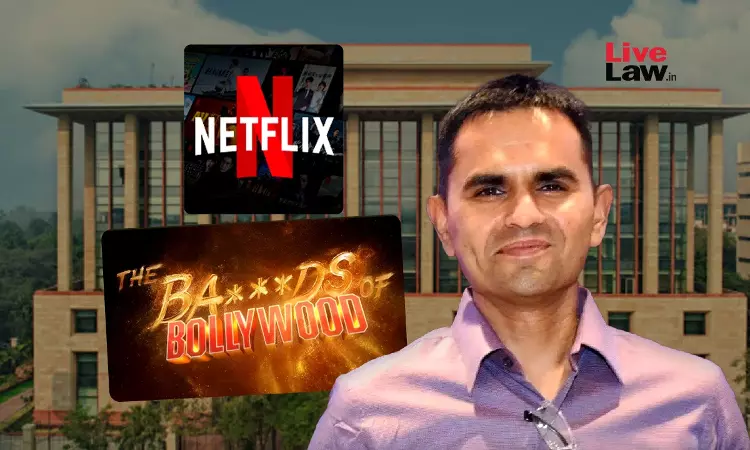
The Delhi High Court today dismissed a defamation suit filed by IRS officer Sameer Dnyandev Wankhede against Netflix series “Ba***ds of Bollywood”, holding that it lacked territorial jurisdiction to entertain the plea.Justice Purushaindra Kumar Kaurav held that an online defamation suit is maintainable only before a court within whose jurisdiction the defendant is located or where...
This is a premium content
Available exclusively to
Our subscribers
Subscribe Premium 
INR 1099+GST
Your support helps us to bring you more content at
an affordable subscription scheme !!!
All payment options available
The Delhi High Court today dismissed a defamation suit filed by IRS officer Sameer Dnyandev Wankhede against Netflix series “Ba***ds of Bollywood”, holding that it lacked territorial jurisdiction to entertain the plea.
Justice Purushaindra Kumar Kaurav held that an online defamation suit is maintainable only before a court within whose jurisdiction the defendant is located or where the reputational harm has occurred.
The Court relied on its earlier ruling in Escorts Ltd. v. Tejpal Singh Sisodia, which laid down principles governing territorial jurisdiction in cases of online defamation. It thus reiterated that mere accessibility of online content across jurisdictions does not confer a universal right to sue in any forum of the plaintiff's choosing.
The Court clarified how territorial jurisdiction must be determined in cases of online defamation while analyzing Section 19 of the Code of Civil Procedure (CPC) as well as the concept of “wrong done” in cases of internet-based publication.
For context, Wankhede had filed the defamation suit over his allegedly defamatory portrayal in the show.
Wankhede, presently posted in Chennai and a resident of Mumbai, had argued that the Delhi High Court had jurisdiction since the impugned content was accessible in the national capital, causing reputational harm among his colleagues and seniors.
Refusing to entertain the suit, the Court held that the wrong of defamation cannot be done at a place where the claimant does not enjoy a reputation or otherwise is not known. Else, it would just be a case of loss of self-esteem in the own eyes of the claimant, and not of reputational loss in the eyes of others, it said.
“Given the purpose for which such a pleading is required, a pan-India company or a politician/celebrity who, ex facie, is seen to enjoy a reputation across various places in the country, may not be, assuming other foundational facts are such, required to make the specific pleadings of the individuals in whose eyes his reputation is lowered,” the Court said.
It added that a plaint which otherwise deserves to be returned or rejected owing to lack of jurisdiction or other defects, cannot, by clever drafting, be made maintainable before a given Court.
“If, upon a careful and meaningful reading of the plaint, it becomes evident that the wrong was also done at the place where the defendant resides, and that the plaintiff has consciously omitted such facts with a view to surmount the jurisdictional bar, the Court would be duty-bound to return the plaint for presentation before the competent court having jurisdiction. Similar consequences would follow if a claimant attempts to evade the application of the Maximum Wrong Rule,” the Court held.
Further, Justice Kaurav said that averments made by Wankhede in the suit to the effect that the allegedly Defamatory Content may impact legal proceedings, or has a tendency to do the same, had no bearing to determine the “wrong done.”
It said that Section 19 of CPC contemplates the place where wrong is done, not where it could have been done, or may likely occur.
Wankhede contended that RPG Media had uploaded a video calling the IRS Officer “idiot” and was carrying on business in Delhi, and thus, the suit was rightly instituted before the Delhi High Court.
On the other hand, Netflix contended that RPG Media was impleaded by Wankhede solely to forum shop and circumvent the established principles on jurisdiction.
The counsel appearing for RPG Media submitted that the entity impleaded in the suit as “RPSG Lifestyle Media Pvt. Ltd.” did not exist as the correct legal entity was “Business Media Pvt. Ltd.” which merely operates a media division under the trade name “RPSG Lifestyle Media.”
According to the counsel, Wankhede was proceeding against a non-existent party and that the alleged acts done by one Suvigya Buch, an employee of the entity, cannot be attributed to the company itself, which was a separate and distinct legal entity.
On this, the Court noted that RPG Lifestyle Media Private Limited (defendant no. 6) was not a legal entity as the correct legal entity was Business Media Pvt. Ltd.
It said that RPG Media was not pleaded as being either the producer or the publisher of the series and the main contesting defendants i.e., Red Chillies and Netflix were based in Mumbai. The Court said that the averments made qua RPG Media were “an attempt to wriggle out of the conditions provided for in Tejpal judgment.”
“It appears that defendant no. 6 (RPG Media) was hunted to create a mirage of having an illusory cause to proceed against an individual resident at New Delhi, solely to plead before this Court that Tejpal does not apply,” the Court said.
“Given the prayers in the instant case, particularly those against defendant no. 3-5 (X Corp, Google and Meta) the impleadment of defendant no. 6 (RPG Media) neither appears to be proper nor necessary. It is an instance of clever drafting aimed at subverting the rigours of jurisdictional principles, as found in the CPC, and declared by Courts,” it added.
The Court said that where wrong has not been done within the jurisdiction of more than one Court, the plaintiff may sue at the place where he resides, or in the case of a company, the place where it has its registered office.
“When he/it sues at such a natural forum, there is no requirement to specifically plead in whose eyes the reputation of the plaintiff has been lowered; and The plaintiff is also entitled to sue at the place where he is not resident, or in the case of company, a place where it is not registered, but in such a case, he/it is required to plead in whose eyes the reputation of the plaintiff has been lowered,” the Court said.
Justice Kaurav held that if wrong has also been done within the jurisdiction of the Court in which the defendant resides, carries on business or works for gain, such a person must sue at “this place of merger and at no place else.”
The Court held if wrong has not been done within the jurisdiction of the Court in which the defendant resides, the plaintiff must sue at the place where maximum wrong has been done, which normally shall be where he is a resident or in case of a corporation, where it has its registered office.
“However, he/it can also sue at an unnatural forum, claiming maximum wrong to have been done there, if the wrong done at the natural forum, in comparison to the place in which the plaintiff seeks to sue, is miniscule,” the Court said.
The Court concluded that since the main contesting defendants in the suit were residing in Mumbai, and Wankhede himself being a resident of Mumbai, and further the wrong having also occurred at Mumbai, the Merger Rule “applied with full force.”
“The jurisdiction to entertain the present suit, lies only with the courts in Mumbai,” the Court held.
Title: SAMEER DNYANDEV WANKHEDE v. RED CHILLIES ENTERTAINMENTS PVT. LTD. & ORS
Tags

Nupur Thapliyal
Nupur Thapliyal is a Principal Correspondent with LiveLaw, based in New Delhi. She reports from the Delhi High Court and trial courts in the national capital

