



- Home
- /
- High Courts
- /
- Delhi High Court
- /
- Delhi High Court Issues Notice On...
Delhi High Court Issues Notice On PIL Against 3-Year Practice Requirement For Assistant Public Prosecutor Posts
Nupur Thapliyal
23 Sept 2026 1:32 PM IST
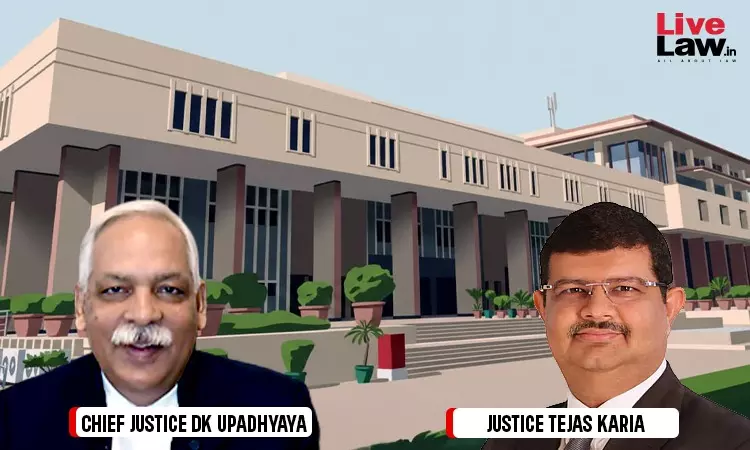
The Delhi High Court on Wednesday issued notice on a PIL challenging the requirement of three years' prior practice at the Bar for direct recruitment to the post of Assistant Public Prosecutor (APP) in Delhi's Directorate of Prosecution.A division bench comprising Chief Justice DK Upadhyaya and Justice Tejas Karia sought response of Union Government, Delhi Government and Delhi's DoP. The...
This is a premium content
Available exclusively to
Our subscribers
Subscribe Premium 
INR 1099+GST
Your support helps us to bring you more content at
an affordable subscription scheme !!!
All payment options available
The Delhi High Court on Wednesday issued notice on a PIL challenging the requirement of three years' prior practice at the Bar for direct recruitment to the post of Assistant Public Prosecutor (APP) in Delhi's Directorate of Prosecution.
A division bench comprising Chief Justice DK Upadhyaya and Justice Tejas Karia sought response of Union Government, Delhi Government and Delhi's DoP.
The plea, filed by Bhumika Trust, seeks a declaration that the three-year practice requirement is unconstitutional and arbitrary.
It also challenges the requirement's application to the ongoing recruitment process for 140 APP posts pursuant to an advertisement issued by UPSC on September 10.
The Trust contends that the requirement operates to exclude otherwise qualified law graduates and newly enrolled advocates from even participating in the recruitment process solely because they have not completed three years of practice at the Bar.
The PIL challenges the condition primarily on the grounds of Articles 14 and 16 of the Constitution of India, arguing that while professional competence and preparedness are legitimate objectives for recruitment to prosecutorial service, insisting upon three years of prior Bar practice as an absolute threshold may not be the only means of achieving those objectives.
“An eligibility criterion which completely excludes an otherwise professionally qualified class from even participating in a competitive selection process must, therefore, withstand scrutiny as to its necessity, rational nexus and proportionality, particularly where less restrictive means capable of achieving the legitimate object of professional preparedness are demonstrably available,” the plea states.
The Trust has also raised concerns regarding the impact of the eligibility condition on persons with benchmark disabilities. It argues that merely reserving vacancies for PwBD candidates may not ensure substantive equality if an antecedent eligibility condition prevents otherwise qualified candidates from entering the selection process.
“ The validity of the impugned prescription must therefore be tested against whether the Respondents possess relevant material demonstrating the necessity of precisely three years' prior Bar practice; whether the requirement bears a rational relationship with the actual functions to be discharged by an APP; whether less restrictive alternatives such as structured induction training, probation, practical attachments or supervised prosecutorial training were duly considered; and whether the exclusionary impact of the condition upon fresh law graduates, newly enrolled advocates and candidates with disabilities has received appropriate consideration,” the PIL says.
Title: Bhumika Trust v. Union of India & Ors
Tags

Nupur Thapliyal
Nupur Thapliyal is a Principal Correspondent with LiveLaw, based in New Delhi. She reports from the Delhi High Court and trial courts in the national capital

