



- Home
- /
- High Courts
- /
- Delhi High Court
- /
- Refusal To Permit Foreign Travel...
Refusal To Permit Foreign Travel Must Not Impede Pregnant Foreigner's Medical Care: Delhi High Court
Nupur Thapliyal
26 Sept 2026 12:00 PM IST
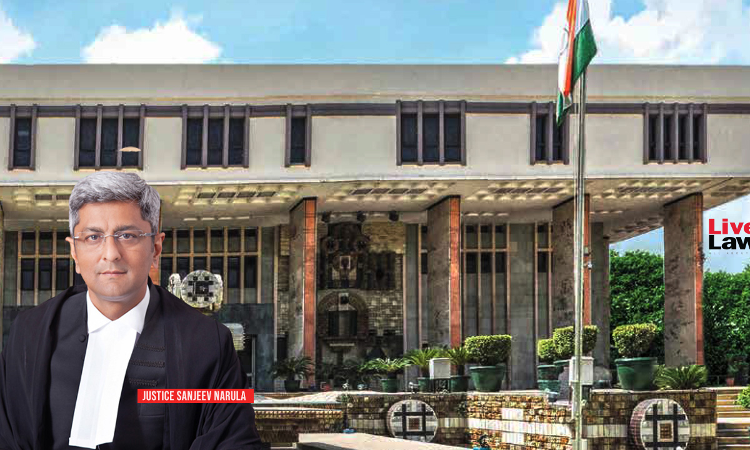
The Delhi High Court has directed the police to ensure that its refusal to permit foreign travel to an Afghan national, who is carrying twins, does not obstruct or delay her access to appropriate antenatal, diabetic or other medical care.Justice Sanjeev Narula, while declining the woman's plea to travel to the United Kingdom amid an ongoing criminal investigation, said that the refusal to...
This is a premium content
Available exclusively to
Our subscribers
Subscribe Premium 
INR 1099+GST
Your support helps us to bring you more content at
an affordable subscription scheme !!!
All payment options available
The Delhi High Court has directed the police to ensure that its refusal to permit foreign travel to an Afghan national, who is carrying twins, does not obstruct or delay her access to appropriate antenatal, diabetic or other medical care.
Justice Sanjeev Narula, while declining the woman's plea to travel to the United Kingdom amid an ongoing criminal investigation, said that the refusal to permit travel must not impede the medical care required by her and the unborn children.
“The Court is acutely conscious that the Petitioner is carrying twins and has placed on record a history of medical complications. The refusal of permission to travel must not impede the care that she and the unborn children require,” the Court said.
It directed the concerned SHO and Investigating Officer to ensure that the investigation does not obstruct or delay the woman's access to appropriate medical treatment.
It further directed that if she seeks treatment at a Government tertiary-care hospital in the city, the State Government shall facilitate it promptly.
“Her physical attendance before the Investigating Officer shall be required with due regard to medical advice and, unless an urgent investigative need dictates otherwise, only upon reasonable prior notice,” the Court said.
While rejecting her plea for foreign travel, the judge however directed the Investigating Agency to make every endeavour to complete the pending investigation expeditiously.
The Court was hearing a petition filed by the foreigner challenging the refusal of the trial court to release her original UK Convention Travel Document and permit her to travel to the United Kingdom.
The petitioner was an Afghan national holding a Convention Travel Document issued by the UK Home Office, with leave to remain in the UK until October 2029.
She was arrested in connection with an FIR alleging that she procured an Indian passport in the identity of “Jyoti Chawla” on the strength of forged Indian documents and used the passport to travel out of India in August 2023.
She was granted bail three days after her arrest on medical considerations, including pregnancy and diabetes. One of the bail conditions restrained her from leaving India without prior permission of the Court.
The woman submitted that she was carrying a twin pregnancy conceived through IVF and was suffering from gestational diabetes and hypothyroidism. As per the record, she was hospitalised during the pregnancy.
Her counsel argued that the proposed travel was intended to enable her confinement, delivery and postnatal care in the UK, where she ordinarily resides.
The Court said that its concern did not stem from the woman's Afghan nationality nor can the fact that she had lawful and settled residence in the United Kingdom, by itself, conclude the matter against her. It added that the real difficulty was in the combination of circumstances which arose in the matter.
Noting that the role of other persons allegedly involved in procuring the documents was still being investigated, the Court said that the material prima facie was in support of the prosecution's assertion that its apprehension was not merely hypothetical.
“This observation must not be misunderstood. The Petitioner continues to be presumed innocent. Nothing in this order is a finding that the passport was forged by her or that the prosecution case has been proved. Those are matters for investigation and, if a charge sheet is filed, for trial. The presumption of innocence, however, does not require the Court to ignore the nature of the accusation and the material collected thus far when deciding whether an existing bail condition should be relaxed,” the Court said.
It added that once the woman resumes residence in UL, securing her presence would no longer remain entirely within the immediate control of the criminal court and thus, the apprehension of non-return could not be characterised as “remote or speculative.”
Justice Narula said that the refusal to permit foreign travel at this stage should not be read as permitting indefinite retention, adding that upon completion of the investigation, or when the document is no longer required for investigative purposes, it will be open to the woman to seek its return before the competent Court, which shall consider that question independently and in accordance with law.
The Court also rejected the woman's offer to furnish an FDR as security for her return. It observed that monetary security may attach a financial consequence to non-return, but cannot secure the accused's physical availability once she is outside Indian jurisdiction.
The petition was accordingly dismissed.
Title: SMT.SIMRAN KAUR v. STATE (GOVT OF NCT OF DELHI )
Citation: 2026 LiveLaw (Del) 911

Nupur Thapliyal
Nupur Thapliyal is a Principal Correspondent with LiveLaw, based in New Delhi. She reports from the Delhi High Court and trial courts in the national capital

