



- Home
- /
- High Courts
- /
- Delhi High Court
- /
- Registered Title Of Property...
Registered Title Of Property Prevails Over Claims Of Oral Family Settlement: Delhi High Court
LIVELAW NEWS NETWORK
13 Jan 2026 1:25 PM IST
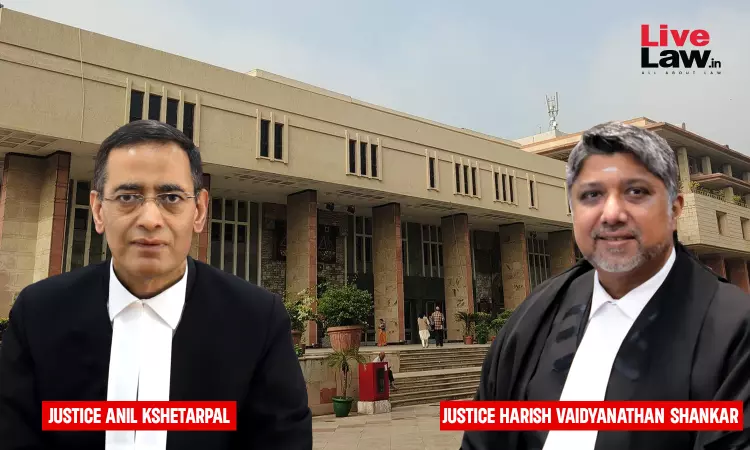
The Delhi High Court has held that a registered conveyance deed confers decisive title, and vague or unsubstantiated claims of an oral family settlement cannot be used to defeat such ownership.A Division Bench of Justices Anil Kshetarpal and Harish Vaidyanathan Shankar thus dismissed the appeals preferred by a man claiming joint ownership over a residential property on the basis of an...
This is a premium content
Available exclusively to
Our subscribers
Subscribe Premium 
INR 1099+GST
Your support helps us to bring you more content at
an affordable subscription scheme !!!
All payment options available
The Delhi High Court has held that a registered conveyance deed confers decisive title, and vague or unsubstantiated claims of an oral family settlement cannot be used to defeat such ownership.
A Division Bench of Justices Anil Kshetarpal and Harish Vaidyanathan Shankar thus dismissed the appeals preferred by a man claiming joint ownership over a residential property on the basis of an alleged family arrangement, and upheld the decree in favour of his brother who held a registered conveyance deed in his name. It observed,
“Mere oral assertions of “joint funds”, unsupported by contemporaneous documentary records, cannot displace registered title documents...in law, once the conveyance deed stands duly executed and registered solely in the name of the Plaintiff, a strong presumption of legality, title and exclusive financial contribution, arises in favour of the Plaintiff. Mere denial or speculative assertions are insufficient to discharge such onus, particularly, in the absence of documentary evidence.”
The dispute concerned a property purchased in the 1990s, where the Appellant contended that although the title stood in his brother's name, the property was acquired for the benefit of the joint family and was governed by an oral family settlement.
He also sought to invoke the exception of fiduciary capacity under the Benami Transactions (Prohibition) Act.
Rejecting these contentions, the High Court noted that no documentary evidence was produced to establish the existence, terms, or implementation of any family settlement.
“It is a settled principle of law that although a family settlement may be oral, its existence must be proved by cogent, reliable and convincing evidence demonstrating not only consensus ad idem but also acceptance and implementation by the parties. The Defendants, however, have failed on all counts,” it said.
The Court further held that merely alleging a fiduciary relationship is insufficient to escape the rigours of the Benami Act. it said,
“In the present case, the Plaintiff cannot, by any stretch of imagination, be said to have been standing in a fiduciary capacity visa-vis the Defendant, nor can the Plaintiff be construed as a trustee. Even assuming such a plea is raised, the same is required to be established through specific and unambiguous pleadings and proof, both of which are conspicuously absent. However, the bar/prohibition under the Benami Act, cannot be circumvented merely by paying lip service to the concept of fiduciary capacity, as such an approach would defeat the very object and legislative intent of the statute.”
Perusing the facts of the case, the Court found that the Appellant's occupation of the premises was permissive in nature, and such permissive possession could not mature into a claim of ownership or adverse possession.
“The Defendant was a licensee, and he must be deemed to be always a licensee. It is not open to him, during the subsistence of the license or in the suit for recovery of possession of the property instituted after the revocation of the license to set up a title to the property in himself or anyone else,” the Court held and dismissed the appeals.
Appearance: Mr. Anil Sapra, Sr. Adv. with Mr. Amrit Pal S. Gambhir & Mr. Dalip Mehra, Advs. with Mr. Sandeep Sethi/Appellant in person for Appellants; Mr. Ashish Mohan, Sr. Adv. with Ms. Manisha Singh, Adv. for Respondent
Case title: Sandeep Sethi & Anr v. Rajinder Kumar Sethi Deceased Through Lrs
Citation: 2026 LiveLaw (Del) 71
Case no.: RFA(OS) 5/2017


