



- Home
- /
- High Courts
- /
- Delhi High Court
- /
- Retired Employees Of Autonomous...
Retired Employees Of Autonomous Bodies Have No Automatic Right To CGHS Coverage: Delhi High Court
LIVELAW NEWS NETWORK
26 Nov 2026 11:00 AM IST
The Delhi High Court has held that employees of an autonomous body who were covered by the Central Government Health Scheme (CGHS) during service have no automatic right to continued coverage after retirement. Coverage of serving employees makes the institution eligible to seek an extension for its retirees, subject to its acceptance of the financial conditions prescribed under the...
This is a premium content
Available exclusively to
Our subscribers
Subscribe Premium 
INR 1099+GST
Your support helps us to bring you more content at
an affordable subscription scheme !!!
All payment options available
The Delhi High Court has held that employees of an autonomous body who were covered by the Central Government Health Scheme (CGHS) during service have no automatic right to continued coverage after retirement.
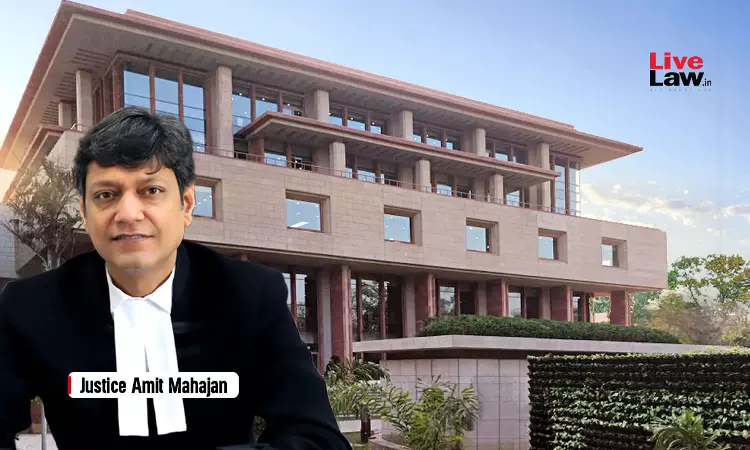
Coverage of serving employees makes the institution eligible to seek an extension for its retirees, subject to its acceptance of the financial conditions prescribed under the scheme, Justice Amit Mahajan held.
The Court dismissed a plea filed by a retiree from the Indian Institute of Public Administration (IIPA).
The Petitioner, who had availed CGHS facilities during his employment, sought their continuation for himself and other IIPA pensioners.
“The coverage of serving employees under CGHS is a necessary eligibility condition for the concerned autonomous body to seek extension of the facility to its retirees. The same, by itself, is not a sufficient condition creating an automatic and individual right in favour of every retired employee,” the Court observed.
The Petitioner argued that withdrawing medical coverage on retirement, when the need for treatment was greater, was arbitrary and discriminatory. He relied on a June 10, 2014 office memorandum issued by the Ministry of Health and Family Welfare providing for extension of CGHS facilities to retirees of autonomous and statutory bodies. He contended that IIPA could not defeat its retirees' claim by declining to forward a proposal to the Ministry.
The Court noted that the memorandum allowed bodies “desirous to extend” coverage to their retirees to accept the prescribed conditions and submit a proposal to the Ministry for consideration. The choice of words was deliberate, Justice Mahajan said, as it allowed each institution to assess whether it could undertake the financial responsibility involved.
IIPA placed an actuarial study on record estimating that extending CGHS facilities to its retirees would cost it more than ₹20 crore over ten years. The institute submitted that it would have to bear the entire cost and was barely able to meet its existing expenditure.
The Court observed that the authorities must exercise their discretion fairly. However, the welfare objective of the scheme did not empower the Court to compel an institution to adopt a policy merely because extending coverage appeared desirable.
The Court also rejected the Petitioner's claim for parity with retirees of other autonomous bodies. The fact that some institutions extended CGHS facilities to their pensioners did not establish that their service regulations, funding structures or financial obligations were comparable to those of IIPA, it held.
For Petitioner: Mr. Sarthak Maggon, Adv.
For Respondent: Ms. Pratima N Lakra, CGSC with Ms. Santha Smruthi, Advs. for R1 & 3. Mr. Ravinder Agarwal, Mr. Manish Kumar Singh, Mr. Vasu Agarwal & Mr. Emmanuel Benny, Advs. for R2.


